Smart watch Water Resistance Tips for Swimming, Showers, and Everyday Adventures
Smart watches have turned into reliable companions for active lifestyles, and water resistance is one of their standout features. From tracking pool laps to surviving unexpected rain showers or salty ocean swims, these devices handle moisture far better than early models ever could. In 2026, flagship options like the Apple Watch Ultra 3 boast 10 ATM ratings with recreational diving certification, Garmin models endure long surface swims with 5-10 ATM, Samsung Galaxy Watches combine IP68 with 5 ATM for versatile use, and Fitbit trackers keep things simple yet effective at 5 ATM.
But water resistance isn’t a free pass to treat your watch like a submarine. Ratings like ATM and IP tell you what the device can handle under test conditions, not real-life abuse. Factors such as soap, temperature changes, chemicals, impacts, and age all degrade seals over time. Misusing your watch can lead to fogged displays, corrosion, muffled speakers, or complete failure.
Understanding Water Resistance Ratings: ATM vs IP Explained
Water resistance gets measured in two main ways: ATM (atmospheres) and IP (Ingress Protection).
ATM ratings indicate pressure tolerance, roughly equivalent to submersion depth in static freshwater tests. One ATM equals about 10 meters of water pressure at sea level.
- 3 ATM (30m): Handles splashes, rain, handwashing. Not for swimming or submersion.
- 5 ATM (50m): Safe for swimming in pools or open water, shallow snorkeling, showering (with caveats). Most mainstream smartwatches fall here.
- 10 ATM (100m): Supports high-speed water sports, deeper surface swimming, some recreational diving (check model specifics).
Higher ratings like 20 ATM appear on dive-focused watches, but few smartwatches reach that.
IP ratings (e.g., IP68) focus on dust and water ingress. The second digit shows liquid protection:
- IPX7: Submersion up to 1m for 30 minutes.
- IPX8: Continuous immersion beyond 1m (manufacturer-specified time/depth).
Many smartwatches combine both: Samsung often lists IP68 + 5 ATM, meaning dust-proof and good for swimming, while Apple uses 50m or 100m under ISO 22810:2010 with IP6X dust resistance.
Important reality check: These are lab-tested static pressures. Dynamic activities (swimming strokes, jumps), hot water, soap, chlorine, salt, or drops can reduce effective protection. No consumer smartwatch is truly “waterproof”—they’re water-resistant, and that resistance fades.
Precautions Before Any Water Exposure
Start with these habits to preserve seals longer.
- Check Your Model’s Official Rating — Don’t assume. Apple Watch Series 11 and later handle 50m swimming but warn against soap in showers; Ultra models go to 100m with dive support. Garmin Venu/Fenix series typically rate 5-10 ATM for swimming. Samsung Galaxy Watch 7/Ultra combines IP68 + 5-10 ATM. Fitbit Charge/Sense lines sit at 5 ATM. Read the manufacturer’s support page—ratings can change slightly between models.
- Inspect for Damage Regularly — Look at the crown, buttons, ports, and speaker grille for cracks or wear. If the screen fogs after moisture or speakers sound muffled, stop water exposure and get it checked. Impacts (dropping on pool deck) compromise seals instantly.
- Avoid Extreme Temperatures — Hot showers, saunas, hot tubs, or steam rooms expand materials differently, stressing adhesives and gaskets. Cold plunges after heat can cause contraction cracks. Stick to room-temperature or mildly warm water.
- Remove Non-Water-Friendly Bands — Leather, stainless steel mesh, or fabric bands aren’t designed for immersion—swap to silicone, fluoroelastomer, or nylon sport bands before swimming or showering.
Daily Use Tips: Showers, Rain, and Sweat
Many people wear their watch 24/7, including showers. Here’s how to do it safely.
- Showering: For 5 ATM+ models, it’s usually okay in cool-to-warm freshwater showers. But avoid soap, shampoo, conditioner, body wash—these chemicals degrade seals faster than plain water. Apple explicitly advises against soapy showers for non-Ultra models; even Ultra benefits from rinsing off residue. Rinse thoroughly with fresh water afterward and dry completely.
- Handwashing and Rain: No issue at all. Quick exposure to splashes or light rain won’t harm anything.
- Sweat During Workouts: Sweat is salty and acidic—worse than plain water over time. After intense sessions, rinse the watch and band under fresh water, then dry. This prevents corrosion around ports and sensors.
Swimming and Pool Workouts: Making the Most of Water-Lock Features
Swim tracking is a highlight for many users, but follow these steps for accuracy and longevity.
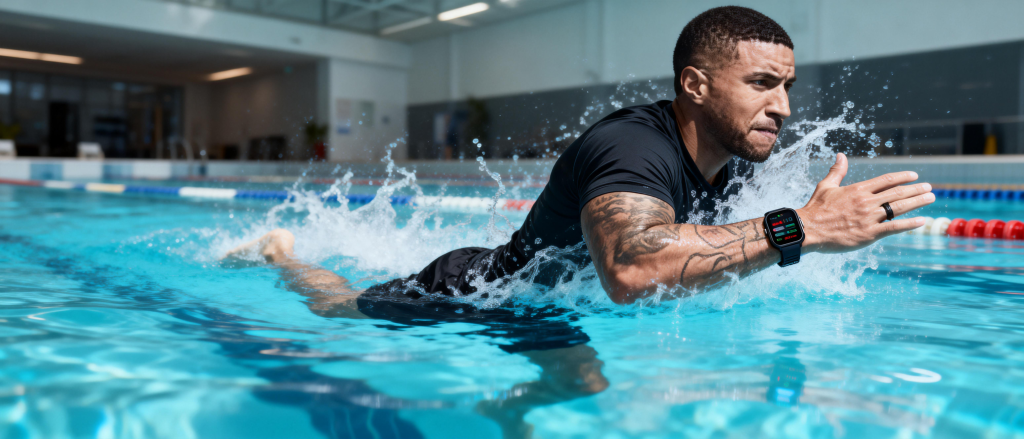
- Activate Water Lock Mode — Apple Watch auto-enables it for swim workouts (or manual toggle). It locks the touchscreen to prevent accidental inputs from water. Samsung and Garmin have similar “water mode” or auto-detection. Fitbit often starts swim tracking automatically.
- Rinse Before and After — Before pool entry, rinse the watch in fresh water to remove sweat/oils that could mix with chlorine. After swimming, rinse gently under running warm fresh water to clear chlorine, salt, or debris. Chlorine attacks seals; salt corrodes metal parts.
- Dry Thoroughly — Pat dry with a lint-free cloth. For speaker ejection: Apple users press/hold Digital Crown to blast water out (makes a satisfying whoosh). Some Garmin models have similar expellers. Let it air-dry fully before charging—moisture in ports causes issues.
- Pool vs Open Water — Pools with chemicals need extra rinsing. Ocean swims expose to salt—rinse immediately and dry. Avoid high-velocity activities (water skiing, jet skiing) unless rated for it (e.g., Apple Ultra, some Garmin).
- Tracking Tips — Wear snugly for accurate stroke detection. Set correct pool length in the app. Don’t push buttons underwater—Water Lock prevents it anyway.
Advanced Water Activities: Diving, Surfing, and High-Impact Sports
Only specific models handle these.
- Recreational Diving: Apple Watch Ultra 3 supports up to 40m/130ft per EN13319 standard—great for casual scuba. Garmin dive-capable models (like Descent series) go deeper. Standard 5 ATM watches stop at surface swimming.
- High-Speed Water Sports: Kitesurfing, wakeboarding, water skiing—look for 10 ATM+ and warnings against high-velocity jets.
- Precautions: Never expose to sudden pressure changes (e.g., cliff jumping). Rinse after saltwater. Avoid if seals feel compromised.
Maintenance and Long-Term Care
Keep your watch water-ready for years.
- Regular Cleaning — Weekly, rinse under fresh water, wipe with soft cloth. For bands, remove and wash separately.
- Avoid Chemicals — No lotions, sunscreens, perfumes near the watch—they seep into seals.
- Storage — When not worn, store dry and cool. Don’t leave in humid bathrooms long-term.
- Professional Check — If fogging, corrosion, or malfunction appears, stop water use. Many brands offer water damage diagnostics (often not covered under warranty if misuse suspected).
- Battery and Charging — Charge dry. Moisture in ports can short circuits.
Common Mistakes That Kill Water Resistance
- Showering with soap daily—biggest seal killer.
- Forgetting to rinse after pool/ocean.
- Wearing during hot tubs/saunas.
- Charging wet.
- Ignoring early fogging or muffled audio.
- Assuming “waterproof” means indestructible.
Swimmers love Apple’s Water Lock and auto-tracking but curse forgetting to rinse chlorine—leading to foggy screens after months. Garmin users on long ocean swims praise durability but stress immediate freshwater rinses to avoid salt buildup. Samsung fans enjoy pool sessions with IP68 but note speaker quality drops if not ejected properly. Fitbit Charge users find 5 ATM plenty for casual laps, with minimal issues when dried after use.
Respect the Limits for Lasting Performance
Your smart watch’s water resistance opens up exciting possibilities—pool workouts, rainy runs, beach days—but it’s not invincible. Understand your model’s rating, rinse religiously after exposure, avoid soaps and extremes, and maintain it diligently. Do that, and it’ll track your swims, monitor heart rate underwater, and survive daily life for years.
Next time you head to the pool or step into the shower, take a second to prep your watch properly.