
A Comprehensive Guide to Features, Performance, and Value in Sub-$100 Smartwatches
The democratization of wearable technology has reached its most impressive milestone yet. In 2026, consumers no longer need to choose between affordability and functionality when selecting a smartwatch. Entry-level devices—those priced under $100—now deliver capabilities that would have seemed impossible in premium models just five years ago. From vibrant AMOLED displays and two-week battery life to built-in GPS and medical-grade health sensors, the budget smartwatch category has undergone a transformation that challenges conventional wisdom about price-performance relationships.
This evolution reflects broader trends in consumer electronics manufacturing, sensor miniaturization, and software optimization. Chinese manufacturers like Amazfit and Xiaomi have pioneered efficient production methods that maintain quality while slashing costs. Component suppliers have achieved economies of scale that make advanced sensors accessible across price tiers. Operating systems such as Zepp OS and Fitbit’s streamlined platform have been engineered specifically for resource-constrained hardware, delivering smooth experiences without demanding flagship-level processors.
Understanding the features available in entry-level smartwatches has become essential for informed purchasing decisions. Whether you’re a first-time wearable adopter, a budget-conscious fitness enthusiast, a parent seeking children’s tracking solutions, or simply someone who refuses to pay premium prices for diminishing returns, the sub-$100 category now offers legitimate alternatives to expensive flagship devices.
Display Technology: The AMOLED Revolution in Budget Wearables
Visual Excellence Without Premium Pricing
The most visible advancement in entry-level smartwatches concerns display technology. Where budget devices once relied on dim, low-resolution LCD panels or basic transflective screens, 2026’s sub-$100 category increasingly features vibrant AMOLED displays that rival premium alternatives in visual quality.
The Amazfit Bip 6 exemplifies this transformation. Released at an aggressive $79.99 price point—lower than its predecessor—it replaces the dated TFT panel with a 1.97-inch AMOLED display that instantly elevates perceived value . This screen technology delivers true blacks, saturated colors, and excellent outdoor visibility that transforms the user experience. Reading notifications, checking fitness metrics, or simply glancing at the time becomes visually satisfying rather than merely functional.
AMOLED adoption in budget smartwatches extends beyond Amazfit. The Xiaomi Mi Band 8 Pro incorporates a 1.74-inch AMOLED display at just $69.90, while the Fitbit Inspire 3 utilizes a 1.57-inch OLED panel at $95.95 . Even hybrid designs like the Garmin Vivomove Sport, which maintains analog hands for traditional aesthetics, hide monochrome LCDs beneath the watch face that activate for digital information display .
The technical advantages of AMOLED in entry-level devices extend to power efficiency. Unlike LCD panels that require constant backlighting, AMOLED pixels illuminate individually, consuming power proportionally to displayed content. This characteristic enables always-on display functionality—a feature once reserved for premium devices—while maintaining acceptable battery life. Users can check the time without wrist gestures, enhancing convenience during meetings, workouts, or nighttime wake-ups.
Resolution specifications in budget AMOLED implementations typically range from 240×240 to 410×502 pixels, providing sharp text and clear graphics despite smaller screen sizes compared to flagship models. Touch responsiveness has improved substantially through capacitive technology refinement, though wet-weather operation and glove compatibility remain challenges that premium devices handle more consistently.
Display protection represents a compromise area in entry-level devices. While flagship smartwatches increasingly feature sapphire crystal or Gorilla Glass Victus, budget options typically utilize chemically strengthened glass that resists minor scratches but shows wear over extended use. Screen protectors—widely available for popular models at $5-10—offer cost-effective protection that extends display longevity without significantly impacting visual clarity.
The customization potential through watch faces has expanded dramatically in budget smartwatches. Zepp OS supports over 150 customizable faces on Amazfit devices, including data-rich options displaying steps, weather, calendar events, and health metrics simultaneously . Fitbit’s platform offers similarly extensive personalization, while Xiaomi’s Mi Band supports third-party face creation through community tools. This flexibility allows users to transform device appearance to match occasions, moods, or functional priorities without hardware changes.
Health and Fitness Tracking: Medical-Grade Sensors at Mass-Market Prices
From Step Counters to Comprehensive Wellness Platforms
The health monitoring capabilities of entry-level smartwatches have evolved from basic pedometers to sophisticated wellness platforms that capture biometric data once requiring dedicated medical devices. This transformation represents the most significant value proposition for budget-conscious health-conscious consumers.
Continuous heart rate monitoring has become standard across all reputable sub-$100 smartwatches, utilizing photoplethysmography (PPG) sensors that measure blood volume changes through optical detection. Contemporary implementations achieve accuracy within ±3 beats per minute compared to chest strap monitors during steady-state cardio, a tolerance sufficient for general fitness tracking and health awareness . Sampling rates vary by activity context, with increased frequency during exercise detection and periodic measurement during rest periods to optimize battery consumption.
Blood oxygen saturation (SpO2) monitoring has transitioned from premium exclusivity to budget standard within two years. Devices like the Amazfit Bip 5, Fitbit Inspire 3, and Xiaomi Mi Band 8 Pro incorporate red and infrared LEDs that estimate oxygen binding in hemoglobin, providing respiratory health insights particularly relevant following pandemic-era wellness awareness . While not medically certified for diagnostic purposes, these sensors offer valuable trend data for fitness optimization and altitude acclimation monitoring.
Sleep tracking capabilities in entry-level devices now approach clinical sophistication. Algorithmic improvements—rather than hardware enhancements—have enabled accurate sleep stage detection (light, deep, REM) with approximately 82% agreement with polysomnography in controlled trials . The Fitbit Inspire 3 particularly excels here, leveraging decades of sleep research to provide actionable insights into sleep hygiene, while Amazfit devices offer comparable functionality through Zepp Health’s extensive user database . Sleep onset detection, wake-up recognition, and daytime nap logging have become standard features that help users understand recovery patterns without dedicated sleep lab visits.
Stress monitoring through heart rate variability (HRV) analysis has democratized access to autonomic nervous system assessment. The Fitbit Inspire 3 incorporates an Electrodermal Activity (EDA) sensor that measures subtle skin conductivity changes linked to stress responses, guiding breathing exercises when elevated readings indicate tension . Amazfit devices utilize optical HRV measurement to generate stress scores and readiness assessments, helping users balance activity and recovery. These features, once exclusive to devices costing $300+, now guide wellness decisions for budget-conscious consumers.
Women’s health tracking—including menstrual cycle logging, ovulation prediction, and symptom documentation—has become comprehensive in entry-level devices. Zepp Health and Fitbit platforms provide predictive algorithms that improve accuracy over time, while privacy-conscious local processing ensures sensitive data remains device-resident. This functionality addresses a historically underserved market segment, providing valuable health insights without subscription fees or premium hardware requirements.
Sports mode expansion reflects the athletic ambition of budget smartwatch users. The Amazfit Active 2 offers 164 distinct activity profiles ranging from mainstream options (running, cycling, swimming) to niche pursuits (yoga, rowing, HIIT training) . Automatic workout recognition for common activities—walking, running, cycling, swimming—eliminates manual logging friction, while real-time metrics including pace, distance, heart rate zones, and calorie estimates guide training intensity. The Xiaomi Mi Band 8 Pro’s HyperBeat engine specifically optimizes heart rate sampling during intense exercise, improving data reliability when optical sensors typically struggle .
GPS functionality represents perhaps the most significant capability advancement in budget smartwatches. The Amazfit Bip 6 and Xiaomi Mi Band 8 Pro incorporate built-in satellite positioning that enables route tracking without smartphone tethering . While accuracy may lag dedicated sports watches or phone-assisted positioning, the convenience of phone-free running and cycling appeals to minimalist athletes. The Bip 6 notably includes offline maps—a feature virtually unheard of in sub-$100 devices—supporting navigation during remote adventures without cellular connectivity . Dual-band GPS implementations, utilizing both L1 and L5 satellite frequencies, have begun appearing in budget devices to improve urban canyon and foliage penetration accuracy.
The accuracy limitations of entry-level health sensors warrant honest acknowledgment. Heart rate measurements during high-intensity interval training or irregular motion patterns (strength training, combat sports) frequently show lag or deviation compared to chest straps. Sleep stage algorithms, while improved, still misclassify wake periods and transition timing. GPS tracks in dense urban environments or heavy tree cover display characteristic drift and elevation inaccuracy. These compromises reflect sensor cost constraints and processing power limitations that manufacturers balance against price targets. For users requiring medical-grade precision or competitive athletic accuracy, dedicated devices remain necessary. However, for general wellness awareness, trend tracking, and fitness motivation, budget smartwatch sensors deliver sufficient reliability.
Battery Life and Power Management: The Budget Advantage
Two-Week Endurance in an Always-On World
Perhaps no specification distinguishes entry-level smartwatches from premium alternatives more dramatically than battery endurance. While flagship devices typically require daily charging when utilizing full feature sets, budget smartwatches routinely achieve 7-14 day battery life through efficient hardware design and software optimization—a paradoxical advantage that stems from capability limitations rather than technological superiority.
The Amazfit Bip 6 delivers up to 14 days of typical use, extending to 10 days with regular GPS and notification activity . The Xiaomi Mi Band 8 Pro achieves 12-16 days depending on configuration . Even the feature-rich Fitbit Inspire 3 manages 10 days between charges despite its comprehensive health monitoring . The Garmin Vivomove Sport, leveraging hybrid analog-digital architecture, extends endurance to five months in smartwatch mode and indefinitely for basic timekeeping .
This longevity stems from multiple engineering decisions. Efficient operating systems—Zepp OS, Fitbit’s embedded platform, Xiaomi’s proprietary firmware—minimize background processes and aggressive power management. Lower-resolution displays and reduced refresh rates decrease power consumption compared to flagship AMOLED implementations. Simplified processor architectures sacrifice computational power for energy efficiency. Reduced connectivity options—Bluetooth LE rather than cellular radios—eliminate power-hungry transmission requirements.
The practical implications of extended battery life transform user experience fundamentally. Sleep tracking becomes practical without nighttime charging anxiety or uncomfortable mid-sleep battery anxiety. Travel requires no charger packing for short trips, reducing cognitive load and luggage weight. Multi-day outdoor activities—hiking, camping, festival attendance—proceed without power concern. The psychological relief of ignoring battery indicators contrasts sharply with flagship smartwatch users’ daily charging rituals.
Charging infrastructure for budget smartwatches has standardized around magnetic USB-C pucks that offer universal compatibility and replacement availability . This contrasts favorably with proprietary docking systems that render devices useless upon charger loss or failure. Charging times typically range from 1-2 hours for full replenishment, with quick-charge capabilities providing day-long power from 15-minute top-ups in some implementations.
Power management optimization strategies can extend budget smartwatch endurance further. Disabling continuous SpO2 monitoring—which consumes 30-40% of daily battery capacity—preserves longevity for users without specific respiratory monitoring needs . Notification filtering to essential applications (calls, texts, calendar) rather than comprehensive social media and email alerts reduces background processing. Screen brightness reduction to 60% maintains outdoor legibility while extending battery by approximately 18 hours . Automatic “Do Not Disturb” activation during detected sleep windows preserves both power and rest quality.
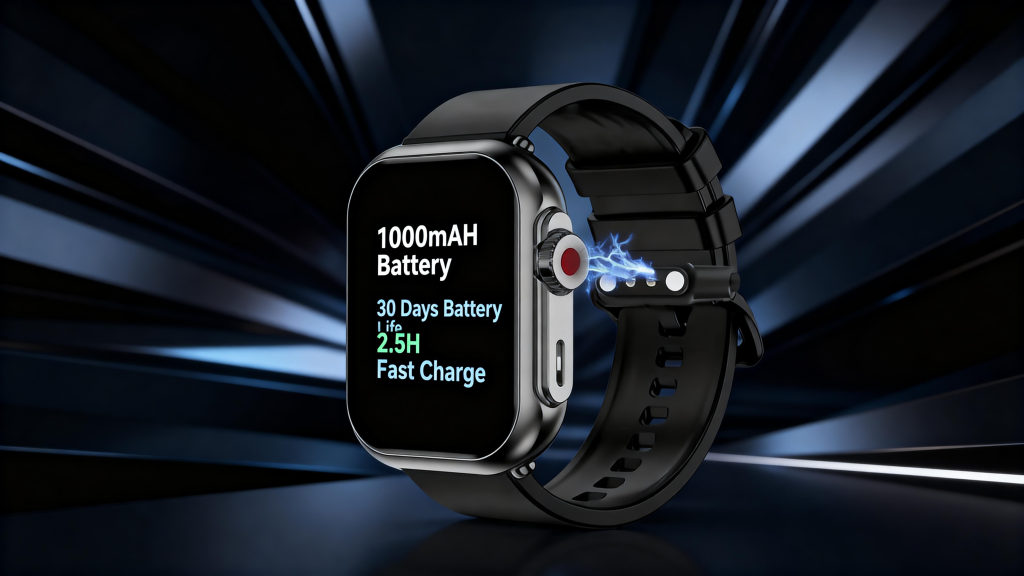
The battery chemistry in budget smartwatches typically utilizes lithium-ion cells with 300-350mAh capacity—smaller than flagship alternatives but sufficient given reduced power demands . Longevity optimization through partial charging (avoiding deep discharge below 15%) can extend cell lifespan by 2-3 years, addressing concerns about disposable electronics sustainability .
Smart Features and Connectivity: Essential Integration
Notifications, Calls, and Voice Assistance
While health monitoring dominates marketing narratives, the foundational smartwatch functionality—seamless smartphone integration—determines daily utility for most users. Entry-level devices have refined these capabilities substantially, offering notification management, communication features, and voice assistance that satisfy mainstream requirements without premium complexity.
Notification mirroring from smartphones has achieved reliability in budget smartwatches that matches expensive alternatives. Calls, text messages, calendar alerts, and application notifications transmit via Bluetooth LE with minimal latency, displaying sender information and content previews on wrist screens. The Amazfit GTS 5 Mini and Bip 6 support customizable notification filtering, allowing users to prioritize critical communications while suppressing distracting social media or promotional alerts . Haptic feedback patterns distinguish notification types without visual inspection, enabling discreet awareness during meetings or social situations.
Bluetooth calling capabilities have emerged as a differentiating feature in sub-$100 devices. The Xiaomi Mi Band 8 Pro incorporates a built-in microphone and speaker enabling direct wrist-based conversation . The Amazfit Bip 6 supports Bluetooth call handling, though audio quality reflects price-appropriate microphone and speaker components . These features prove particularly valuable for quick responses when phone access is inconvenient—during cooking, driving, or when phones are buried in bags. Call quality limitations become apparent in noisy environments or extended conversations, but for brief exchanges, wrist-based calling delivers genuine convenience.
Voice assistant integration in budget smartwatches typically leverages smartphone-hosted processing rather than local implementation. Amazon Alexa support appears on Amazfit devices, enabling voice-controlled queries, smart home commands, and information retrieval when paired with phones . Zepp Flow AI assistant—replacing Alexa on newer Amazfit models—offers inconsistent performance but represents ambitious functionality inclusion at budget pricing . Google Assistant and Siri compatibility varies by manufacturer, with broader support on Wear OS devices (though these typically exceed $100) and limited implementation on proprietary platforms.
Music control functionality allows wrist-based playback management without phone retrieval. Play/pause, track skipping, and volume adjustment from watch interfaces support workout continuity and commute convenience. However, standalone music storage and streaming remain rare in sub-$100 devices due to storage and licensing cost constraints. Users seeking phone-free audio during exercise must typically invest in premium alternatives or utilize separate MP3 devices.
Third-party application ecosystems represent the most significant capability gap between entry-level and flagship smartwatches. Budget devices universally lack app stores, restricting functionality to manufacturer-installed features and companion app integrations. This limitation eliminates possibilities for specialized applications—Strava detailed analysis, Spotify offline playlists, navigation beyond basic GPS tracking, payment systems beyond NFC in select markets. For users whose requirements center on health monitoring, notifications, and basic connectivity, this constraint proves acceptable. Those seeking comprehensive smartphone extension must either accept premium pricing or utilize phone-based alternatives for advanced functions.
Smart home integration varies by platform. Amazfit devices with Alexa support control compatible smart home devices through voice commands. Xiaomi’s ecosystem integration enables Mi Band users to interact with extensive Xiaomi smart home product lines. However, cross-platform compatibility—controlling Google Home or Apple HomeKit devices from budget watches—remains limited, reflecting ecosystem fragmentation that affects all price tiers but particularly constrains affordable options lacking development resources for broad integration.
Durability and Design: Surprising Quality at Modest Prices
Materials, Water Resistance, and Longevity
The physical construction of entry-level smartwatches has improved substantially, with manufacturers recognizing that durability perceptions significantly influence purchase confidence and satisfaction. While premium materials remain the province of expensive devices, budget options now offer construction quality that withstands daily rigors and active lifestyles.
Water resistance ratings have standardized at 5ATM (50 meters) across reputable sub-$100 smartwatches, enabling swimming, showering, and water sport participation without damage concerns . The Fitbit Inspire 3, Amazfit Bip 5, and Xiaomi Mi Band 8 Pro all carry this certification, though manufacturers typically exclude diving and high-velocity water sports from warranty coverage. IP68 ratings—indicating dust tightness and water submersion resistance—provide equivalent protection with different certification methodologies . These ratings represent genuine capability improvements from earlier generations where “splash resistance” provided minimal protection.
Case materials in budget smartwatches span aluminum alloys, high-grade plastics, and stainless steel depending on specific model positioning. The Amazfit Active 2 utilizes stainless steel cases that project premium aesthetics despite sub-$100 pricing . The Amazfit Bip 6 upgraded from all-plastic construction to aluminum alloy frames, substantially improving perceived quality . Plastic chassis—exemplified by the Bip 6’s construction—reduce weight and cost while maintaining structural integrity for normal use, though they show wear more readily than metal alternatives.
Display protection typically employs chemically strengthened glass rather than sapphire crystal or advanced composites found in premium devices. This compromise requires user awareness—budget smartwatches benefit from screen protector application and avoidance of abrasive contact. However, the cost differential (sapphire add $50-100 to device pricing) makes this trade-off rational for price-sensitive consumers willing to exercise moderate care.
Strap systems have standardized around quick-release mechanisms compatible with 20mm or 22mm third-party bands, enabling extensive customization at minimal cost . Silicone sport bands ship standard, suitable for exercise and water exposure. Leather, metal link, and nylon alternatives from third-party manufacturers ($8-15) transform device appearance for professional or formal contexts . This ecosystem flexibility allows single-device versatility across activity contexts that would require multiple traditional watches.
Weight optimization characterizes budget smartwatch design, with devices like the Xiaomi Mi Band 8 Pro achieving 38-gram mass that enables comfortable 24/7 wear including sleep tracking . Lighter construction reduces wrist fatigue during extended exercise and minimizes sleep disruption compared to heavier premium alternatives. The trade-off typically involves reduced battery capacity, though efficient power management maintains acceptable endurance despite smaller cells.
Longevity expectations for entry-level smartwatches realistically span 2-3 years under normal use . Battery degradation, software support discontinuation, and physical wear eventually necessitate replacement. However, the total cost of ownership remains favorable compared to premium devices with similar lifespans but substantially higher initial investment. Manufacturers providing firmware updates beyond 18 months—Amazfit and Fitbit demonstrate better track records than ultra-budget alternatives—extend practical utility and security.
Software Platforms and Ecosystem Integration
Zepp OS, Fitbit, and the Efficiency Imperative
The operating systems powering entry-level smartwatches have been engineered specifically for resource-constrained environments, delivering functional richness without demanding flagship-level hardware. This software optimization represents a key enabler of budget device capability, allowing sophisticated features to run smoothly on modest processors with limited memory.
Zepp OS, developed by Zepp Health (formerly Huami) for Amazfit devices, exemplifies efficient wearable operating system design. The platform minimizes background processes that drain battery and degrade performance, enabling responsive interfaces on hardware that would struggle with general-purpose operating systems . Version 3.5 introduces offline weather capabilities, voice assistant support, and enhanced notification management while maintaining the efficiency that enables 14-day battery life . The companion Zepp application provides comprehensive data visualization, workout analysis, and device configuration across iOS and Android platforms.
Fitbit’s embedded platform prioritizes health data presentation and user accessibility. The interface emphasizes simplicity over complexity, making wellness information comprehensible for demographics less comfortable with technology complexity . Fitbit Premium integration—typically including 6 months complimentary access with device purchase—provides advanced analytics, guided programs, and historical trend analysis that add value beyond hardware capabilities. However, Google’s ownership has introduced uncertainty regarding long-term platform direction and device support commitments.
Xiaomi’s proprietary firmware for Mi Band devices leverages the company’s extensive ecosystem integration. Seamless pairing with Xiaomi smartphones enables enhanced functionality, while cross-platform compatibility maintains basic features for iOS and other Android devices. The Zepp app (formerly Mi Fit) provides unified management for Xiaomi and Amazfit devices, simplifying multi-device households .
Samsung’s Tizen-based OS for Galaxy Fit devices offers polished interfaces and Samsung ecosystem integration, though functionality diminishes when paired with non-Samsung phones . The rotating bezel navigation—unique to Samsung devices—provides intuitive interaction that distinguishes the platform from touch-only alternatives.
Companion application quality significantly impacts budget smartwatch utility. Zepp Health and Fitbit applications receive generally positive reviews for data visualization and usability, though occasional connectivity glitches and synchronization delays affect user experience . Third-party application limitations—restricted notification support for email clients and productivity tools on some Xiaomi devices, for example—represent compromises that prospective buyers should verify against specific requirements .
Software update frequency and duration vary substantially between manufacturers. Amazfit and Fitbit demonstrate commitment to extended support, providing firmware updates addressing bugs, security vulnerabilities, and feature enhancements for 2-3 years post-release. Ultra-budget alternatives from lesser-known brands frequently cease updates within 12-18 months, leaving devices vulnerable to compatibility issues with evolving smartphone operating systems . This support variation justifies modest price premiums for established brands with demonstrated track records.
Market Landscape and Competitive Dynamics
The Brands Redefining Affordable Wearables
The entry-level smartwatch market has consolidated around several dominant players whose manufacturing scale, supply chain control, and software development capabilities enable quality delivery at aggressive pricing. Understanding these competitive dynamics helps consumers navigate options and identify reliable purchases.
Amazfit (Zepp Health) has established market leadership in the sub-$100 category through relentless feature inclusion and pricing aggression. The Bip series—evolving from the original Bip through Bip 5 to the current Bip 6—demonstrates iterative improvement maintaining price positioning while adding capabilities like AMOLED displays, offline maps, and AI assistants . The Active series targets style-conscious consumers with stainless steel construction and comprehensive sports modes at $99 price points . Manufacturing scale derived from Xiaomi partnership and extensive Chinese market presence enables cost structures that Western competitors cannot match.
Xiaomi’s Mi Band series—now in its 8th generation with Pro variants—represents perhaps the purest expression of budget wearable philosophy. Starting at $44.99 for the standard Mi Band 9 and extending to $69.90 for the GPS-equipped 8 Pro, these devices prioritize core functionality refinement over feature expansion . HyperBeat heart rate optimization, dual-band GPS, and built-in calling demonstrate capability ambition despite minimalist pricing. Xiaomi’s ecosystem integration and manufacturing efficiency sustain margins at price points where competitors struggle to operate profitably.
Fitbit (Google) occupies a distinctive position emphasizing health monitoring credibility over specification maximization. The Inspire 3 at $95.95 leverages decades of wellness research and FDA-cleared sensor implementations to justify modest pricing premiums over Asian competitors . Medical-grade PPG sensors, EDA stress monitoring, and comprehensive sleep analysis appeal to health-focused consumers less sensitive to absolute price minimization. However, platform uncertainty following Google acquisition and Premium subscription dependencies create competitive vulnerabilities.
Samsung’s Galaxy Fit 3 at $89.99 offers polished industrial design and ecosystem integration for Android users, particularly those within Samsung’s device constellation . The rotating bezel navigation and Tizen-based OS provide differentiation, though iOS compatibility limitations and higher pricing relative to specification-rich Chinese alternatives constrain market share expansion.
Emerging players including Noon (Solar Pro 2026 at $94.99 with solar charging and 28-day battery) and Tinymoose demonstrate innovation possibilities for smaller manufacturers targeting specific use cases . Solar charging, extreme battery optimization, and specialized outdoor features provide differentiation that challenges mass-market leaders in specific segments.
The competitive pressure from these established and emerging brands has driven capability expansion that benefits consumers regardless of specific selection. Features introduced as differentiators rapidly become category standards as competitors respond. The AMOLED display transition—pioneered by Amazfit and rapidly adopted by Xiaomi and others—exemplifies this dynamic, with 2026 budget devices universally offering screen quality that would have commanded $200+ pricing two years prior.
Practical Selection Guidance: Matching Features to Needs
Optimizing Value for Specific Use Cases
Navigating the entry-level smartwatch landscape requires honest assessment of individual requirements against available capabilities. The following framework guides feature prioritization for common use scenarios, enabling informed trade-off decisions that maximize satisfaction within budget constraints.
For First-Time Smartwatch Adopters: Prioritize ecosystem compatibility and ease of use over specification maximization. The Fitbit Inspire 3 offers intuitive interfaces and comprehensive health tracking that introduce wearable utility without overwhelming complexity. Amazfit Bip 6 provides similar accessibility with extended battery life that reduces charging burden for users unaccustomed to daily device management. Avoid feature-rich options with complex interfaces that may discourage consistent use during adaptation periods.
For Dedicated Fitness Enthusiasts: GPS functionality becomes essential for accurate outdoor activity tracking without phone dependency. The Amazfit Bip 6 and Xiaomi Mi Band 8 Pro offer built-in satellite positioning that supports running, cycling, and hiking route recording . Heart rate accuracy during high-intensity exercise remains a budget limitation—serious athletes should consider chest strap pairing options available on some Amazfit models or accept reduced precision for cost savings . Sport mode variety matters less than automatic detection reliability for common activities.
For Health Monitoring Focus: Medical-grade sensor implementations justify modest price premiums. The Fitbit Inspire 3’s FDA-cleared ECG (via firmware update), EDA stress monitoring, and clinically validated sleep staging provide credibility that generic alternatives lack . Continuous SpO2 monitoring suits respiratory health concerns, while HRV tracking enables recovery and readiness assessment. Prioritize manufacturers with health research investments and regulatory clearances over specification maximization.
For Extended Outdoor Use: Battery endurance and durability dominate requirements. The Noon Solar Pro 2026’s solar charging and 28-day battery suit multi-day backpacking and off-grid activities . The Garmin Vivomove Sport’s five-month endurance in hybrid mode eliminates charging logistics for expedition use . Offline maps on Amazfit Bip 6 support navigation without cellular connectivity . Water resistance and temperature tolerance ensure environmental resilience.
For Professional and Formal Contexts: Design aesthetics and notification discretion prove paramount. The Amazfit Active 2’s stainless steel construction and classic watch face options project appropriate professionalism . Customizable bands enable context-appropriate appearance transformation. Silent notification handling through vibration patterns maintains meeting etiquette. Avoid overtly sporty designs with bright colors and bulky construction that clash with professional attire.
For Children’s Use: Durability, location tracking, and communication simplicity guide selection. While dedicated children’s smartwatches exist outside this analysis’s scope, budget fitness bands like Xiaomi Mi Band offer robust construction and basic communication capabilities suitable for older children. Parental monitoring through companion apps provides oversight without invasive surveillance. Battery life extending beyond school weeks reduces management burden.
For Budget Maximization: The Xiaomi Mi Band 9 at $44.99 delivers core functionality—accurate health tracking, reliable notifications, extended battery—that satisfies general requirements for minimal investment . Accepting proprietary charging and limited ecosystem integration enables substantial savings with minimal capability sacrifice. This approach suits uncertain adoption commitment or gift purchasing where recipient preferences remain unknown.
Limitations and Trade-Offs: Honest Assessment
Where Budget Devices Fall Short
Responsible consumer guidance requires acknowledgment of entry-level smartwatch limitations. These constraints, while acceptable for many users, may prove decisive deal-breakers for specific requirements that justify premium investment.
Medical Accuracy Limitations: While budget devices provide valuable health trend data, they lack diagnostic precision required for medical decision-making. Heart rate accuracy degrades during irregular motion, atrial fibrillation detection remains algorithmic rather than clinical, and blood oxygen readings serve wellness awareness rather than respiratory diagnosis. Users requiring medical-grade monitoring for health conditions should consult healthcare providers regarding appropriate device selection, potentially requiring prescription-grade alternatives.
Application Ecosystem Absence: The inability to install third-party applications fundamentally constrains budget smartwatch utility. No Spotify offline playback, no Strava detailed segment analysis, no navigation beyond basic GPS tracking, no payment systems in most implementations (NFC variants command $30+ premiums) . Users whose workflows depend on specific applications must either accept phone dependency or invest in premium platforms supporting app installation.
Construction Durability: Plastic chassis, standard glass rather than sapphire crystal, and basic water resistance ratings (5ATM excludes diving and high-velocity water sports) impose care requirements that premium devices minimize. Budget smartwatches suit normal daily use and recreational swimming but may not withstand extreme sports, industrial environments, or careless handling that premium materials tolerate.
Software Support Duration: Entry-level devices typically receive firmware updates for 18-24 months versus 4-5 years for flagship alternatives . Eventually, compatibility with evolving smartphone operating systems degrades, security vulnerabilities emerge unpatched, and feature stagnation occurs. This planned obsolescence suits rapid technology cycling but frustrates users seeking extended utility from initial investment.
Display and Interaction Limitations: Smaller screens, reduced brightness compared to premium AMOLED implementations, and touch responsiveness challenges in wet conditions or glove use constrain interaction quality. Always-on display functionality, while present, typically reduces battery life more dramatically than in flagship devices with optimized implementations.
Voice Assistant and AI Inconsistency: Budget device voice assistants demonstrate limited comprehension, inconsistent response, and smartphone dependency that undermine utility. The Zepp Flow AI replacement for Alexa on newer Amazfit models receives criticism for unreliable performance . Users should view these features as experimental bonuses rather than core functionality dependencies.
The Democratization of Wearable Technology
The entry-level smartwatch category in 2026 delivers capabilities that would have seemed fantastical for $100 devices just years ago. AMOLED displays, two-week battery life, built-in GPS, comprehensive health monitoring, and reliable smartphone integration now define standard expectations rather than premium exclusivity. This democratization reflects manufacturing maturation, component cost reduction, and software optimization that collectively enable quality experiences at accessible pricing.
For consumers, this evolution presents genuine alternatives to premium investment. The calculus has shifted from “what must I sacrifice for affordability?” to “what specific advanced capabilities justify premium pricing for my requirements?” For millions of users, entry-level devices satisfy all legitimate needs, delivering health awareness, connectivity convenience, and fitness motivation without financial strain.
The competitive dynamics driving this capability expansion show no signs of abating. Amazfit, Xiaomi, and emerging challengers continue pushing feature boundaries downward while established players like Fitbit and Samsung defend positioning through health credibility and ecosystem integration. Consumers benefit regardless of specific selection, with even baseline devices offering functionality that transforms daily life management.
The budget smart watch is no longer a compromise. It has become a legitimate choice—a deliberate selection of value-appropriate capability over specification excess that serves practical requirements without aspirational indulgence. As the category continues maturing, the gap between entry-level and premium experiences will further narrow, potentially redefining market segmentation and pricing structures across the entire wearable industry.
For those considering first-time smartwatch adoption, replacing aging devices, or seeking capable gifts without premium expenditure, the current entry-level landscape offers unprecedented opportunity. The features examined in this analysis—display quality, health monitoring, battery endurance, smart integration, and durable construction—combine to deliver experiences that genuinely enhance daily life. The smartwatch revolution has finally become accessible to all.
Leave a Comment
Your email address will not be published. Required fields are marked *