
The Art of Pricing in the Age of Wrist Computing
Walk into any electronics retailer in 2026, and you’ll encounter a fascinating paradox. On one shelf, smartwatches priced under $50 promise to track your heart rate, monitor your sleep, and keep you connected to the digital world. On another, devices commanding $1,000 or more offer essentially the same core functions, yet justify their premium through materials, precision, and intangible qualities like brand prestige and ecosystem integration.
This pricing spectrum isn’t arbitrary—it’s the result of sophisticated market segmentation strategies that have evolved over a decade of intense competition. The smartwatch industry has matured from a single-product category into a complex ecosystem where brands deliberately position themselves at specific price points to capture distinct consumer segments, each with unique needs, expectations, and willingness to pay.
Understanding these positioning strategies matters whether you’re a consumer navigating purchase decisions, a retailer optimizing inventory, or an industry observer tracking competitive dynamics. The price tag on a smartwatch represents far more than the sum of its components. It reflects research and development investments, regulatory compliance costs, supply chain efficiencies, brand equity, and strategic decisions about which features to include, which to exclude, and how to communicate value to specific audiences.
In 2026, the market has settled into five distinct price tiers, each with its own competitive dynamics and consumer expectations. From the sub-$50 entry-level devices that democratize wearable technology to the $1,000+ luxury offerings that blend centuries-old horological tradition with cutting-edge sensors, every segment serves a purpose in the broader ecosystem. The brands that thrive are those that understand their target segments intimately and resist the temptation to be everything to everyone.
The Five Price Tiers: Mapping the Smart watch Landscape
The contemporary smartwatch market can be understood through five distinct price segments, each representing different value propositions, target demographics, and competitive strategies. These tiers aren’t rigid categories—there’s overlap and movement between them—but they provide a useful framework for understanding how brands approach market positioning.
Tier One: The Entry Level (Under $100)
At the bottom of the market, typically priced between $20 and $100, sits a vibrant ecosystem of budget smartwatches that have democratized access to wearable technology. These devices prove that sophisticated health monitoring and connectivity don’t necessarily require premium pricing, though they inevitably involve compromises in materials, accuracy, and long-term support.
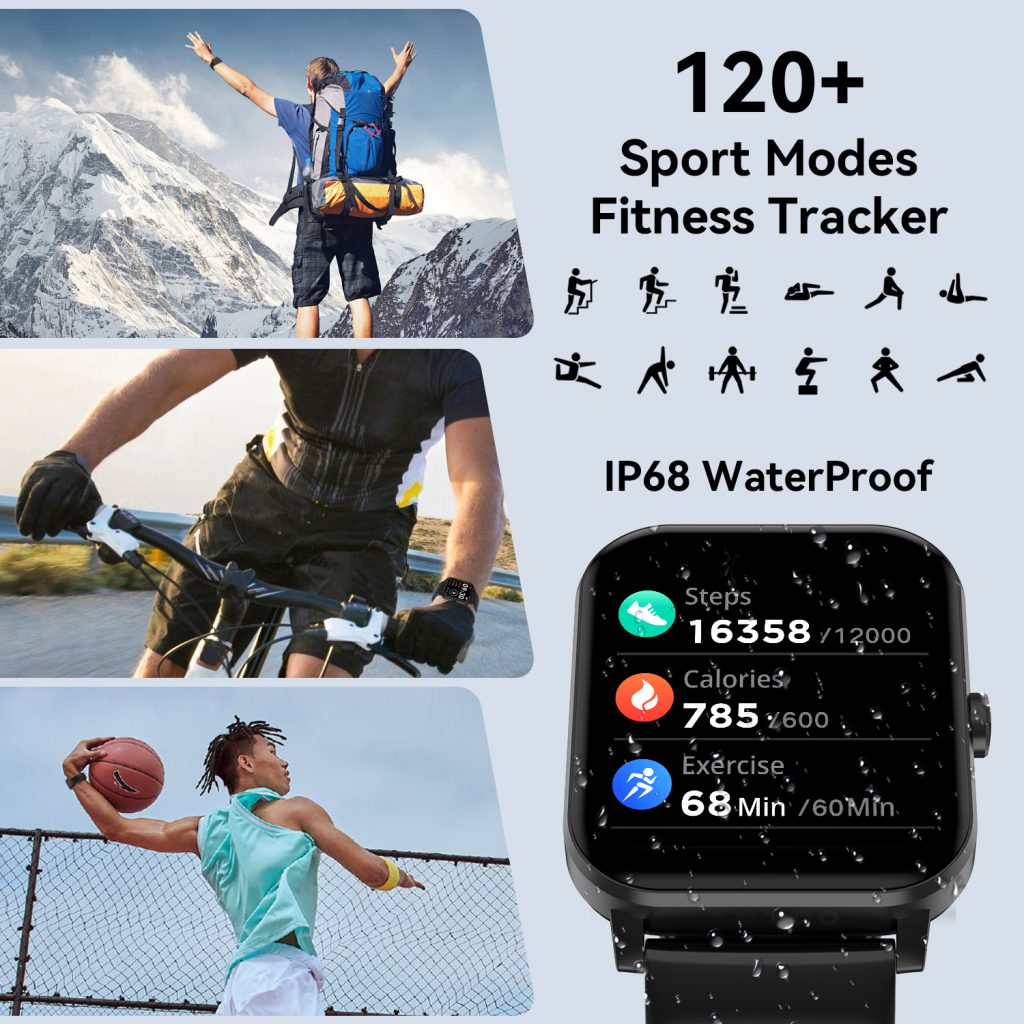
The entry-level segment has evolved remarkably. Early budget smartwatches were essentially digital toys—unreliable step counters with poor battery life and frustrating user interfaces. Today’s sub-$100 offerings, from brands like Amazfit, Xiaomi, and various white-label manufacturers, deliver genuinely useful functionality. Heart rate monitoring, sleep tracking, multiple sports modes, and even GPS capabilities have become standard features at price points that would have seemed impossible five years ago.The positioning strategy here is straightforward: maximum functionality at minimum cost. Brands competing in this space focus on specification sheets, emphasizing feature counts over refinement. A typical entry-level smartwatch might offer 50+ sports modes, 7-14 day battery life, and IP68 water resistance—specifications that match or exceed premium devices in specific dimensions. The trade-offs appear in sensor accuracy, build quality, software polish, and long-term viability.
Consumer psychology in this segment is distinctly practical. Buyers are often first-time smartwatch users, price-sensitive consumers, or those seeking secondary devices for specific use cases like children’s tracking or gym workouts. The purchase decision is driven by value perception—getting the most features per dollar rather than brand prestige or ecosystem integration.
The business model relies on volume manufacturing and minimal after-sales support. These devices are designed to be replaced rather than repaired, with limited software update commitments and basic warranty coverage. For manufacturers, success means achieving massive scale through online retail channels, often leveraging direct-to-consumer models that eliminate traditional retail markups.
Tier Two: The Accessible Mid-Range ($100-$200)
The $100-$200 bracket represents the most competitive battleground in the smartwatch market. This is where mainstream consumers enter the ecosystem, where feature sets expand meaningfully, and where brand reputation begins to influence purchase decisions beyond pure specifications.
Samsung’s Galaxy Watch FE, priced around $176, exemplifies this segment’s positioning. It offers nearly the full suite of Samsung’s health monitoring capabilities—heart rate tracking, sleep analysis, body composition measurement, and automatic workout detection—while making strategic compromises in display size, processor speed, and materials to hit the price point. The value proposition is clear: access to a major brand’s ecosystem and health algorithms at roughly half the cost of their flagship models.
This segment also sees significant activity from Chinese manufacturers seeking to move upmarket. Amazfit’s higher-end models, Xiaomi’s premium lines, and emerging brands like Noise in India occupy this space with aggressive feature sets and competitive pricing. The strategy involves offering specifications that match or exceed premium brands while undercutting them significantly on price, appealing to savvy consumers who research extensively before purchasing.
The mid-range positioning requires careful balance. Manufacturers must include enough premium features to justify the price increase over entry-level devices while maintaining sufficient differentiation from their own flagship products. This often results in “good enough” implementations of advanced features—functional ECG monitoring, for instance, but without the regulatory clearances and medical-grade accuracy of premium offerings.
Consumer behavior in this segment reflects growing sophistication. Buyers have typically researched extensively, comparing specification sheets and reading reviews. They’re willing to pay more for proven reliability and brand reputation but remain sensitive to value propositions. The purchase represents a commitment to wearable technology—an investment in a device intended for daily use over several years.
Tier Three: The Premium Mainstream ($200-$400)
The $200-$400 range represents the heart of the smartwatch market, where flagship devices from major brands compete for mainstream consumers seeking the best balance of features, performance, and price. This is where Apple positions its entry-level Series models, where Samsung deploys its Galaxy Watch standard editions, and where Garmin offers its versatile Venu and Forerunner series.
Apple’s positioning in this tier is particularly instructive. The Apple Watch Series 10, now available around $329 following the Series 11 launch, offers nearly the complete Apple Watch experience: comprehensive health monitoring, seamless iPhone integration, access to the vast app ecosystem, and the prestige of the Apple brand. The strategic limitation is battery life—typically 18 hours—requiring daily charging that excludes some use cases like multi-day hiking or sleep tracking without charging interruptions.
Samsung’s Galaxy Watch 7 and 8 series occupy similar positioning in the Android ecosystem. These devices represent the full realization of Samsung’s wearable vision: bright AMOLED displays, sophisticated BioActive sensors combining multiple health metrics, Wear OS integration with Google services, and refined industrial design. The pricing, typically $300-$400 depending on size and connectivity options, reflects the cost of premium materials, regulatory compliance for health features, and substantial R&D investments.
Garmin’s approach in this tier differs significantly. Rather than competing directly with Apple and Samsung on smart features, Garmin positions its $300-$400 devices as specialized tools for serious athletes and outdoor enthusiasts. The Forerunner series and Venu models offer exceptional battery life—often 5-7 days—superior GPS accuracy, and sport-specific metrics that justify premium pricing over budget alternatives despite less polished smartwatch functionality.
The consumer profile in this segment is diverse but shares common characteristics: these buyers view their smartwatch as an essential daily tool rather than a novelty. They’re willing to pay for reliability, accuracy, and integration with their existing digital lives. The purchase decision involves evaluating ecosystem fit, specific feature needs, and long-term value rather than impulse buying.
Tier Four: The Professional/Enthusiast Tier ($400-$800)
Above the mainstream premium tier sits a specialized segment targeting professionals, serious athletes, and technology enthusiasts who demand uncompromising performance. This is where Apple positions its Watch Ultra series, where Garmin offers its Fenix and Epix lines, and where specialized brands like TAG Heuer and Montblanc enter the conversation.
The Apple Watch Ultra 2, priced at $549
, demonstrates how Apple extends its ecosystem into professional use cases. The titanium case, sapphire crystal display, dual-frequency GPS, and extended battery life—up to 36 hours in normal use, 72 hours in low power mode—transform the Apple Watch from a daily companion into a legitimate tool for diving, hiking, and endurance sports. The positioning emphasizes durability and capability without sacrificing the ecosystem integration that defines the Apple Watch experience.
Garmin’s Fenix 8 series, starting around $999 and reaching $1,199 for advanced models, represents the pinnacle of GPS watch engineering. These devices are positioned as essential tools for professionals whose activities demand reliable navigation, extended battery life, and environmental resistance. The pricing reflects not just materials and manufacturing costs but the specialized software development, mapping data licensing, and regulatory compliance required for professional-grade outdoor tools.
This segment also includes luxury fashion brands attempting to bridge traditional horology with smart technology. TAG Heuer’s Connected series and Montblanc’s Summit line, typically priced $1,000-$2,000, emphasize materials—titanium cases, sapphire crystals, hand-finished leather straps—and design heritage over pure technical specifications. The positioning targets consumers who view their watch as much as a fashion accessory and status symbol as a functional device.
Consumer psychology here is distinctly different from lower tiers. Buyers are often enthusiasts or professionals who understand exactly what they need from their devices. Price sensitivity is lower, but expectations for performance, durability, and specialized functionality are correspondingly higher. The purchase represents an investment in a tool that will be used intensively in challenging conditions.
Tier Five: The Ultra-Premium/Luxury Segment ($800+)
At the apex of the market, prices extend beyond $1,000 and can reach several thousand dollars for limited editions or precious metal variants. This segment serves multiple distinct purposes: professional-grade tools for extreme environments, luxury fashion statements, and collector’s items that happen to include smart functionality.
Garmin’s Fenix 8 Pro, with its Micro-LED display variant priced up to $1,999, represents the technical extreme. The 4,500-nit brightness display, satellite connectivity for emergency communication, and advanced training metrics position this as essential equipment for professionals operating in remote or dangerous environments. The pricing reflects genuine technological differentiation—Micro-LED manufacturing remains extremely expensive—and the life-safety applications that justify premium costs.
The luxury fashion positioning in this tier operates by different rules. A $3,000 TAG Heuer Connected or Hublot smartwatch doesn’t compete on specifications with a $400 Apple Watch. Instead, it offers exclusivity, craftsmanship, and the heritage of mechanical watchmaking applied to digital technology. The target consumer already owns traditional luxury watches and views these smart offerings as extensions of their collection rather than replacements for them.
This segment also sees experimental and limited-edition positioning. Titanium-cased Apple Watch Ultras with specialized bands, Samsung’s designer collaborations, and concept pieces from traditional watchmakers test market appetite for ultra-premium smartwatches. These limited runs serve marketing purposes—generating media attention and brand prestige—even when direct profitability is uncertain.
Strategic Positioning: How Brands Choose Their Battlegrounds
The price tier a brand occupies isn’t accidental—it’s the result of deliberate strategic decisions about target markets, competitive advantages, and long-term business models. Examining how specific brands position themselves reveals the logic behind their pricing strategies.
Apple: The Ecosystem Premium
Apple’s pricing strategy is perhaps the most studied and emulated in the technology industry. The company maintains premium positioning across all tiers while creating clear differentiation between entry, mid, and high-end offerings. The Apple Watch SE 3, positioned around $219-$249, offers the core Apple Watch experience—iOS integration, health tracking, App Store access—while limiting advanced sensors and materials. The Series 11, at $399-$499, adds comprehensive health monitoring including blood oxygen, ECG, and temperature sensing. The Ultra series, starting at $799, extends capabilities for professional use cases.
This tiered approach serves multiple strategic purposes. It captures price-sensitive consumers who want Apple ecosystem access without flagship pricing. It creates upgrade pathways—SE owners who embrace the Apple Watch experience often move to Series models, while Series users occasionally upgrade to Ultra for specific needs. Most importantly, it maintains Apple’s premium brand positioning without excluding mainstream consumers.
The pricing power Apple commands—maintaining margins that would be impossible for competitors—stems from ecosystem lock-in. Once a consumer owns an iPhone, AirPods, and perhaps a Mac or iPad, the Apple Watch becomes the obvious choice regardless of price comparison with Android-compatible alternatives. This ecosystem integration justifies premium pricing that independent brands cannot match.
Samsung: The Android Flagship
Samsung’s positioning strategy mirrors Apple’s in structure but differs in competitive context. As the leading Android smartwatch manufacturer, Samsung must balance differentiation from Apple with competition from other Android manufacturers and price pressure from Chinese brands.
The Galaxy Watch FE, at approximately $176, serves as Samsung’s entry point. It offers the essential Wear OS experience, Samsung Health integration, and core smartwatch functionality while making visible compromises in display size and processor performance. This positioning captures budget-conscious Android users and serves as an upgrade path from fitness bands.
The standard Galaxy Watch series, priced $300-$400, represents Samsung’s mainstream flagship. These devices showcase Samsung’s manufacturing capabilities—Super AMOLED displays developed in-house, BioActive sensors combining multiple health metrics, and refined industrial design. The pricing reflects genuine technical differentiation while remaining accessible to mainstream consumers.
The Galaxy Watch Ultra, positioned around $600-$700, extends Samsung’s reach into professional and enthusiast markets. With titanium construction, enhanced durability ratings, and extended battery life, it challenges Apple’s Ultra series while maintaining Android ecosystem compatibility.
Samsung’s positioning advantage lies in vertical integration. As a manufacturer of displays, processors, and memory, Samsung can achieve cost structures that pure assemblers cannot match. This allows competitive pricing at premium quality levels, though the company must constantly defend against Chinese manufacturers offering similar specifications at lower prices.
Garmin: The Specialist Premium
Garmin occupies a unique position in the smartwatch market, deliberately avoiding direct competition with Apple and Samsung in the general-purpose smartwatch space while commanding premium prices for specialized devices. The company’s positioning strategy rests on three pillars: exceptional battery life, superior GPS accuracy, and sport-specific functionality that justifies premium pricing over generalist competitors.
In the $300-$400 range, Garmin’s Venu and Forerunner series offer specialized alternatives to mainstream smartwatches. These devices sacrifice app ecosystem breadth and smart assistant integration for battery life measured in days rather than hours, GPS accuracy that approaches professional equipment, and training metrics developed through partnerships with sports scientists.
The $600-$1,000+ Fenix and Epix series represent Garmin’s flagship positioning. These are not marketed as smartwatches in the traditional sense but as “multisport GPS watches” or “outdoor recreation devices.” The terminology matters—Garmin positions these as professional tools rather than lifestyle accessories, justifying prices that exceed Apple and Samsung flagships despite less polished general-purpose functionality.
Garmin’s pricing power stems from genuine technical differentiation in areas that matter to its target market. The company’s GPS expertise, developed through decades of aviation and marine navigation products, translates into consumer wearables with accuracy that generalist manufacturers struggle to match. The battery life achieved through efficient software and purpose-built hardware enables use cases—multi-day hiking, ultramarathon racing, extended sailing—that are simply impossible with mainstream smartwatches.
Chinese Brands: The Value Disruptors
Xiaomi, Amazfit, Huawei, and emerging brands like Noise have fundamentally disrupted smartwatch pricing through aggressive positioning strategies that prioritize specification-to-price ratios over brand premium or ecosystem integration.
Amazfit’s approach exemplifies this strategy. Devices like the Bip U Pro, priced under $100, offer built-in GPS, Amazon Alexa integration, heart rate and blood oxygen monitoring, and 60+ workout modes—specifications that match $300+ devices from established brands. The positioning targets specification-focused consumers who compare feature lists and are willing to sacrifice brand reputation and ecosystem integration for tangible capabilities.
Xiaomi leverages its massive smartphone user base—over 800 million active users globally—to drive smartwatch adoption through aggressive bundling and ecosystem pricing. Smartwatches are positioned as natural extensions of Xiaomi phones, often sold at minimal margins to lock users into the broader ecosystem where profitability is achieved through services and accessories.
The Indian brand Noise demonstrates how local positioning can challenge global giants. By focusing on offline distribution in tier-2 cities and pricing specifically for the Indian market, Noise captured 26% market share despite competing against much larger international brands. The positioning emphasizes local preferences—regional language support, cricket tracking, price points accessible to emerging middle-class consumers.
These value-positioned brands face ongoing challenges in moving upmarket. While they dominate entry-level and mid-range segments, premium positioning requires brand building and ecosystem development that takes years and substantial investment. The risk is permanent confinement to low-margin, high-volume segments while competitors capture the profitable premium market.
Feature Differentiation: What You Get at Each Price Point
Understanding what features are realistically available at different price points helps consumers make informed decisions and reveals how manufacturers allocate costs across their product lines.
Display Technology: From LCD to Micro-LED
The display represents one of the most significant cost drivers and quality differentiators in smartwatch manufacturing. At the entry level, LCD or basic TFT panels provide acceptable visibility indoors but struggle with brightness and viewing angles. These displays consume more power than advanced alternatives, contributing to the paradoxical situation where budget watches sometimes achieve better battery life than premium models—by simply keeping the screen off or dim most of the time.
The mid-range and premium mainstream tiers have standardized on AMOLED technology, which now accounts for 68.46% of 2025 shipments. These displays offer vibrant colors, deep blacks, and excellent outdoor visibility while enabling always-on functionality without excessive battery drain. The cost of AMOLED panels has dropped below $12, making them accessible even in sub-$150 devices, though quality and calibration vary significantly between budget and premium implementations.
At the ultra-premium tier, Micro-LED technology is emerging as the next frontier. With brightness reaching 4,500 nits—compared to 1,000-2,000 nits for premium AMOLED—and 30% lower power consumption, Micro-LED enables new use cases in extreme lighting conditions. However, manufacturing challenges limit this technology to devices priced $1,000 and above, with Garmin’s Fenix 8 Pro Micro-LED variant representing the current state of the art.
Health Monitoring: From Basic Tracking to Medical Grade
Health monitoring capabilities show perhaps the clearest progression across price tiers, though the relationship between price and accuracy is not always linear.
Entry-level devices typically offer optical heart rate monitoring, step counting, and basic sleep stage detection. These features are functional for casual users but often lack the accuracy and consistency required for serious health management. The sensors and algorithms at this tier prioritize low cost over clinical validation.
The $200-$400 mainstream premium tier introduces more sophisticated health monitoring: continuous heart rate with higher sampling rates, blood oxygen saturation (SpO2) monitoring, stress tracking through heart rate variability, and increasingly accurate sleep stage detection. Apple’s Series watches and Samsung’s Galaxy Watch series have received FDA clearances for specific features like ECG monitoring and irregular rhythm notifications, representing genuine medical-grade capabilities.Professional-tier devices from Garmin and specialized brands add sport-specific health metrics: lactate threshold estimation, training load balance, recovery time recommendations, and altitude acclimatization tracking. These features require extensive research partnerships and algorithm development that justifies premium pricing.
The highest tier introduces experimental and emerging health technologies. Continuous glucose monitoring partnerships, hydration tracking, and blood pressure estimation are appearing in premium devices, though regulatory approval and clinical validation remain ongoing challenges.
Battery Life: The Compromise Everyone Faces
Battery life represents the most persistent trade-off in smartwatch design, and pricing strategies reflect different approaches to this challenge.
Entry-level devices often achieve impressive battery life—7-14 days—by limiting functionality, using efficient but basic displays, and minimizing always-on features. The Amazfit Neo Retro, for example, offers 28-day battery life by combining a retro LCD display with minimal smart features.Mainstream premium devices typically require daily or every-other-day charging. The Apple Watch Series models achieve approximately 18 hours of mixed use, while Samsung’s Galaxy Watch series offers around 26-30 hours with always-on display enabled. This limitation is accepted by users who prioritize comprehensive smart features and health monitoring over extended battery life.
The professional tier inverts this compromise. Garmin’s Fenix series offers 7-14 days in smartwatch mode and 40-60 hours with continuous GPS tracking. Apple Watch Ultra models achieve 36-72 hours depending on usage modes. This extended battery life justifies premium pricing for users who genuinely need multi-day functionality, though it requires sacrifices in display brightness, app ecosystem, or processor performance.
Materials and Durability: From Plastic to Titanium
Build quality and materials represent significant cost drivers that correlate strongly with price positioning.
Entry-level and budget mid-range devices typically use polycarbonate cases, silicone straps, and mineral glass displays. These materials keep costs down and weights low but show wear over time and offer limited protection against serious impacts.
The $300-$400 premium tier introduces aluminum and stainless steel cases, Gorilla Glass or sapphire crystal displays, and more refined strap options including leather and metal. These materials enhance durability and aesthetics while maintaining reasonable weight.
Professional and ultra-premium devices employ titanium cases, sapphire crystal displays, and specialized strap materials designed for extreme conditions. The Garmin Fenix 8’s titanium with sapphire crystal configuration
or Apple Watch Ultra’s titanium case represent genuine material differentiation that justifies pricing for users who subject their watches to challenging environments.
Consumer Psychology: Why We Pay What We Pay
Understanding the psychological factors that influence smartwatch purchasing decisions reveals why pricing strategies succeed or fail across different segments.
The Value-Seeking Majority
The largest consumer segment prioritizes value—defined as useful features at acceptable prices—over brand prestige or cutting-edge technology. These buyers research extensively, read reviews, and compare specification sheets before purchasing. They’re attracted to mid-range devices that offer “80% of the flagship experience at 50% of the price.”
This psychology explains the success of Samsung’s Galaxy Watch FE, Apple’s Watch SE series, and Chinese brands like Amazfit. These devices target consumers who want legitimate smartwatch functionality without paying for marginal improvements they won’t use.
The positioning challenge for brands is convincing these consumers that mid-range devices are genuinely sufficient. This requires careful feature differentiation—excluding capabilities that would cannibalize flagship sales while including enough functionality to satisfy mainstream needs.
The Ecosystem Loyalist
A significant segment purchases smartwatches primarily based on smartphone ecosystem compatibility. iPhone owners overwhelmingly choose Apple Watches despite sometimes superior specifications or lower prices from Android-compatible alternatives. Similarly, Samsung phone owners show strong preference for Galaxy Watches.
This psychology creates pricing power for ecosystem leaders. Apple can maintain premium pricing because the alternative—switching to Android for a cheaper watch—is far more expensive and disruptive than paying the Apple premium. Samsung benefits similarly within the Android ecosystem, though to a lesser degree given the fragmentation of Android manufacturers.
The positioning implication is that ecosystem integration becomes a feature worth paying for. Brands invest heavily in seamless pairing, shared health data, and cross-device functionality because these integrations create loyalty that transcends pure price comparison.
The Aspiration Buyer
Luxury smartwatch positioning targets consumers who view their watch as a fashion accessory and status symbol. For these buyers, the $3,000 TAG Heuer or Hublot smartwatch offers value that a $400 Apple Watch cannot—exclusivity, craftsmanship heritage, and social signaling.
This psychology operates differently from technology purchasing. The buyer isn’t evaluating specifications or calculating value-per-feature. They’re purchasing an identity—a statement about taste, success, and appreciation for traditional craftsmanship adapted to modern technology.
The positioning challenge for luxury brands is maintaining credibility in technology while preserving horological heritage. These watches must offer sufficient smart functionality to justify the category while emphasizing materials, design, and exclusivity over pure technical capabilities.
The Professional Investor
Serious athletes, outdoor professionals, and enthusiasts who depend on their watches for safety and performance represent a distinct psychological segment. These buyers evaluate tools based on reliability, accuracy, and capability in specific use cases rather than general smart features.
For this segment, price sensitivity is low relative to functionality requirements. A trail runner training for a 100-mile ultramarathon will pay $1,000 for a Garmin Fenix if it offers the battery life and navigation capabilities necessary for safe training. A diver will invest in a specialized computer watch regardless of cost because it protects their life.
The positioning strategy here emphasizes technical credibility—partnerships with sports science institutions, certifications from professional organizations, and testimonials from recognized athletes. Marketing focuses on use cases and capabilities rather than lifestyle aspiration or ecosystem integration.
Market Dynamics: How Pricing Strategies Are Evolving
The smartwatch pricing landscape is not static. Several emerging trends are reshaping how brands position themselves and how consumers respond to different price tiers.
The Premiumization Shift
Despite economic uncertainties, the smartwatch market is experiencing a premiumization trend. Average selling prices have risen 28% as consumers show willingness to pay more for devices they use daily. This shift benefits established brands with strong premium positioning while challenging budget manufacturers dependent on volume.
The drivers of premiumization include lengthening replacement cycles—as consumers keep watches longer, they’re willing to invest more upfront—and increasing health consciousness following the pandemic. A device that monitors vital signs and potentially detects health emergencies justifies higher investment than a simple notification display.
Brands are responding by elevating their positioning. Features that were premium-exclusive two years ago—AMOLED displays, blood oxygen monitoring, ECG capabilities—are moving downmarket, but new premium features (Micro-LED, advanced AI coaching, medical-grade monitoring) maintain differentiation at the top.
The Subscription Revenue Model
Hardware pricing is increasingly viewed as the entry fee to ongoing service relationships rather than the primary profit center. Apple Fitness+, Garmin Connect subscriptions, and Fitbit Premium convert device purchases into recurring revenue streams.
This model affects positioning strategies in subtle ways. Brands may accept lower hardware margins to maximize installed base, then monetize through services. Alternatively, they may bundle premium services with hardware purchases to justify higher upfront pricing. The long-term implication is that total cost of ownership over several years may exceed the initial purchase price significantly.
The Healthcare Integration Opportunity
As smartwatches gain medical device clearances and integrate with healthcare systems, new pricing models emerge. Remote patient monitoring contracts, insurance incentive programs, and corporate wellness initiatives create B2B revenue streams that complement consumer sales.These integrations may subsidize consumer pricing—health insurers might offer discounted or free smartwatches to members with chronic conditions in exchange for monitoring data. Alternatively, medical-grade features may command premium pricing justified by reimbursement potential and clinical value.
The Sustainability Premium
Environmental consciousness is beginning to influence smartwatch pricing and positioning. The European Union’s Digital Product Passport requirements and similar regulations demand supply chain transparency and product longevity. Brands that can demonstrate sustainable materials, repairable designs, and responsible manufacturing may command pricing premiums from environmentally conscious consumers.
This trend challenges the traditional model of frequent replacement and disposable electronics. Premium positioning may increasingly emphasize longevity—devices built to last years rather than months, with software support extending beyond traditional cycles.
Regional Variations: One Global Market, Many Local Strategies
Pricing strategies that succeed in North America may fail in Asia, and vice versa. Understanding regional market dynamics is essential for global brands and illuminating for consumers comparing options across markets.
North America: The Premium Standard
The North American market, valued at approximately $23 billion in 2026, shows strong preference for established brands and willingness to pay premium prices for ecosystem integration and health features. Apple dominates with roughly 40% market share, while Samsung captures the Android premium segment.
Pricing in this market emphasizes total cost of ownership—consumers evaluate cellular connectivity costs, subscription services, and accessory ecosystems alongside hardware prices. Carrier subsidies and installment plans make even $1,000+ devices accessible through monthly payments.
The professional segment is well-developed, with significant demand for Garmin’s outdoor watches and Apple’s Ultra series. Corporate wellness programs represent a growing B2B channel that influences consumer pricing through bulk purchasing and subsidies.
Europe: Fragmented Preferences
European markets show significant national variation. The UK retains preference for premium brands with 23% regional market share, while Germany and France emphasize corporate wellness integration. Italy shows strong preference for luxury positioning, blending traditional fashion sense with smart functionality.
Regulatory complexity affects pricing strategies. GDPR compliance, medical device regulations, and emerging sustainability requirements (Digital Product Passport) create costs that must be absorbed or passed to consumers. Brands with strong compliance capabilities may gain pricing power over competitors struggling with regulatory complexity.
Asia-Pacific: Volume and Innovation
China’s massive market has spawned domestic giants with unique positioning strategies. Huawei’s HarmonyOS ecosystem offers an alternative to Apple/Google duopoly, with pricing that undercuts comparable international brands while maintaining feature parity. Xiaomi’s aggressive pricing—often sub-$100 for capable devices—drives volume but challenges profitability.
India represents perhaps the most dynamic pricing environment. The rapid rise of local brand Noise, capturing 26% market share through offline distribution in tier-2 cities, demonstrates that pricing strategies must account for distribution channels and local preferences, not just product specifications. The shift from 95% budget segment share to 91% with concurrent growth in the $60-$120 range
indicates emerging middle-class willingness to pay more for quality.
Latin America: Emerging Opportunity
Brazil and Mexico lead regional growth, characterized by strong demand for mid-range devices that balance features with affordability. The market is less ecosystem-locked than North America or Europe, presenting opportunities for brands with strong value positioning.
Healthcare integration represents particular opportunity given regional healthcare access challenges. Remote monitoring capabilities may justify premium pricing in this context, with B2B healthcare partnerships potentially subsidizing consumer costs.
Strategic Recommendations: Choosing Your Position
For consumers navigating this complex landscape, and for industry observers seeking to understand competitive dynamics, several strategic principles emerge from this analysis.
For Budget-Conscious Consumers
The sub-$100 segment offers genuine value for first-time buyers, children’s devices, or secondary use cases. Focus on brands with established reputations for reliability—Amazfit, Xiaomi, and select others—rather than unknown white-label products. Prioritize battery life and basic health tracking over marginal smart features that perform poorly at this tier.
Recognize that entry-level devices have limited lifespans—plan for 1-2 years of useful service rather than long-term investment. Consider these devices as trials to determine whether smartwatch functionality justifies future investment in higher tiers.
For Mainstream Value Seekers
The $200-$400 range offers the strongest value propositions for most consumers. Samsung’s Galaxy Watch FE and standard series, Apple’s Watch SE, and Garmin’s entry-level Forerunner models provide comprehensive functionality without flagship pricing.
Evaluate ecosystem compatibility above pure specifications. An Apple Watch SE provides more value to an iPhone user than a technically superior Android-compatible alternative. Similarly, Samsung watches maximize their potential only within the Samsung/Android ecosystem.
Consider total cost of ownership including cellular connectivity, subscription services, and accessory needs. A $300 watch requiring $10/month cellular service and $80/year fitness subscriptions costs significantly more over three years than the purchase price suggests.
For Enthusiasts and Professionals
Serious athletes, outdoor professionals, and technology enthusiasts should evaluate professional-tier devices based on specific use case requirements rather than general smart features. Garmin’s Fenix series justifies premium pricing for users who genuinely need extended battery life, superior GPS, and sport-specific metrics. Apple’s Ultra series serves similar needs within the iOS ecosystem.
Avoid over-purchasing—don’t pay for professional capabilities you won’t use. A casual hiker doesn’t need a $1,000 Fenix when a $400 Apple Watch or Samsung Galaxy Watch provides sufficient functionality. Conversely, don’t compromise on essential capabilities to save money—reliability in challenging conditions is worth premium pricing when safety depends on it.
For Luxury and Fashion Buyers
If brand prestige and materials matter, traditional luxury watchmakers offer genuine differentiation from technology-focused brands. However, recognize that luxury smartwatches face faster obsolescence than mechanical watches—plan for 3-5 year replacement cycles rather than decades.
Evaluate whether a luxury smartwatch serves your needs better than a traditional luxury watch paired with a discrete fitness band. For many, the combination of timeless mechanical craftsmanship and functional wearable technology provides better value than a single luxury smartwatch.
The Price of Progress
The smart watch pricing landscape of 2026 reflects a mature market where brands have learned to segment effectively, consumers have developed sophisticated preferences, and technology has enabled genuine differentiation at every tier. From the $30 fitness band that introduces millions to wearable technology to the $2,000 professional tool that guides expeditions in extreme environments, each price point serves legitimate purposes.
Understanding these positioning strategies empowers better decision-making. Consumers can match their needs and budgets to appropriate tiers without overpaying for unused capabilities or underinvesting in essential features. Industry observers can track competitive dynamics and identify emerging opportunities. Retailers can optimize assortments to serve their specific customer bases.
The fundamental truth is that no single “best” smartwatch exists—only the best smartwatch for specific needs, preferences, and budgets at specific moments in time. The brands that thrive in this environment are those that understand their target segments intimately, deliver genuine value at their chosen price points, and resist the temptation to be everything to everyone.
As technology continues evolving—Micro-LED displays becoming mainstream, AI coaching replacing simple tracking, medical integration deepening—the pricing landscape will shift accordingly. New capabilities will emerge at premium tiers and cascade downward over time. Battery technology may eventually resolve the persistent compromise between functionality and longevity. Healthcare integration may create new subsidized pricing models.
Through these changes, the core principles of effective positioning will remain constant: understand your customer, deliver genuine value, price according to positioning, and build sustainable competitive advantages that transcend temporary specification advantages. The smartwatch wars will continue, but the battlefield is increasingly defined by strategic positioning rather than pure technology.
For consumers, this competitive intensity creates unprecedented choice. Whether your budget is $50 or $2,000, whether your priority is basic fitness tracking or professional expedition support, whether you value ecosystem integration or standalone capability—the perfect smartwatch for your wrist is available. The challenge isn’t finding a device; it’s understanding your own needs well enough to choose wisely from the abundance of options. In that challenge lies the ultimate victory of a mature, competitive market: not just products, but genuine solutions tailored to the diversity of human needs and aspirations.
Leave a Comment
Your email address will not be published. Required fields are marked *