
Let’s play a quick mental game. Think about everything your hands have touched today. The door handle at your office. Your phone screen. The subway pole. The bathroom faucet. Now think about your smartwatch. It has been on your wrist all day, every day, collecting the combined residue of every single thing you’ve touched, plus your own sweat, dead skin cells, and that tiny drip of lotion you applied this morning.
Here’s the part that might make you queasy: A study found that 95% of tested smartwatch wristbands harbored bacteria such as Staphylococcus and E. coli . That’s not just a “little bit dirty.” That’s “potentially hazardous to your health” territory.
We obsess over cleaning our phone screens. We wipe down our keyboards. But the device that is literally strapped to our bodies 24 hours a day, the one that presses against our skin while we sleep and while we sweat, gets ignored. The case—the very body of your watch—becomes a petri dish wrapped around your wrist.
This isn’t just about aesthetics. A dirty watch case can cause skin irritation, interfere with sensor accuracy, and even degrade the materials over time . But here’s the good news: fixing it is simple, cheap, and takes about ten minutes.
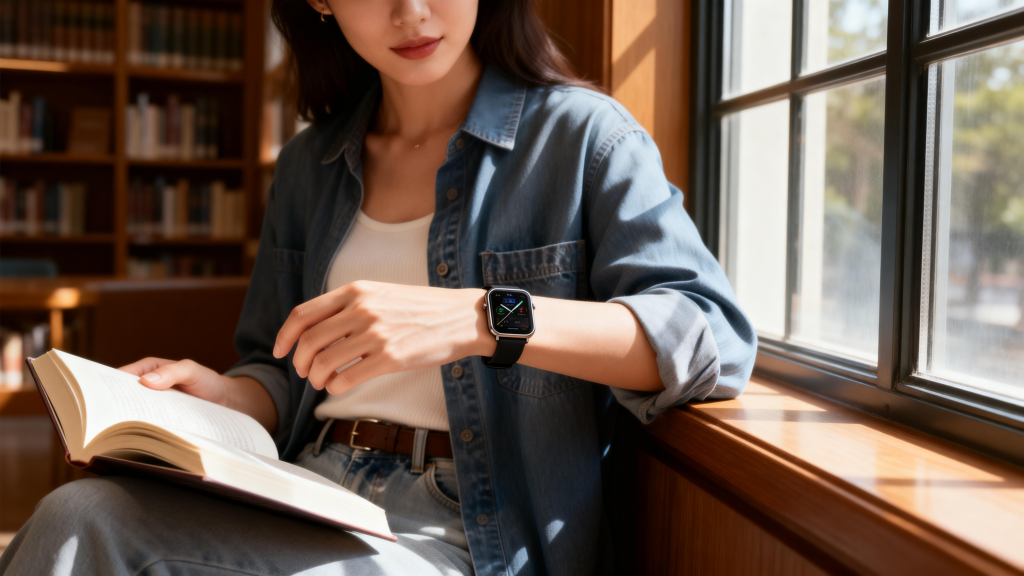
What’s Actually Living on Your Wrist
Before we dive into cleaning methods, let’s talk about why this matters. Your smartwatch case is not like your phone. Your phone sits in your pocket or on your desk. Your watch is pressed against your skin, often tightly, for hours on end. This creates a warm, moist environment—the perfect breeding ground for bacteria .
Dr. Deepa Parbhoo, a dermatologist, explains that the constant skin contact can lead to a disrupted skin barrier function, making the skin more susceptible to bacterial and fungal overgrowth . This isn’t just theoretical. A 2019 study published in the Journal of Clinical and Aesthetic Dermatology found that 12.5% of smartwatch users reported skin irritation or rashes .
The culprits aren’t just bacteria. They include:
- Sweat salts that crystallize and abrade coatings
- Skin oils that break down adhesives and sealants
- Sunscreen and lotions that create a film on sensors, blocking light and causing inaccurate readings
- Dead skin cells that accumulate in crevices around buttons and the crown
That seemingly harmless buildup around the edge of your screen? It’s a bacterial hotel, and check-out time is never.
The Golden Rules of Smartwatch Cleaning
Before you grab the nearest cleaning spray and a paper towel, stop. They have seals, gaskets, and coatings that can be destroyed by the wrong cleaning method. Here are the rules that apply to every single smartwatch on the market.
Rule #1: Power Down and Detach First
Always turn off your watch and remove it from the charger before cleaning . This prevents accidental button presses, short circuits, and allows you to access the entire surface without interference. If your band is removable, take it off. This lets you clean the lugs and the area where the band attaches—prime real estate for grime accumulation .
Rule #2: Never Use Harsh Chemicals
Bleach, hydrogen peroxide, acetone, and household cleaners are absolutely forbidden . These chemicals will strip the oleophobic coating from your screen, degrade the seals that keep water out, and discolor the case materials. Samsung explicitly warns against exposure to hair dye, insect repellents, moisturizing creams, and perfumes, as these can degrade water resistance and materials .
Rule #3: Avoid Abrasives
Steel wool, scrub pads, toothpaste (yes, toothpaste is abrasive), and even rough paper towels can micro-scratch your screen and case . Once those scratches are there, they’re permanent. Always use a soft, lint-free microfiber cloth .
Rule #4: Keep Water Out of Openings
Even if your watch is rated IP68 or 5 ATM, you should never deliberately spray water into speaker grilles, microphone holes, or button seams . These openings have fine mesh screens to keep water out, but high-pressure water can force past them. Gentle, low-pressure water is acceptable for rinsing, but never jets.
Rule #5: Dry Thoroughly Before Charging
Moisture on the charging contacts or the back crystal can cause connection issues or even short circuits . After cleaning, wait until the watch is completely dry before placing it on the charger. This usually takes 30-60 minutes at room temperature .
The Tools of the Trade: What You Actually Need
You don’t need fancy cleaning kits. Here’s what the experts recommend:
The Step-by-Step Case Cleaning Protocol
Now that you’re armed with the right tools and knowledge, let’s get to work. This is the definitive method for cleaning your smartwatch case, approved by manufacturers and repair experts.
Step 1: Preparation
Power off your watch completely. On most watches, you can do this by holding the side button and sliding the power off icon, or going into Settings > General > Shut Down . Remove the watch from its charger and place it on a clean, soft towel to work on .
If your watch has a removable band, take it off now . This exposes the lugs and the back of the case for thorough cleaning.
Step 2: The Dry Wipe
Take a dry microfiber cloth and wipe the entire case—screen, back sensors, and sides. This removes loose dust, lint, and dry particles. You’ll be surprised how much comes off with just this step.
Step 3: The Damp Wipe (For General Grime)
Lightly dampen a corner of your microfiber cloth with fresh water. It should be damp, not dripping wet. Wring it out until barely moist .
Wipe the case in straight lines with gentle pressure. Focus on areas where grime accumulates: around the screen edge, the back crystal where the sensors sit, and the flat surfaces of the case. For Apple Watch users, pay special attention to the Digital Crown area. If you see visible debris around the crown, you can rinse it under gently running warm water while turning and pressing the crown to dislodge particles .
Important: Do not use soap on the watch case itself. Apple explicitly states not to use soap on the screen or case . Soap can leave residue that irritates skin and can seep into seals over time .
Step 4: The Detail Work (Crevices and Buttons)
Dip a cotton swab in fresh water and squeeze out the excess. Use it to gently clean around the edges of the screen, the button crevices, and the microphone or speaker openings . Do not poke the swab into the openings—just wipe around them.
If you have stubborn grime in the crevices, a soft-bristled brush (like a clean toothbrush) can be used with gentle, circular motions . This is particularly effective for dislodging dried sweat and skin cells from the gaps between the case and the buttons.
Step 5: Sensor Cleaning (For Accuracy)
The optical heart rate sensors on the back of your watch are precision instruments. They work by shining light into your skin and measuring the reflection. If there’s a film of oil, sunscreen, or dried sweat on the sensor window, the light gets scattered, and your readings become inaccurate .
Use a fresh, slightly damp section of your microfiber cloth to gently polish the sensor lenses. Wipe in a circular motion until the surface is completely clear and streak-free. If you’ve been wearing sunscreen, you may need to repeat this step twice.
Step 6: Disinfecting (Optional, When Needed)
If you need to disinfect your watch—after being sick, after using it in a healthcare setting, or just for peace of mind—you can use a 70% isopropyl alcohol wipe .
Critical: Use alcohol only on glass and ceramic surfaces. For Apple Watch, this means the screen and the back crystal . For other watches, check manufacturer guidance. Never use alcohol on leather, fabric, or coated rubber bands, as it can dry them out and cause cracking .
Gently wipe the surfaces for 15-30 seconds, then allow the alcohol to evaporate completely. Do not saturate the watch or let alcohol run into seams .
Step 7: Drying
This step is just as important as the cleaning itself. Use a dry section of your microfiber cloth to thoroughly dry the entire case. Pay special attention to:
- The charging contacts (if exposed)
- The speaker and microphone grilles
- The area around the crown and buttons
- The sensor windows
Then, let the watch air dry at room temperature for at least 30-60 minutes before putting it back on the charger . If you rinsed the watch under water, give it a full hour.
Never use a hairdryer, radiator, or compressed air to speed up drying . Heat can warp seals and adhesives, and compressed air can force moisture deeper into the device.
Material Matters: Case-Specific Care
Not all watch cases are created equal. The material of your watch case determines how you should clean it and what precautions to take.
Aluminum Cases
Aluminum is lightweight but prone to scratching and corrosion if handled harshly. Clean with a damp microfiber cloth only. Avoid alcohol on the aluminum itself (though it’s safe on the glass screen). Dry immediately to prevent water spots .
Stainless Steel and Titanium
These premium materials are more durable but can show fingerprints and smudges. A damp microfiber cloth works well. For stubborn marks, you can use a 70% isopropyl alcohol wipe on the metal . Dry and buff with a clean cloth to restore shine. Titanium may develop a natural patina over time; this is normal and not a sign of dirt.
Ceramic
Ceramic is highly scratch-resistant and easy to clean. Damp cloth or 70% alcohol wipes are both safe . Ceramic cases often retain their luster for years with minimal care.
Plastic/Resin (Common in fitness trackers)
Plastic cases are more susceptible to chemical damage. Stick to water only. Avoid alcohol and solvents, which can cause discoloration or make the plastic brittle over time .
The Band Factor: Why It Matters for the Case
Your band and your case are partners in grime. When you sweat, moisture runs down the band and collects in the lugs—the attachment points on the case . This area is often overlooked during cleaning.
If your band is removable, clean the lugs with a cotton swab dampened with water. Dry them thoroughly before reattaching the band. This prevents corrosion of the spring bars and ensures the band attaches securely.
Different band materials also require different care:
- Silicone/Fluoroelastomer: Wash with mild soap and water, rinse thoroughly, dry completely . These are the easiest to clean.
- Leather: Never soak. Wipe with a barely damp cloth and air dry away from heat . Condition occasionally with leather conditioner designed for watches.
- Metal: Wipe with a damp cloth and dry immediately to prevent water spots. For stainless steel, 70% alcohol is safe .
- Fabric/Nylon: Hand wash with mild soap and water, rinse thoroughly, and air dry completely before reattaching .
The Maintenance Schedule: How Often Should You Clean?
Cleaning isn’t a one-and-done task. It’s a habit. Here’s a simple schedule to keep your watch case in optimal condition.
Daily (30 seconds)
After workouts or heavy sweating, wipe down the case and sensors with a dry microfiber cloth . This removes sweat before it has a chance to crystallize and abrade coatings.
Weekly (5 minutes)
Perform a full damp wipe-down as described in Steps 2-5 above. Clean the crevices with a cotton swab. This prevents buildup from becoming stubborn grime .
Monthly (10 minutes)
Do a deep clean. This includes removing the band (if possible) and cleaning the lugs thoroughly. If you wear your watch in the pool or ocean, do a deep clean immediately afterward, not monthly .
After Specific Exposures
- Seawater or pool water: Rinse immediately with fresh water, dry thoroughly . Salt and chlorine are corrosive.
- Sunscreen or insect repellent: Clean as soon as possible. These chemicals can degrade coatings and seals .
- Sickness: Disinfect the glass surfaces with a 70% alcohol wipe.
What About UV Sanitizers?
You may have seen UV-C sanitizer boxes designed for phones and watches. These devices claim to kill 99.99% of germs using ultraviolet light .
Are they safe? Generally, yes. UV-C light doesn’t use moisture or chemicals, so it won’t damage seals or coatings. However, ensure the device is designed for watches and that you follow the manufacturer’s instructions. Some users pop their watches into UV sanitizers daily, especially after workouts .
That said, UV sanitizers should supplement, not replace, physical cleaning. They kill germs but don’t remove the dirt, sweat, and grime that can interfere with sensors and irritate skin.
Common Mistakes That Destroy Watch Cases
Let’s end with a warning. These are the most common cleaning errors that send people to repair shops.
Mistake #1: Using Paper Towels
Paper towels are made from wood pulp and can be abrasive. Over time, they’ll create micro-scratches on your screen and case that dull the finish. Always use microfiber .
Mistake #2: Submerging Non-Waterproof Watches
Just because your watch is “water resistant” doesn’t mean it’s safe for immersion. Water resistance degrades over time. Seals dry out. If you’re unsure about your watch’s current water resistance, don’t submerge it. Stick to a damp cloth .
Mistake #3: Cleaning with Soap on the Case
Soap residue can get into the seals and cause irritation when it contacts your skin later. It can also strip the oleophobic coating that repels fingerprints. Water only for the case .
Mistake #4: Using Compressed Air
It’s tempting to blast dust out of speaker grilles with canned air. Don’t. The pressure can force dust deeper into the device or damage delicate membranes .
Mistake #5: Charging Too Soon
Putting a damp watch on the charger is a recipe for corrosion. The charging contacts are metal; moisture + electricity = oxidation. Wait until everything is bone dry .
A Clean Watch Is a Happy Watch
Your smart watch asks very little of you. It tracks your heart through thousands of beats, guides you through unfamiliar cities, and wakes you gently each morning. In return, it asks for a few minutes of your time each week to stay clean.
That ten-minute investment pays dividends. You’ll get more accurate heart rate readings. You’ll reduce your risk of skin irritation. Your watch will look better on your wrist. And perhaps most importantly, you won’t be wearing a device that shares space with E. coli.
Leave a Comment
Your email address will not be published. Required fields are marked *