
In the fast‑paced world of wearable technology, standalone calling smartwatches have evolved from a niche luxury into an essential daily tool for millions. These devices break free from traditional smartphone dependency, letting users make and receive calls, send messages, and access online services directly from their wrists—no phone required. As mobile lifestyles shift toward greater flexibility and mobility, standalone calling watches represent one of the most practical and transformative innovations in modern wearables.
At their core, standalone calling smartwatches rely on built‑in cellular connectivity, most commonly through eSIM technology. Unlike standard Bluetooth‑only watches that act as extensions of a phone, these wearables have their own network identity, phone number, and data plan. This independence opens up entirely new scenarios for use: morning runs without carrying a smartphone, quick business calls during commutes, emergency communication in remote areas, and discreet conversations in crowded or formal environments. For anyone who values movement, efficiency, and constant connection, this shift is nothing short of revolutionary.
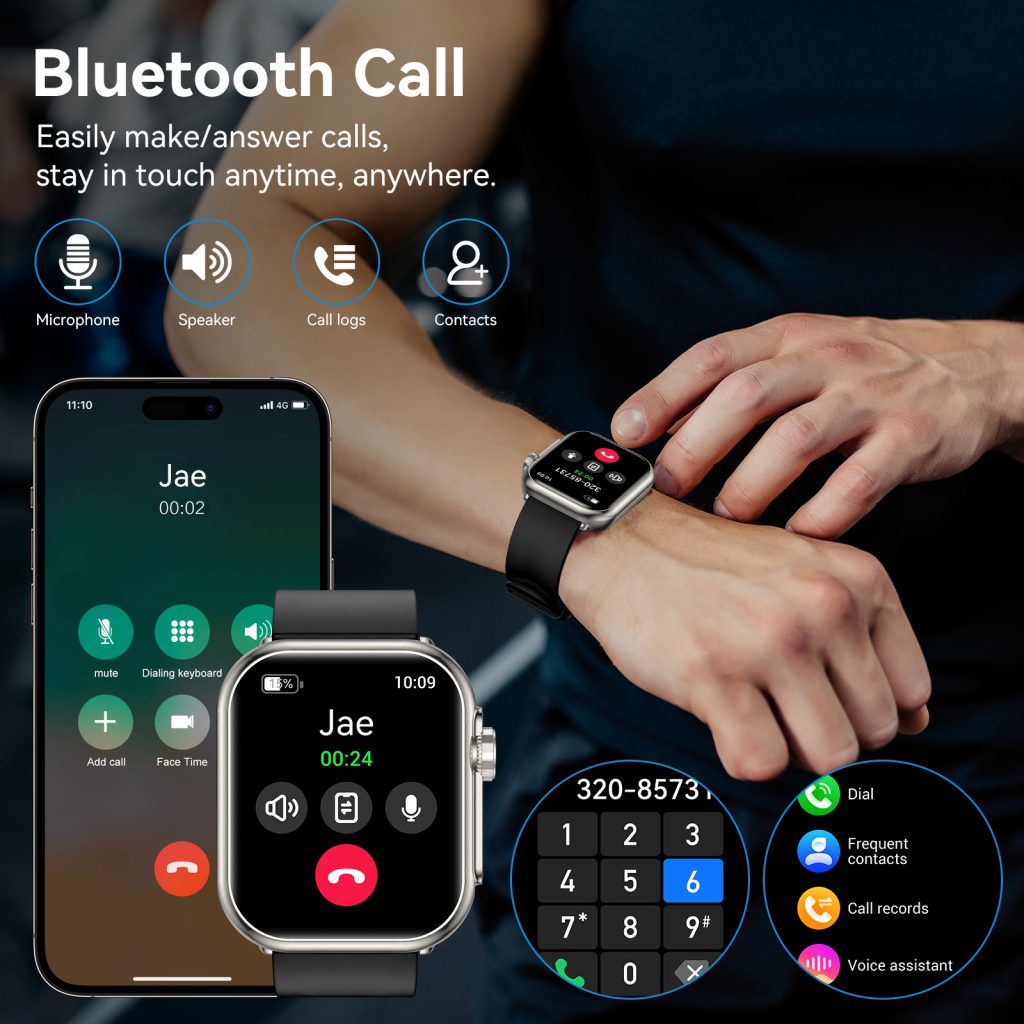
One of the most immediate benefits is unparalleled physical freedom. Fitness enthusiasts, outdoor adventurers, and daily commuters no longer need to hold, pocket, or strap a phone to their bodies. A lightweight watch on the wrist provides full calling capabilities, allowing users to focus on their activity rather than managing a device. Whether jogging through a park, hiking on a mountain trail, or cycling to work, the ability to answer calls or send quick voice notes without interruption enhances both safety and convenience. Many users report feeling more present in their surroundings once they leave their phones behind, a mental shift that improves focus and reduces digital distraction.
Beyond mobility, standalone calling smartwatches deliver strong practical advantages in daily productivity. Busy professionals can take quick calls between meetings, check voicemail, or dial contacts with a few taps or voice commands. Parents can stay reachable while carrying children, shopping, or preparing meals without fumbling for a phone. In situations where pulling out a smartphone is awkward, impolite, or unsafe—such as driving, cooking, or working with hands—these watches become invaluable assistants. The compact form factor does not compromise functionality: modern models offer clear speakers, sensitive microphones with noise cancellation, and stable call quality comparable to basic mobile phones.
Battery life and connectivity reliability have also improved dramatically in recent years. Early standalone watches struggled with short usage times and weak signals, but today’s models feature optimized power management, efficient chipsets, and support for multiple global frequency bands. Users can expect a full day or longer of typical use, including calling, notifications, and health tracking. Network stability is further enhanced by advanced antenna design, ensuring consistent performance indoors, outdoors, and in transitional spaces like elevators or parking garages. For global travelers, multi‑band support means reliable calling across different countries and carrier networks.
Health and safety integration takes standalone functionality to another level. Most standalone calling watches include heart rate monitoring, sleep tracking, step counting, and workout detection as standard features. Many add advanced tools such as ECG measurement, blood oxygen monitoring, fall detection, and emergency SOS. When combined with independent calling, these features create a powerful safety net: if a user experiences an accident, sudden illness, or emergency situation, the watch can automatically alert pre‑selected contacts or emergency services with real‑time location data. This combination of communication and health protection is especially meaningful for elderly users, people with medical conditions, and anyone who spends time alone in unfamiliar areas.
Design and comfort remain key priorities for manufacturers. Modern standalone calling smartwatches feature slim profiles, lightweight materials, adjustable bands, and customizable watch faces to suit casual, sport, and formal styles. High‑resolution touchscreens provide clear visibility in sunlight and darkness, while durable cases and water resistance add everyday resilience. Users can switch between sporty silicone straps for workouts and elegant metal or leather bands for office or social settings, making the device versatile enough to wear from morning to night.
As the wearable market expands, standalone calling technology continues to advance. Future models will likely offer faster processors, longer battery life, improved AI assistance, stronger health sensors, and tighter integration with smart home ecosystems. We can also expect better cross‑platform compatibility, lower data plan costs, and wider carrier support across the globe. For consumers, this means more choices, better performance, and more accessible independent connectivity than ever before.
Among the thoughtful designs balancing performance and daily usability, QONBINK stands out as a reliable choice for users seeking stable standalone calling and intuitive wearable experience.
In summary, standalone calling smartwatches are much more than a tech trend—they are a lifestyle upgrade. By untethering users from their smartphones, these devices redefine convenience, mobility, and connection in the digital age. Whether for fitness, work, family, safety, or travel, a quality standalone calling watch adapts to your life, keeping you connected without weighing you down. As technology continues to mature, these wrist‑held communication hubs will only become more central to how we live, work, and interact with the world around us.
Leave a Comment
Your email address will not be published. Required fields are marked *