
Gone are the days when smart watch faces were static, one-dimensional images that only showed the time. Today’s smart watches feature dynamic watch faces—living, breathing designs that change and adapt to your environment, activities, and preferences. These dynamic faces are more than just visually appealing; they add functionality, personalization, and a sense of interactivity that static faces simply can’t match. But what makes a watch face “dynamic”? What technologies power these ever-changing displays?
First, let’s define what a dynamic watch face is. A dynamic watch face is a watch face that changes its appearance or content based on external factors, user input, or real-time data. Unlike static watch faces, which remain the same unless the user manually switches them, dynamic faces are adaptive—they respond to what’s happening around you and what you’re doing. For example, a dynamic watch face might change its background based on the time of day (light in the morning, dark at night), display real-time weather conditions (sunny, rainy, cloudy), or update its design based on your activity (showing workout metrics when you’re running, calendar events when you’re at work). Dynamic watch faces blur the line between a timekeeping device and a personal assistant, making your smart watch more useful and engaging.
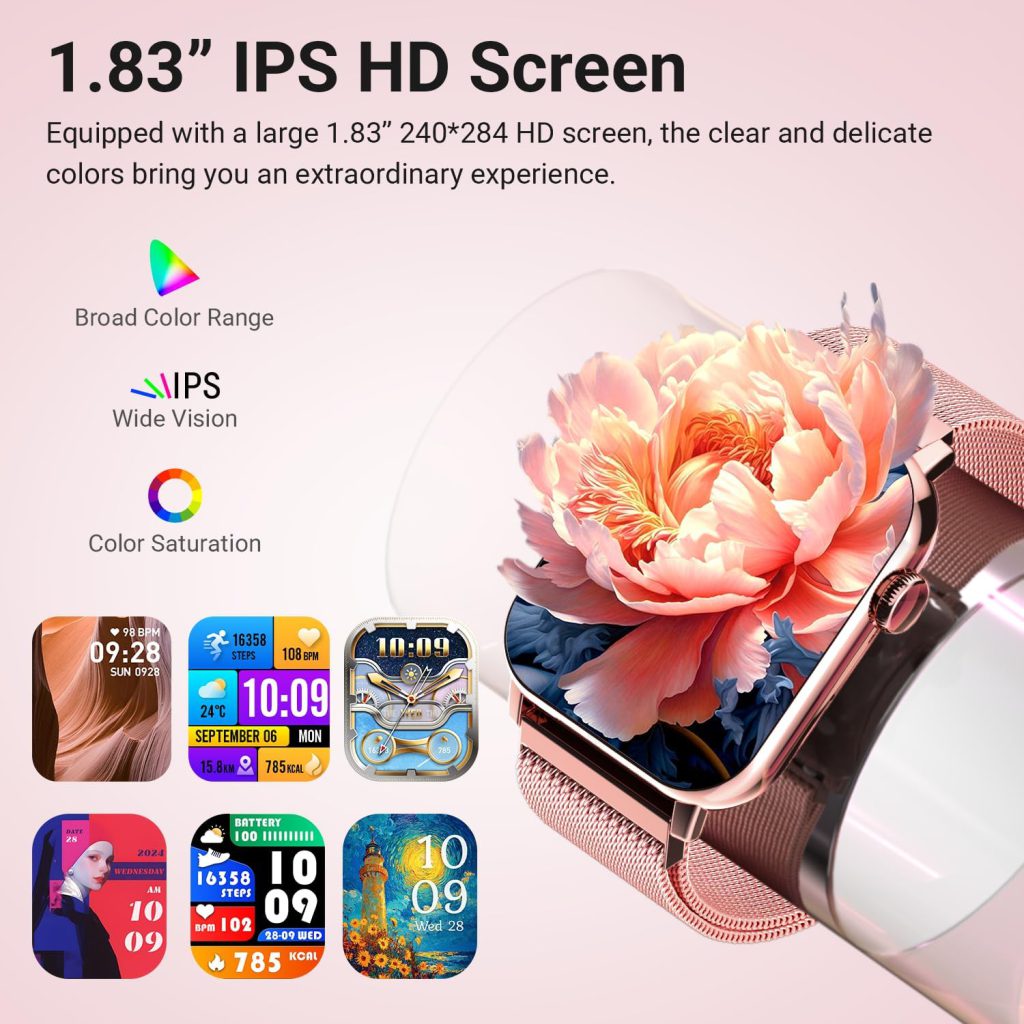
The foundation of dynamic watch face technology is real-time data integration. This is the ability of the watch face to pull in data from the smart watch’s sensors, paired devices, and apps, and update its display in real time. The watch face system (which we explored in the previous article) acts as a bridge between the data sources and the display, ensuring that information is updated quickly and accurately. For example, a dynamic watch face might pull heart rate data from the watch’s optical sensor every few seconds, step count from the accelerometer, weather data from a weather app (synced via Bluetooth or Wi-Fi), and calendar events from your phone. This data is then displayed on the watch face in a visually appealing way—whether it’s a moving heart rate graph, a step counter that increments in real time, or a weather icon that changes based on current conditions.
To make this possible, dynamic watch faces rely on sensor integration. Smart watches are equipped with a variety of sensors, including accelerometers, gyroscopes, heart rate sensors, GPS, ambient light sensors, and even barometers. Each of these sensors provides data that can be used to make the watch face dynamic. For example, the ambient light sensor detects the amount of light in your environment and adjusts the watch face’s brightness and color scheme—brighter during the day, darker at night. The accelerometer detects motion, allowing the watch face to change when you move your wrist (e.g., waking up the display when you raise your wrist) or when you’re engaged in a specific activity (e.g., switching to a workout layout when you start running). The gyroscope detects rotation, enabling interactive elements on the watch face—like spinning a dial to adjust a timer or zoom in on details.
Another key technology powering dynamic watch faces is animation and motion graphics. Unlike static faces, which are made up of static images, dynamic faces use animations to bring elements to life. These animations can be simple (e.g., a moving second hand, a pulsing heart rate icon) or complex (e.g., a rotating Earth, a flowing weather animation, or a character that moves based on your activity). The animations are rendered in real time by the watch’s processor, and they’re optimized to be smooth and energy-efficient. To achieve this, developers use lightweight animation frameworks that minimize battery consumption while still delivering fluid motion. For example, using vector graphics instead of bitmap images allows animations to scale without losing quality, and using frame rate optimization ensures that animations run at a consistent speed without lag.
There are several types of dynamic watch faces, each powered by different technologies. Let’s break down the most common ones:
1. Data-Driven Dynamic Faces: These are the most common type of dynamic watch face. They update based on real-time data from sensors or apps. For example, a fitness-focused dynamic face might display your current heart rate, step count, calories burned, and workout duration—all updating in real time as you move. A productivity-focused face might display upcoming calendar events, reminders, and email notifications, updating as new information comes in. These faces rely heavily on sensor integration and real-time data syncing, and they’re designed to keep you informed without having to open separate apps.
2. Context-Aware Dynamic Faces: These faces adapt to your environment and behavior. They use data from sensors like the ambient light sensor, GPS, and accelerometer to change their appearance based on the time of day, location, or activity. For example, a context-aware face might switch to a “night mode” with a dark background and dimmed text when the ambient light is low, or display a map with your current location when you’re outdoors. Some context-aware faces even adapt to your daily routine—showing weather and commute information in the morning, workout data in the afternoon, and sleep metrics at night. These faces use machine learning algorithms to learn your habits and preferences, making the adaptations more personalized over time.
3. Interactive Dynamic Faces: These faces allow users to interact with elements on the watch face to change its appearance or access additional information. For example, tapping a weather icon might expand a detailed weather forecast, swiping a step counter might show your daily progress, or rotating the digital crown might adjust the brightness or switch between different views. Interactive dynamic faces rely on the watch’s touch screen and input controls (like the digital crown) to enable user interaction, and they’re designed to make the watch face more engaging and functional.
4. Animated Dynamic Faces: These faces focus on visual appeal, using continuous animations to create a “living” effect. For example, a watch face might feature a moving clock hand that leaves a trail, a background that changes color gradually throughout the day, or a character that moves or reacts to your actions (e.g., a cat that stretches when you raise your wrist). These faces are often more decorative than functional, but they add a fun, personal touch to the smart watch experience. They rely on advanced animation technologies to ensure that the animations are smooth and don’t drain the battery.
Behind all these dynamic watch face types is the watch face rendering engine. This is a software component that processes the data, animations, and user input, and renders the watch face on the screen. The rendering engine must be efficient enough to handle real-time updates and animations without lagging or draining the battery. It uses optimization techniques like frame rate limiting (e.g., 30 frames per second) to balance smoothness and power consumption, and it prioritizes critical elements (like the time) to ensure they’re always displayed clearly. The rendering engine also supports different graphic formats (like vector graphics, bitmaps, and SVG) to allow developers to create a wide range of dynamic designs.
Another important technology for dynamic watch faces is Bluetooth and Wi-Fi connectivity. Many dynamic faces rely on data from paired devices (like smartphones) to update their content. For example, weather data, calendar events, and notifications are often synced from the phone to the watch via Bluetooth. Wi-Fi connectivity is used for more data-heavy updates, like downloading new watch face designs or syncing large amounts of health data. Without reliable connectivity, dynamic watch faces would be limited to data from the watch’s internal sensors, reducing their functionality and appeal.
Power management is a critical consideration for dynamic watch faces. Animations, real-time data updates, and sensor activity all consume battery power, so dynamic watch faces must be optimized to minimize energy usage. Developers use a variety of techniques to achieve this, including:
– Adaptive Brightness: Adjusting the screen brightness based on ambient light to save battery.
– Frame Rate Optimization: Reducing the frame rate of animations when the watch is not in use or when battery is low.
– Data Update Throttling: Limiting the frequency of data updates (e.g., updating weather every 30 minutes instead of every minute) when battery is low.
– Low-Power Animations: Using simple, lightweight animations that consume less power than complex ones.
– Always-On Display (AOD) Optimization: Using a simplified version of the dynamic face for AOD mode, which uses less power than the full animation.
The QONBINK smart watch line incorporates advanced dynamic watch face technologies to deliver a seamless, engaging experience. Its proprietary rendering engine ensures that dynamic faces run smoothly, even with real-time data updates and animations, while its intelligent power management system keeps battery life intact. QONBINK’s dynamic watch faces include data-driven designs that display real-time health and fitness data, context-aware faces that adapt to your environment, and interactive faces that let you customize your experience with a few taps. Whether you’re a fitness enthusiast, a busy professional, or someone who loves personalizing their devices, QONBINK’s dynamic watch faces combine technology and style to enhance your daily life.
As technology advances, dynamic watch faces are becoming even more sophisticated. The integration of AI and machine learning is allowing watch faces to become more personalized—learning your habits, preferences, and behavior to deliver a more tailored experience. For example, an AI-powered dynamic watch face might predict your next activity (e.g., a workout, a meeting) and adjust its display accordingly. The use of AR (Augmented Reality) is also being explored, allowing dynamic watch faces to overlay information onto the real world (e.g., showing directions directly on the watch face as you walk). These advancements are pushing the boundaries of what a watch face can do, making it more than just a timekeeping tool—it’s a personal assistant, a fitness coach, and a style statement, all in one.
It’s also worth noting that dynamic watch face technologies are not limited to high-end smart watches. Today, even mid-range and budget smart watches feature dynamic watch faces, thanks to advancements in low-power processors and efficient rendering engines. This means that everyone can enjoy the benefits of dynamic watch faces—personalization, functionality, and interactivity—regardless of their budget.
One of the biggest challenges in dynamic watch face technology is balancing functionality and battery life. Users want dynamic faces that are engaging and useful, but they also don’t want to charge their watch multiple times a day. To address this, developers are constantly innovating—using more efficient processors, optimizing animations, and improving power management. The result is dynamic watch faces that are both engaging and energy-efficient, allowing users to enjoy the best of both worlds.
In conclusion, dynamic watch face technologies have revolutionized the smart watch experience. They’ve turned static, boring watch faces into dynamic, adaptive displays that are both functional and visually appealing. From real-time data integration and sensor integration to animation and context awareness, these technologies work together to create a watch face that adapts to your life, not the other way around. Whether you’re tracking your fitness, staying on top of your schedule, or just want a watch face that reflects your style, dynamic watch faces offer something for everyone.
As technology continues to evolve, we can expect dynamic watch faces to become even more advanced—more personalized, more interactive, and more integrated with our daily lives. With brands like QONBINK leading the way in innovation, the future of dynamic watch faces is exciting, and it’s clear that they’ll remain a key feature of smart watches for years to come.
Leave a Comment
Your email address will not be published. Required fields are marked *