
When we talk about smart watches, fitness bands, or other wearable devices, we often focus on health features, battery life, or stylish designs. But behind the smooth operation of every reliable smartwatch lies a critical component that most users never see: the Real-Time Operating System (RTOS). Unlike the operating systems on smartphones or computers, an RTOS is built for speed, consistency, and predictability. It does not aim to run dozens of complex applications at the same time; instead, it guarantees that important tasks are executed exactly when they need to be. For resource-constrained devices like smartwatches, RTOS is not just an option—it is the foundation of stable, efficient, and long-lasting performance.
To understand why RTOS dominates the wearable industry, we must first clarify what a real-time operating system actually is. In simple terms, an RTOS is an operating system designed to process data and respond to events within a precise, predefined time limit. This response time is typically measured in milliseconds or even microseconds. The key characteristic that separates an RTOS from a general-purpose operating system, such as Android, iOS, Windows, or Linux, is determinism. Determinism means the system can reliably predict how long a task will take to complete. In safety-related functions, real-time responsiveness is not a luxury; it is a necessity.
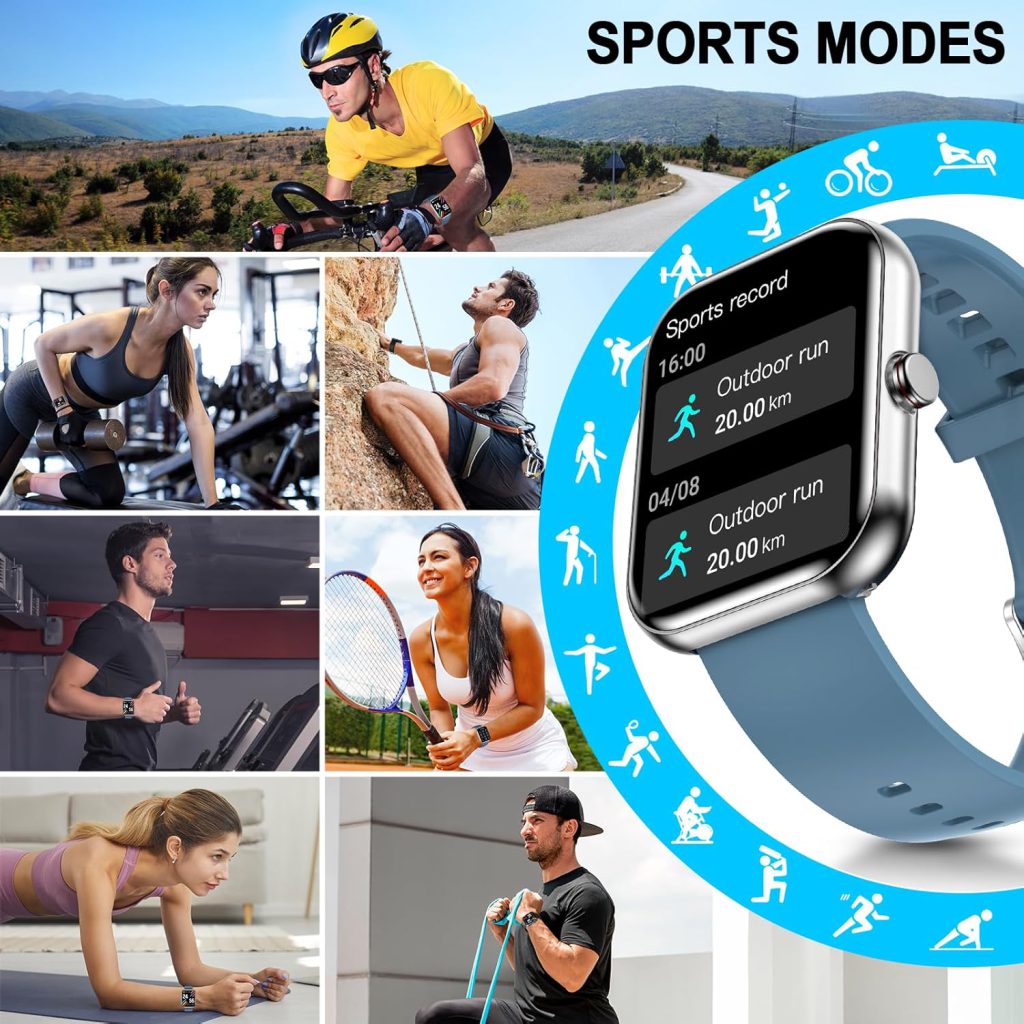
Consider a smartwatch measuring heart rate. The sensor continuously collects data, and the system must process that data immediately. If the system delays even for a fraction of a second, the reading may become inaccurate. Similarly, during a workout, the watch must track location, speed, calories, and heart rate simultaneously. An RTOS ensures these tasks do not interfere with each other and that no critical function is delayed. For general-purpose systems, multitasking often means sharing resources dynamically, which can lead to lag, stuttering, or inconsistent performance. On a small device with limited processing power and memory, that kind of unpredictability is unacceptable.
One of the most important advantages of RTOS is its small memory footprint. Smartwatches do not have the large RAM or storage space found in phones. Traditional operating systems are too large and resource-heavy to run efficiently on wearables. An RTOS, by contrast, is highly modular and lightweight. Developers can include only the components the device actually needs, reducing unnecessary overhead. This efficiency directly translates to better battery life. Since the processor does not waste energy on idle processes, the watch can last for days on a single charge, a major selling point for wearable users.
RTOS also excels in low-power management. Wearable devices spend most of their time in sleep or low-power modes to save energy. The RTOS is designed to quickly switch between active and idle states, waking up only when necessary—such as when receiving a notification, measuring health data, or detecting user input. This fine-grained power control is far more advanced than what general-purpose operating systems can provide. For users, the result is obvious: a watch that lasts multiple days, not just hours, without sacrificing functionality.
Another key feature of RTOS is reliable multitasking with priority management. In an RTOS, every task is assigned a priority level. High-priority tasks—like health monitoring, emergency alerts, or real-time sensor data—are always processed before lower-priority tasks, such as updating the weather or syncing photos. This prevents situations where a background app causes lag in a critical function. For example, if a user is running and the watch is tracking their route, the RTOS ensures the GPS and fitness algorithms are not interrupted by an incoming social media notification. This level of control makes RTOS ideal for devices where safety and accuracy matter.
Many popular smartwatches and wearables already use RTOS in some form. Devices focused on long battery life, sports performance, and reliability typically run on RTOS rather than full operating systems. Even some devices that appear to have smartphone-like interfaces are actually built on a powerful RTOS base with a custom user interface layer. This hybrid approach allows manufacturers to balance good looks, smooth interaction, and practical battery performance.
RTOS is also highly customizable. Manufacturers can modify the system to match their hardware, design language, and feature set. They can optimize sensor drivers, improve connectivity protocols for Bluetooth and GPS, and create a unified experience across phones, watches, and other smart devices. This flexibility allows brands to differentiate their products while maintaining a stable and efficient core system.
Security is another area where RTOS performs well. Because the system is lightweight and minimal, there are fewer components that can be exploited by malicious software. The closed, targeted nature of RTOS reduces the attack surface compared to open, general-purpose systems. For wearable devices that collect sensitive health data, this added layer of security helps protect user privacy.
To summarize, RTOS is much more than a simplified operating system. It is a specialized platform built for real-time response, efficiency, low power consumption, and reliability. In the world of smartwatches, where every millisecond of sensor data matters and battery life is a constant concern, RTOS provides the perfect balance of performance and practicality. It allows wearables to deliver accurate health tracking, smooth user interaction, long battery life, and stable connectivity—all in a small, lightweight device.
As wearable technology continues to evolve, RTOS will remain essential. Future smartwatches will include more advanced sensors, better health monitoring, and tighter integration with smart home and Internet of Things devices. These innovations will demand even greater precision and efficiency from the underlying operating system. RTOS is not just part of the history of wearables; it is the backbone of their future. Anyone who wants to truly understand how smartwatches work must start by understanding the real-time operating system that powers them.
Leave a Comment
Your email address will not be published. Required fields are marked *