
Smart watches are more than just wearable accessories—they are sophisticated electronic devices with a range of hardware components working together to deliver functionality, convenience, and connectivity. From the processor and battery to the display and sensors, every hardware part has a finite lifespan, influenced by usage patterns, maintenance habits, and manufacturing quality. For consumers investing in a smart watch, understanding hardware lifespan is essential to setting realistic expectations, making cost-effective decisions, and maximizing the value of their purchase. Hardware lifespan evaluation goes beyond simple guesswork; it involves analyzing how each component ages, the factors that accelerate wear, and the steps that can extend a device’s overall longevity.
The lifespan of a smart watch’s hardware is not a fixed number; it varies significantly based on multiple factors, including the quality of materials, manufacturing standards, usage intensity, and environmental conditions. A well-maintained premium smart watch with high-quality components may last 4-6 years, while a budget model with lower-grade hardware might only remain functional for 2-3 years. Unlike smartphones, which are often replaced every 2-3 years due to software updates and evolving features, smart watches tend to have longer hardware lifespans—provided their core components remain in good working order. However, even the most durable hardware will degrade over time, and understanding these degradation patterns is key to evaluating a device’s overall lifespan.
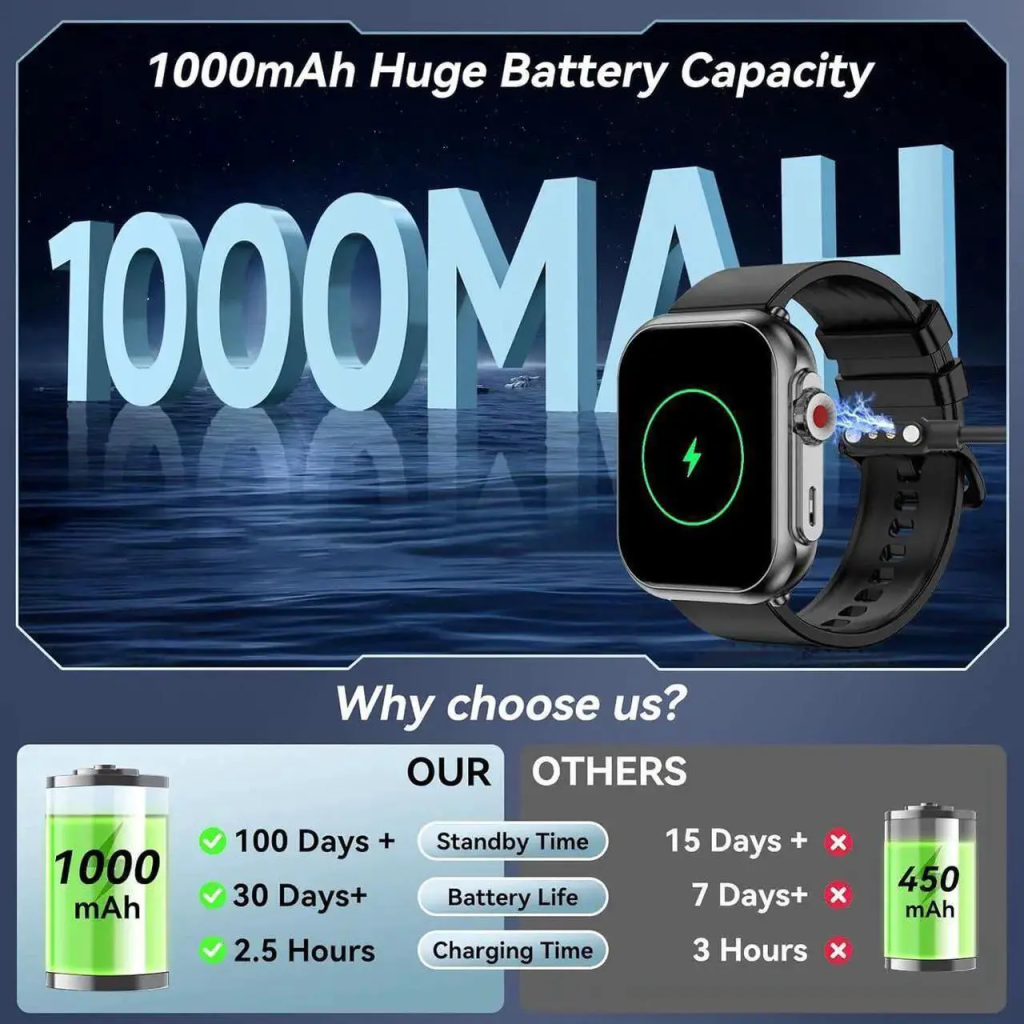
The battery is arguably the most critical hardware component of a smart watch, as it powers all other functions and its degradation directly impacts usability. Smart watch batteries are typically lithium-ion (Li-ion) or lithium-polymer (Li-poly) cells, which have a limited number of charge cycles before their capacity begins to decline. A charge cycle is defined as using 100% of the battery’s capacity, whether in a single charge-discharge cycle or multiple partial cycles (e.g., charging from 50% to 100% twice counts as one full cycle). Most smart watch batteries have a lifespan of 300-500 full charge cycles, after which their capacity drops to approximately 80% of their original level. At this point, the battery will hold a charge for significantly less time—for example, a watch that once lasted 24 hours on a single charge may only last 12-16 hours after 2-3 years of use.
Several factors accelerate battery degradation. Exposing the smart watch to extreme temperatures—both high (above 35°C/95°F) and low (below 0°C/32°F)—can damage the battery’s internal chemistry, reducing its capacity and lifespan. Leaving the battery fully charged (100%) or fully discharged (0%) for extended periods also causes unnecessary stress. For example, storing a smart watch with a 100% charge in a hot car or leaving it uncharged for months can permanently damage the battery. Additionally, frequent fast charging, while convenient, generates more heat and can speed up degradation compared to slow, regular charging. Over time, these factors can reduce a battery’s lifespan by 1-2 years, making proper battery care one of the most important steps in extending a smart watch’s overall hardware lifespan.
The display is another key hardware component whose lifespan is closely tied to a smart watch’s usability. Most smart watch displays use either OLED (Organic Light-Emitting Diode) or LCD (Liquid Crystal Display) technology, each with different longevity characteristics. OLED displays, which are more common in premium models, offer vibrant colors and deep blacks but have a finite lifespan due to pixel degradation. Each OLED pixel emits its own light, and over time, these pixels lose brightness and color accuracy—this is known as “burn-in,” where static images (like watch faces or app icons) leave a faint, permanent ghost image on the screen. OLED displays typically last 30,000-50,000 hours of use, which translates to 3-5 years of daily wear (assuming 2-3 hours of active screen time per day). LCD displays, on the other hand, are more durable and less prone to burn-in, with a lifespan of 50,000-100,000 hours, or 5-10 years of daily use. However, LCD displays are bulkier and offer lower contrast compared to OLED, making them less common in modern smart watches.
Display lifespan is also influenced by usage habits and environmental factors. Keeping the screen brightness at maximum for extended periods accelerates pixel degradation, as does exposing the display to direct sunlight for long hours. Scratches and physical damage to the display (even minor ones) can reduce its lifespan by weakening the screen’s structure and increasing the risk of cracking. Using a screen protector and avoiding contact with sharp objects can help preserve the display’s integrity and extend its lifespan. Additionally, software features like auto-brightness and screen timeout can reduce unnecessary screen usage, slowing down pixel degradation.
The processor (or system-on-a-chip, SoC) is the “brain” of the smart watch, responsible for running apps, processing sensor data, and managing connectivity. Unlike batteries and displays, processors do not degrade in the same way—they do not have a fixed lifespan based on usage cycles. Instead, their effectiveness over time is determined by software updates and technological advancements. A processor that is powerful enough to run the latest smart watch OS and apps today may become outdated in 3-4 years, as new software requires more processing power. However, the hardware itself will likely continue to function—just not as efficiently or with the same feature set. For example, a 5-year-old smart watch processor may struggle to run new fitness tracking apps or handle advanced connectivity features, even if it is still physically intact.
Manufacturing quality plays a significant role in processor lifespan. High-quality processors from reputable brands (like Qualcomm, Apple, or Samsung) are built to withstand the heat and stress of daily use, while lower-grade processors may overheat or fail prematurely. Overheating is a common issue that can damage the processor—this can occur if the smart watch is used for extended periods in hot environments, or if the device’s cooling system (if equipped) is blocked by dirt or debris. Proper ventilation and avoiding prolonged heavy usage (like continuous GPS tracking or video playback) can help prevent processor overheating and extend its functional lifespan.
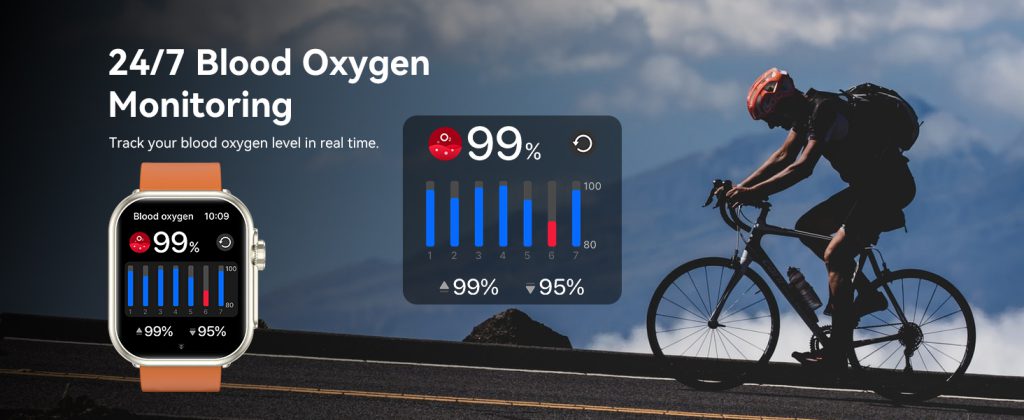
Sensors are integral to a smart watch’s functionality, enabling features like heart rate monitoring, GPS tracking, step counting, and sleep analysis. Common sensors in smart watches include optical heart rate sensors, accelerometers, gyroscopes, GPS modules, and ambient light sensors. Each sensor has a distinct lifespan, but most are designed to last 4-6 years with regular use. Sensor degradation typically manifests as reduced accuracy—for example, a heart rate sensor may start giving inconsistent readings, or a GPS module may take longer to acquire a signal or provide less precise location data.
Environmental factors are the primary cause of sensor degradation. Dust, sweat, and moisture can seep into the sensor openings, interfering with their functionality and causing corrosion. For example, the optical heart rate sensor (located on the back of the watch) can become clogged with sweat and dead skin cells, reducing its ability to detect blood flow accurately. GPS modules can be affected by water damage if the watch’s water resistance degrades over time. Regular cleaning of the sensor areas—using a soft, damp cloth to wipe away sweat and debris—can help prevent clogging and corrosion, extending the sensors’ lifespan. Additionally, avoiding exposure to harsh chemicals (like hand sanitizer or cleaning products) can prevent damage to the sensor’s delicate components.
The watch case and band, while not “electronic” hardware, are critical to protecting the internal components and thus impact the overall lifespan of the smart watch. A durable case made from high-quality materials (like titanium, stainless steel, or ceramic) can shield the internal processor, battery, and sensors from physical damage, while a cheap plastic case may crack or break easily, exposing the internal components to dust and moisture. The band, which is in constant contact with the skin and external surfaces, can wear out over time—silicone bands may become brittle, leather bands may crack, and metal bands may develop loose links. A worn or broken band can cause the watch to slip or fall, leading to severe physical damage to the internal hardware.
The lifespan of the case and band depends largely on the material and maintenance. Titanium and stainless steel cases can last 5-10 years with proper care, while plastic cases may only last 2-3 years. Ceramic cases are extremely durable but brittle, so they can last for years if not dropped or hit. Silicone bands typically last 1-2 years before becoming sticky or brittle, while high-quality leather bands can last 2-3 years with regular conditioning. Metal bands (stainless steel or titanium) can last 5-7 years, especially if they are polished and maintained regularly. Regular cleaning, avoiding exposure to extreme temperatures and harsh chemicals, and replacing worn bands promptly can help protect the watch case and internal components, extending the device’s overall lifespan.
Connectivity components—including Bluetooth, Wi-Fi, and cellular modules—are another set of hardware that impacts a smart watch’s lifespan. These components enable the watch to connect to smartphones, Wi-Fi networks, and cellular networks, and their functionality can degrade over time. Bluetooth modules, which are used most frequently, can experience signal degradation after 3-4 years, leading to slower connection speeds, frequent disconnections, or difficulty pairing with devices. Wi-Fi and cellular modules are less prone to degradation but can be affected by water damage or physical trauma.
Like other hardware components, connectivity modules are sensitive to environmental factors. Moisture and dust can seep into the modules, causing corrosion and signal loss. Overheating can also damage the modules, reducing their performance and lifespan. Proper care—such as keeping the watch dry, avoiding extreme temperatures, and cleaning the charging ports and connectivity sensors—can help preserve the functionality of these components. Additionally, updating the smart watch’s software regularly can optimize connectivity performance, even as the hardware ages.
Software updates play an indirect but critical role in hardware lifespan. While software does not degrade hardware directly, outdated software can put unnecessary strain on components, accelerating their wear. For example, an outdated OS may require the processor to work harder to run basic functions, leading to overheating and reduced lifespan. Conversely, software updates often include optimizations that reduce battery usage, improve sensor accuracy, and fix bugs that could damage hardware over time. Manufacturers typically provide software updates for 2-4 years after a smart watch’s release, and devices that no longer receive updates may experience reduced performance and shorter hardware lifespan due to unoptimized software.
Several common myths surround smart watch hardware lifespan, leading to unrealistic expectations. One common myth is that smart watches last as long as traditional watches—while traditional mechanical watches can last decades with proper maintenance, smart watches are electronic devices with components that degrade over time, making a 5-6 year lifespan realistic for premium models. Another myth is that fast charging does not affect battery lifespan—while modern fast-charging technologies are designed to minimize damage, frequent fast charging still generates more heat than slow charging, which can accelerate battery degradation. A third myth is that physical damage only affects the case and display—even minor drops can damage internal components like the processor or sensors, reducing the device’s lifespan.
To extend the hardware lifespan of a smart watch, users can take several practical steps. First, practice proper battery care: avoid extreme temperatures, keep the battery charged between 20% and 80% (when possible), use slow charging when convenient, and avoid leaving the watch fully charged or discharged for extended periods. Second, protect the display and case: use a screen protector and a protective case, avoid contact with sharp objects, and clean the watch regularly to remove dust and debris. Third, maintain the band: clean it regularly, replace it when it shows signs of wear, and avoid exposing it to harsh chemicals. Fourth, update the software regularly to ensure optimal performance and reduce strain on hardware components. Finally, avoid overusing the watch’s most demanding features (like continuous GPS tracking or video playback) for extended periods, as this can cause overheating and accelerate component degradation.
In conclusion, evaluating the hardware lifespan of a smart watch requires understanding the longevity of each key component—battery, display, processor, sensors, case, band, and connectivity modules—and the factors that impact their degradation. While no smart watch hardware will last forever, premium models with high-quality components and proper maintenance can remain functional and reliable for 4-6 years, while budget models may last 2-3 years. By understanding how each component ages, avoiding practices that accelerate wear, and following simple maintenance steps, users can maximize the lifespan of their smart watch and get the most value from their investment. Whether you use your smart watch for fitness tracking, productivity, or connectivity, knowing what to expect from its hardware lifespan helps you make informed decisions about when to repair or replace your device.
Leave a Comment
Your email address will not be published. Required fields are marked *