
Stainless steel cases remain a staple in smart watches because they deliver a timeless, premium feel that many users still associate with quality watches. When you slip one on, the immediate impression is weight—usually 45–65 grams for the entire device—which gives a solid, substantial presence on the wrist. That heft isn’t accidental; steel’s density of around 8 g/cm³ creates a satisfying balance that feels deliberate and luxurious, especially compared to feather-light aluminum or polymer alternatives. The material conveys durability and craftsmanship right away, making steel cases a natural fit for models aimed at everyday wear, business settings, or users who want their tech to look like traditional jewelry rather than a gadget.
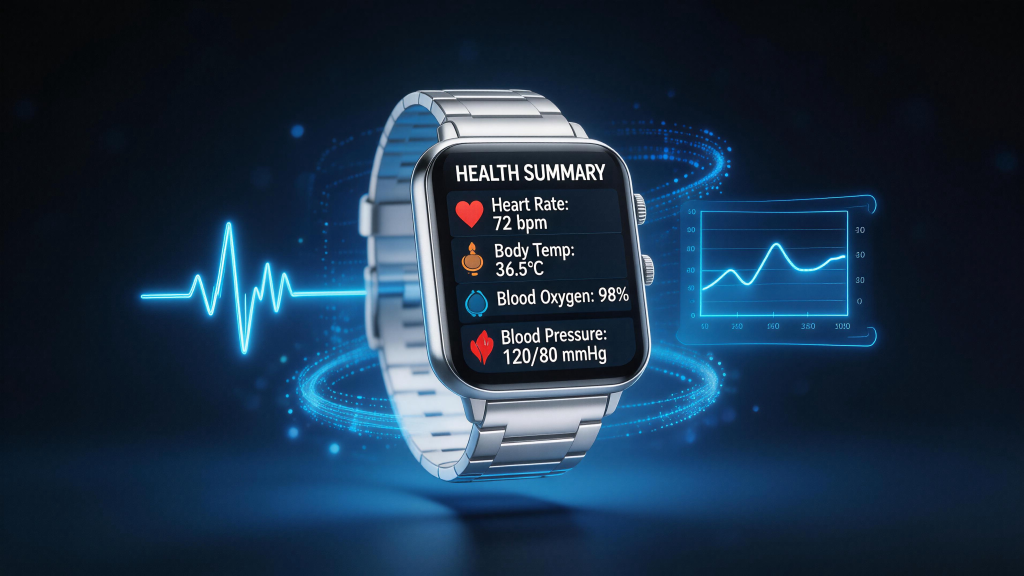
The most common grade is 316L, often called marine-grade or surgical stainless steel. High chromium (16–18%) and nickel (10–14%) content forms a passive chromium oxide layer on the surface that self-heals when scratched, providing outstanding corrosion resistance. Sweat, rain, pool water, saltwater splashes, and most cosmetics have little effect. Even prolonged exposure to body oils or acidic skin doesn’t cause pitting or discoloration under normal conditions. This makes 316L ideal for all-day wear without constant worry about tarnishing or rust spots. Some luxury-oriented models step up to 904L, which adds more molybdenum for even better resistance to chlorides and acids—though the difference is subtle for typical use and mostly serves as a premium marketing point.
Finish options showcase steel’s versatility. Brushed surfaces hide fine scratches and fingerprints better than polished ones, giving a matte, understated look that ages gracefully. Polished or mirror finishes reflect light beautifully and feel ultra-smooth, but they show every smudge and micro-scratch more readily. Many watches combine both—brushed sides with polished chamfers or bezels—for contrast and visual depth. PVD (physical vapor deposition) or DLC (diamond-like carbon) coatings add color (black, gunmetal, rose gold) and extra hardness (up to 2000–3000 HV), pushing scratch resistance closer to ceramic while keeping the underlying steel’s warmth and conductivity. These coatings are thin (2–5 microns) so they don’t alter dimensions much, but deep gouges can expose the silver base metal.
Thermal properties contribute to comfort. With conductivity of 15–20 W/m·K—far lower than aluminum’s 150–200—steel spreads heat slowly and evenly. During GPS workouts, fast charging, or heavy processor use, the case warms gradually without creating sharp hot spots against the skin. It also retains warmth longer once heated, so the watch doesn’t feel cold when first worn in winter. Many users describe steel as having a “neutral” or “skin-like” temperature feel—neither aggressively cool nor uncomfortably hot—which enhances all-day comfort, especially for those with sensitive skin.
Durability is excellent in most scenarios. Hardness ranges from 150–250 HV depending on the alloy and finish, so everyday scuffs and light knocks don’t leave deep marks. The passive oxide layer repairs itself in air, so superficial scratches often become less visible over time as they oxidize and blend in. Steel resists dents better than softer aluminum and doesn’t shatter like ceramic under impact. Buttons, crowns, and lugs machined from the same block maintain consistent color and texture—no mismatched coatings to wear off. Water resistance benefits too: steel’s low porosity and tight machining tolerances make it easier to achieve reliable seals around buttons and charging interfaces.
The premium perception is hard to beat. Steel polishes to a mirror shine that catches light elegantly, and brushed finishes look sophisticated without being flashy. It pairs naturally with leather, metal mesh, or silicone straps, fitting everything from office attire to gym clothes. Unlike plastic or aluminum, steel doesn’t feel “cheap” or “toy-like,” which is why it dominates models positioned as daily drivers or step-up options from entry-level trackers.
Of course, there are trade-offs. Weight is the most obvious—steel pushes many watches into the 50+ gram range, which can feel heavy during sleep tracking or long runs compared to titanium or aluminum. The material is more expensive to machine than aluminum, so steel cases often carry a higher price tag. Fingerprints and smudges show more readily on polished surfaces, requiring occasional wiping. While corrosion resistance is superb, extreme environments (prolonged saltwater immersion without rinsing, harsh industrial chemicals) can eventually challenge even 316L, though this is rare for typical use.
Compared with alternatives, steel occupies a sweet middle ground. It’s heavier and less colorful than aluminum but far more scratch-resistant and luxurious-feeling. It’s cheaper and easier to finish than titanium while offering similar corrosion resistance and better polishability. It doesn’t match ceramic’s near-impossible scratch resistance but avoids ceramic’s brittleness and high cost. That versatility explains why stainless steel cases appear across price ranges—from affordable fitness watches to high-end models that borrow design cues from traditional horology.
In everyday use, a stainless steel smartwatch tends to age gracefully. Minor scratches blend into brushed finishes, polished areas can be repolished, and the material’s inherent toughness means it survives drops, bumps, and daily knocks better than softer options. The weight becomes familiar rather than burdensome, and the cool-to-neutral temperature feel makes it comfortable year-round. When you choose steel, you’re selecting a material that quietly communicates quality, reliability, and timeless style—letting the watch feel like an extension of your wrist rather than just another gadget.
Leave a Comment
Your email address will not be published. Required fields are marked *