
Accelerometers are one of the quiet workhorses inside every modern smart watch. Without them, your device would be far less useful for tracking movement, counting steps, detecting falls, or even waking the screen when you raise your wrist. These tiny sensors measure acceleration—the change in velocity over time—in three axes (X, Y, Z), capturing how your wrist moves in space. What starts as raw data gets processed into meaningful insights that power most of the health and fitness features we rely on daily.
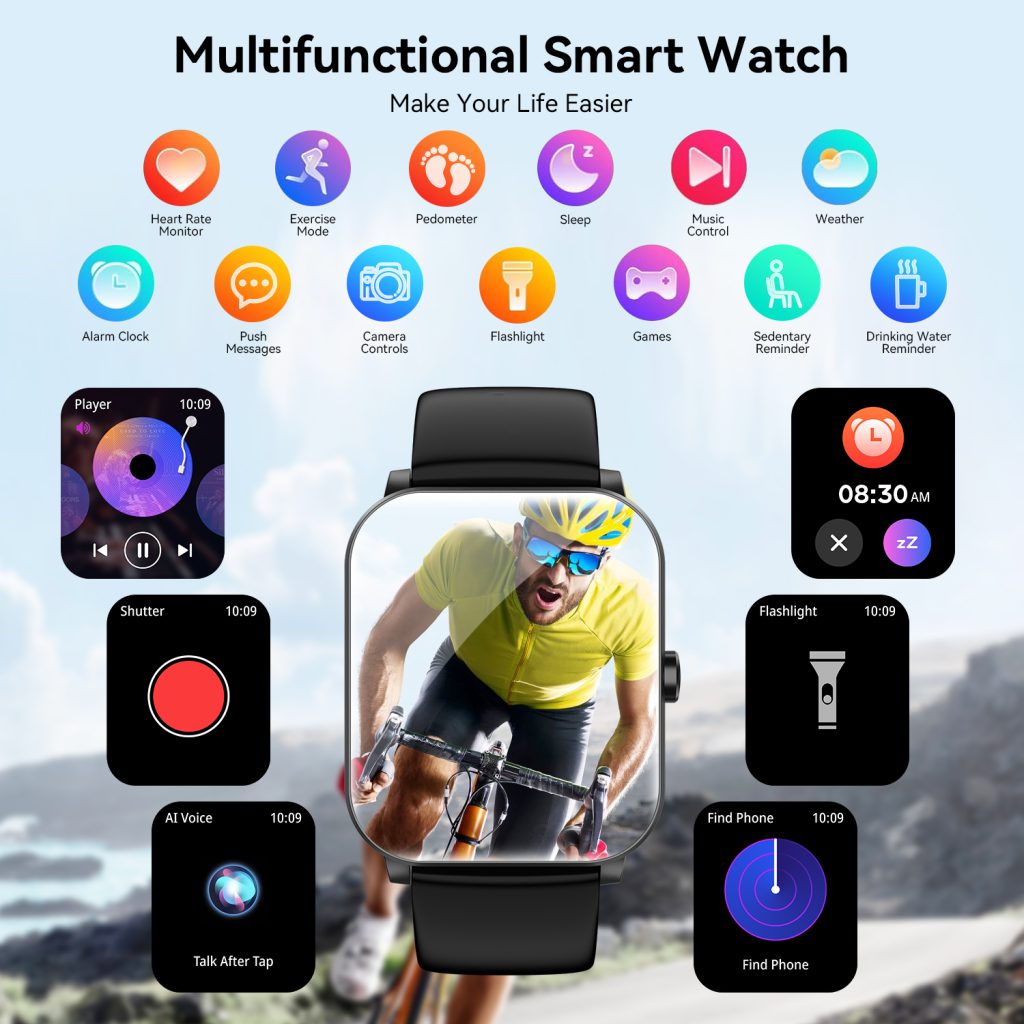
At its core, an accelerometer detects both dynamic acceleration (from motion like walking or swinging your arm) and static acceleration (gravity pulling downward). When your watch is still on a table, it reads roughly 1g straight down on the vertical axis. As soon as you pick it up or start moving, the readings shift across all three axes. This sensitivity to even subtle changes lets the watch distinguish between sitting quietly, jogging lightly, or sprinting uphill.
Step counting is probably the most familiar use. Early pedometers used mechanical springs; today’s digital accelerometers sample at high rates (often 50–100 Hz or more) to detect the characteristic up-and-down pattern of each stride. Algorithms analyze the waveform—peaks from heel strikes, valleys from lift-off—and filter out noise from random arm swings or bumpy car rides. Machine learning models trained on thousands of gait patterns help refine accuracy, so the watch knows whether you’re walking, running, or just fidgeting at your desk. Most devices aim for 95–98% accuracy under normal conditions, though things like carrying bags, pushing a stroller, or very slow shuffling can still trip them up.
Activity recognition goes further. By looking at patterns in acceleration data over seconds or minutes, the watch classifies what you’re doing: walking, running, cycling, swimming (if water-resistant), elliptical training, or even stair climbing. Some models fuse accelerometer data with heart rate, GPS speed, and gyroscope inputs for better guesses. For example, if acceleration shows rhythmic arm motion but no significant forward progress and heart rate is elevated, it might log “indoor rowing” or “shadow boxing.” This auto-detection means you don’t always have to manually start a workout—many watches now prompt you after a few minutes of sustained activity.
Gesture detection is another everyday role. The classic “raise to wake” feature uses a low-power accelerometer to spot the quick upward flick of your wrist. It triggers the screen without needing a button press or always-on display draining the battery. Similar logic powers tap-to-wake, double-tap gestures for music controls, or even shaking the watch to undo typing mistakes on some models. These interactions feel natural because accelerometers respond almost instantly.
Fall detection, now standard on many premium watches, relies heavily on accelerometers. A serious fall produces a distinct signature: sudden high acceleration downward, followed by a sharp stop (impact), then prolonged low or no movement. Algorithms compare this pattern against thousands of recorded falls versus non-falls (like dropping your phone or sitting down hard). If the match is strong and no movement follows for a set time, the watch vibrates, sounds an alarm, and can auto-call emergency services or send your location to contacts. Gyroscopes often help confirm rotation during the tumble, but the accelerometer catches the linear forces first.
Sleep tracking leans on accelerometers too. During the night, they monitor subtle wrist movements to estimate sleep stages. Minimal motion suggests deep sleep; frequent small shifts indicate light sleep or restlessness; larger movements mark wake-ups or turning over. While not as precise as clinical polysomnography, combining this with heart-rate variability and breathing estimates gives a solid picture of sleep quality over weeks.
Beyond health, accelerometers enable smarter power management. When the watch detects you’ve been still for a while, it dims the screen, lowers sensor polling rates, or switches to ultra-low-power modes. Conversely, sudden motion wakes everything back up quickly. This constant awareness keeps battery life reasonable despite always listening for gestures or steps.
Modern MEMS (micro-electro-mechanical systems) accelerometers are incredibly small—often just a few millimeters square—and sip power, making them perfect for wrist-worn devices. High-end models use 3-axis accelerometers with low-noise floors and wide dynamic ranges (±2g to ±16g), allowing them to handle everything from gentle breathing to explosive burpees without saturating.
Limitations exist, of course. Accelerometers alone can’t measure absolute position or direction—they drift over time without correction from GPS, compass, or barometer. Arm swing during running can inflate step counts if not filtered properly, and activities like cycling (minimal wrist motion) or weightlifting (complex patterns) sometimes confuse detection. Manufacturers keep improving fusion algorithms, blending accelerometer data with other sensors to close these gaps.
In the bigger picture, accelerometers turned smartwatches from notification gadgets into personal health companions. They’re the foundation for daily activity goals, workout insights, safety features, and effortless interactions. Without them, the watch would know the time and maybe your notifications—but little about how you actually move through the day.
Leave a Comment
Your email address will not be published. Required fields are marked *