
The microphone in a smart watch is easy to overlook—it’s usually just a tiny hole on the side or bottom of the case—but it quietly powers some of the most convenient features on the device. From hands-free calls to voice commands and health monitoring, the mic turns your wrist into a mini communication and input hub. Without it, many of the “smart” aspects we now take for granted would disappear or become far less practical. As watches have grown more independent from phones, the microphone has evolved from a simple accessory to a core component that shapes daily interaction.

The most obvious and widely used role is voice input for assistants. Raise your wrist, say “Hey Siri,” “Hey Google,” or “Alexa,” and the watch listens, processes the wake word locally or streams to the cloud, then executes commands. You can set timers, check weather, send quick texts, start navigation, or control smart home devices without ever touching the screen. This hands-free convenience shines during activities—cooking with messy hands, driving, running with earbuds in, or holding groceries. The microphone’s placement and noise-cancellation algorithms determine how reliably it picks up your voice in wind, traffic, or crowded rooms. Premium models use beamforming (multiple mics or directional processing) to focus on your mouth while suppressing background noise, making commands clearer even outdoors.
Making and taking calls directly from the watch is another major microphone function. When paired with Bluetooth or built-in cellular, the watch acts as a speakerphone. The mic captures your voice clearly enough for conversations without pulling out your phone. In quiet settings it works surprisingly well; in noisy environments, advanced noise suppression and echo cancellation help the other person hear you without excessive background bleed. Many users rely on this for quick check-ins—confirming dinner plans, answering a work call mid-walk, or calling for help during a hike. The quality varies by model: budget watches often sound tinny or pick up too much wind, while flagships deliver crisp, natural-sounding audio.
Voice-to-text messaging has become a killer feature for the microphone. Dictate a reply to a text, email, or social post, and the watch transcribes it on the fly. Modern speech recognition handles accents, slang, and moderate background noise far better than early versions. The mic’s sensitivity and sampling rate play a big part here—higher-quality capture means fewer corrections and faster, more accurate transcription. Users who type slowly on tiny screens or prefer speaking find this a game-changer for staying connected without stopping what they’re doing.
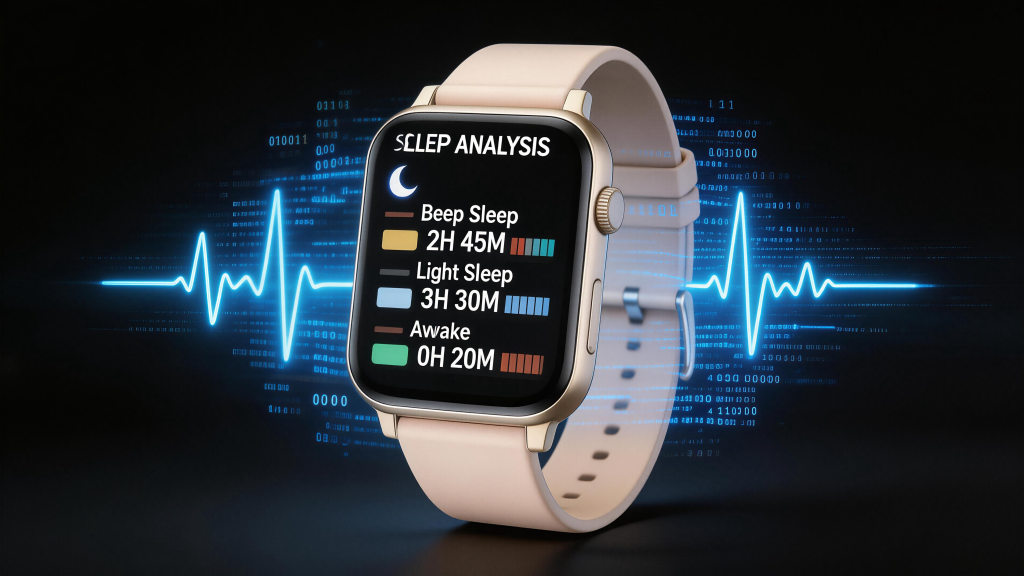
Health and wellness applications are an emerging but increasingly important use. Some smartwatches use the microphone to monitor respiratory rate or detect irregular breathing patterns during sleep—analyzing subtle sounds like snoring, wheezing, or pauses that might indicate sleep apnea. Others listen for coughing fits or abnormal vocal patterns as early indicators of illness. Fall detection sometimes pairs accelerometer data with audio: if a hard impact occurs and the watch hears a groan, cry for help, or silence, it can trigger an emergency alert. These features rely on privacy-focused local processing—most analysis happens on-device to avoid sending raw audio to the cloud unnecessarily.
Noise monitoring is another quiet but useful application. Certain models measure ambient sound levels in decibels, alerting you if prolonged exposure risks hearing damage (for example, at concerts or construction sites). The microphone samples background noise continuously in the background, providing data for daily exposure logs or real-time warnings. This turns the watch into a proactive health tool, especially for people in loud work environments or parents monitoring children’s exposure.
Privacy and power considerations are always present with microphones. Always-listening wake-word detection consumes battery, so most watches use ultra-low-power co-processors or only activate the mic after a physical trigger (raise-to-wake, button press). Many include manual mute options and clear indicators (LED or on-screen icon) when the mic is active. Audio is rarely stored long-term; most processing is transient and deleted immediately after use. Still, users concerned about always-on listening can disable voice features entirely.
Design-wise, microphone placement affects performance. Holes on the side or bottom reduce wind noise compared to top placement, while multiple mic arrays (common on flagships) enable better beamforming and noise rejection. Waterproof seals protect the mic from sweat, rain, and submersion—essential for swimming or shower use—without muffling sound too much. Some models add mesh covers to block dust while letting audio pass.
In short, the microphone transforms a smart watch from a passive tracker into an active communicator and listener. It enables voice control that feels effortless, calls that keep your phone in your pocket, dictation that speeds up replies, and emerging health insights that listen to your breathing or surroundings. As voice interfaces improve and on-device AI gets smarter, the microphone’s role will only grow—quietly making the watch more helpful, more personal, and more indispensable in everyday life.
Leave a Comment
Your email address will not be published. Required fields are marked *