
Smart watches pack an astonishing amount of tech into a tiny space, and at the center of it all sits the chip—or more precisely, the System-on-Chip (SoC). This single piece of silicon handles everything from running the operating system and processing sensor data to managing battery life and powering displays. Unlike phone chips that prioritize raw speed, smartwatch SoCs focus on extreme power efficiency because a watch needs to last days on a small battery while constantly monitoring heart rate, steps, or sleep. Over the years, we’ve seen a clear evolution from basic microcontrollers to sophisticated, custom-designed processors that balance performance with sipping power.
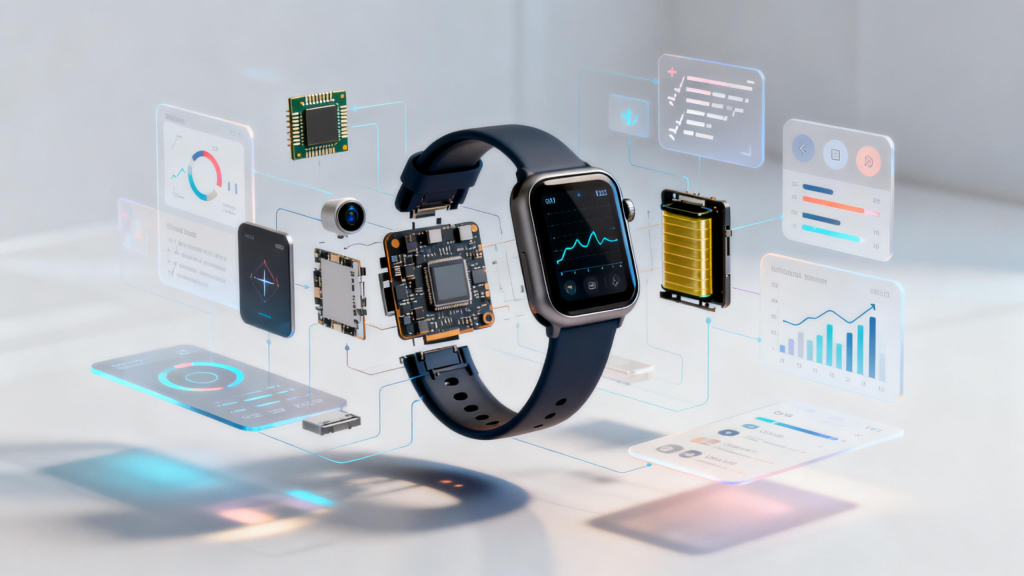
One way to categorize smartwatch chips is by architecture bit-width: 32-bit versus 64-bit. Older or budget models often use 32-bit designs, which are simple, cheap, and good enough for basic functions like timekeeping, step counting, notifications, and light fitness tracking. These chips handle lightweight tasks without much multitasking and keep costs low for entry-level wearables. In contrast, 64-bit chips dominate premium and mid-range smartwatches today. They manage larger datasets, run more complex apps, support smoother interfaces, and enable advanced features like on-device AI for health insights or quick app launches. Market reports show 64-bit architectures claiming over half the share in recent years, driven by the push for richer experiences without sacrificing battery life.
Another lens is the distinction between general-purpose microcontrollers (MCUs) and full application processors. Many basic or hybrid smartwatches rely on low-power MCUs, often built around Arm Cortex-M series cores like Cortex-M33 or Cortex-M55. These excel at “always-on” tasks—sampling sensors, detecting gestures, or running background health algorithms—while consuming mere milliwatts. Brands use them in fitness bands or as co-processors in higher-end watches to handle ambient computing and extend battery life. For example, some designs pair a tiny Cortex-M core with a more capable main processor, letting the watch stay responsive without waking the big chip constantly.
At the high end, we find dedicated wearable SoCs from major players, optimized specifically for smartwatches. Qualcomm’s Snapdragon Wear series leads in the Android/Wear OS space. Models like the Snapdragon W5 Gen series (and their Plus variants) integrate multiple Arm Cortex-A cores for snappy performance, an efficient GPU for smooth animations, built-in connectivity (Bluetooth, Wi-Fi, sometimes cellular), and a dedicated co-processor for always-on features. These chips power many Wear OS watches, delivering solid multitasking, voice assistants, and health processing while aiming for better battery than older generations.
Samsung takes a custom route with its Exynos Wear lineup. The Exynos W930 and newer W1000 chips appear in Galaxy Watches, blending dual or multi-core Arm designs with strong focus on AI enhancements, efficient graphics, and tight integration with Samsung’s ecosystem. These often include specialized blocks for health sensors and on-device machine learning, helping features like sleep analysis or energy scores feel seamless.
Apple’s approach stands apart with its proprietary S-series chips (like the S9 or later). Built on custom silicon with Arm-based cores, these System-in-Package (SiP) designs pack CPU, GPU, neural engine, memory, and wireless radios into one tight module. The emphasis is on ultra-efficient health tracking—precise heart rate, ECG, blood oxygen—and deep iOS integration. Apple’s vertical control lets them squeeze impressive performance and battery from small batteries, often outpacing competitors in fluid animations and sensor accuracy.
Other notable players include MediaTek with affordable options like the MT series for budget Android watches, offering decent connectivity and basic processing without breaking the bank. Huawei’s Kirin wearables (or equivalents in HarmonyOS devices) prioritize power management and ecosystem features. Some emerging or niche chips come from companies like NXP (i.MX RT crossover MCUs with DSP and GPU elements) or Infineon (PSoC Edge with neural accelerators), targeting specialized low-power or AI-on-edge needs.
A growing trend is dual-chip or hybrid architectures. Some watches use a high-performance main SoC for interactive use (apps, maps, calls) alongside a ultra-low-power co-processor for background monitoring. This setup dramatically improves standby time—sometimes pushing multi-day battery life—while keeping the watch always listening for gestures or heart irregularities.
What ties these chips together is the reliance on Arm architectures. Virtually all draw from Arm’s Cortex families: Cortex-A for application processing, Cortex-M for efficiency. Custom silicon adds proprietary accelerators for AI, graphics, or sensor fusion, letting brands differentiate. As demands grow—more on-wrist AI, satellite messaging, advanced fitness metrics—chips keep shrinking in process node (down to 5nm or below in some cases) to pack more efficiency.
Choosing a watch often means indirectly choosing its chip. A Snapdragon Wear model might excel in app variety and Google services; an Apple S-series offers unmatched polish in the iPhone world; Samsung’s Exynos shines for Galaxy users with deep health integration. Budget picks lean on simpler 32-bit or MediaTek solutions that still deliver core tracking reliably.
In the end, the “best” chip depends on what you value: battery endurance, feature depth, ecosystem fit, or cost. As the market pushes toward smarter, longer-lasting wearables, these tiny powerhouses will keep evolving, quietly making your wrist smarter every year.
Leave a Comment
Your email address will not be published. Required fields are marked *