
The modern health journey does not end on the watch. It continues into the cloud, where individual data points transform into meaningful patterns. Cloud synchronization is the invisible process that moves health information from the wrist to smartphones, servers, and sometimes directly to healthcare providers.
The Basic Sync Process
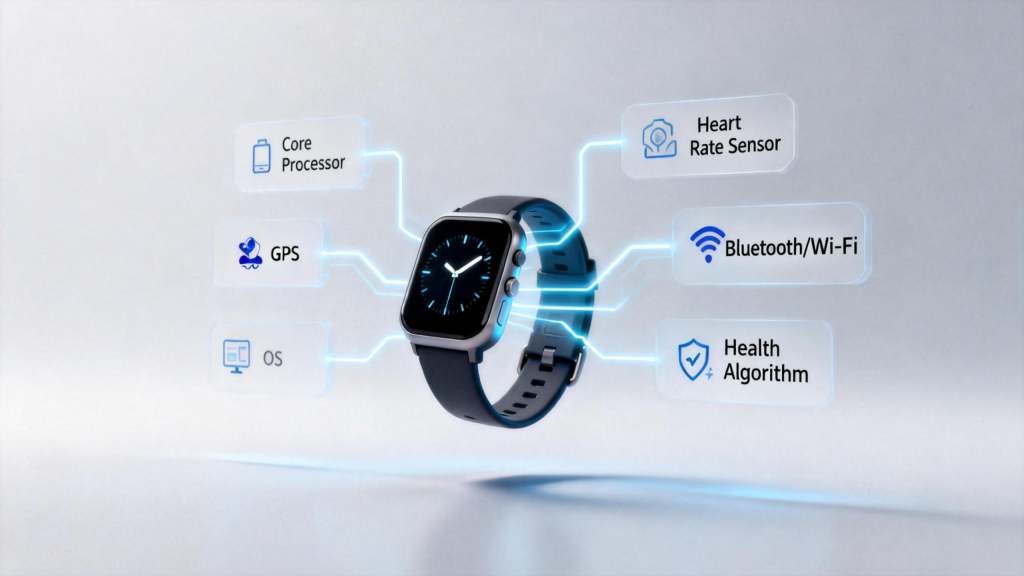
When a smart watch collects health data, it stores it locally as described earlier. Synchronization begins when the watch establishes a connection with its paired smartphone. This typically happens automatically whenever the devices are within range and Bluetooth is enabled. The watch transmits accumulated data to the phone, which then forwards it to the manufacturer’s cloud servers .
Users rarely notice this process. It runs in the background, quietly ensuring that the latest heart rate readings and workout summaries appear in the companion app. For most people, sync just works.
Cloud Platforms and Integration
Once data reaches the cloud, it becomes part of a larger ecosystem. Manufacturers maintain sophisticated cloud platforms that store, process, and analyze health information at scale. These platforms enable features that would be impossible on the watch alone.
Users can view months or years of historical data through web dashboards or mobile apps. Algorithms running on cloud servers calculate trends, generate insights, and detect anomalies. Machine learning models compare individual data against population-level patterns to identify potential health issues .
Some platforms go further by integrating with healthcare systems. Google Health Cloud and Salesforce Health Cloud, for example, allow providers to connect wearable data to electronic health records . This gives clinicians access to continuous monitoring data alongside traditional medical information, creating a more complete picture of patient health.
Real-World Example of Cloud Sync in Action
Consider a user wearing a smartwatch that tracks heart rate variability and sleep. Each night, the watch collects detailed data. In the morning, it syncs with the phone. The data flows to the cloud, where algorithms analyze it against the user’s baseline. If the system detects significant deviations, it might send a notification suggesting the user pay attention to recovery or stress levels.
This entire process happens automatically. The user never sees the data move, but the insights appear seamlessly on the wrist or phone.
The Role of APIs
Application Programming Interfaces make cloud synchronization useful for more than just manufacturer apps. Developers use APIs to access wearable data and build third-party applications that extend functionality . A nutrition app might read step counts to adjust calorie recommendations. A sleep coaching service might analyze sleep stage data to provide personalized advice.
Health platforms like Apple HealthKit provide frameworks for apps to read and write health data with user permission. However, important limitations exist. HealthKit data stays on-device by default, and there is no backend API for remote access. Apps must run natively on iOS to read data, and users must grant explicit consent for each data type . This privacy-first design ensures that cloud synchronization happens only with active user participation.
Clinical Applications and Cloud Sync
The healthcare industry increasingly relies on cloud-synchronized wearable data. Remote patient monitoring programs use continuous data from wearables to track chronic conditions. Patients with heart failure, diabetes, or hypertension can be monitored at home, with data flowing automatically to care teams .
When a patient’s vital signs cross critical thresholds, cloud-based alerting systems can notify clinicians in real time . This enables early intervention before problems escalate, potentially preventing hospitalizations. The cloud transforms raw sensor data into actionable clinical intelligence.
Security and Compliance
Because health data is sensitive, cloud synchronization must meet stringent security requirements. Healthcare organizations using cloud platforms for patient data must comply with regulations like HIPAA in the United States. This requires end-to-end encryption, secure data platforms, and formal agreements between device vendors and healthcare providers establishing shared responsibility for protecting patient information .
Data is encrypted both in transit from device to cloud and at rest in cloud storage. Access controls ensure that only authorized parties can view sensitive information. Audit trails track who accessed what data and when .
Multi-Device Syncing
Cloud synchronization also enables multi-device experiences. A user might start a workout on their smartwatch and later review it on their tablet. They might check sleep trends on their phone while commuting. The cloud keeps all devices in sync, providing a consistent view of health data regardless of which screen the user looks at .
This seamless experience relies on the cloud as a central repository. Each device syncs to the same cloud account, pulling down updates from others and pushing up its own new data.
Privacy Considerations
Despite its benefits, cloud synchronization raises privacy questions. Data that leaves the device enters a broader ecosystem with different protections. Users should understand what data is being synced, where it is stored, and who can access it.
Leave a Comment
Your email address will not be published. Required fields are marked *