
The intersection of consumer technology and medical science has produced few tools as promising as the smartwatch for cardiovascular health. What began as a fitness accessory has evolved into a sophisticated monitoring device capable of detecting irregular heart rhythms, measuring physiological changes, and potentially alerting users to serious conditions before symptoms appear.
The Technology Behind the Wrist
Modern smartwatches rely on two primary technologies to assess heart health. The first is photoplethysmography, or PPG, which uses green and infrared LEDs to measure blood volume changes beneath the skin. This optical method allows for continuous heart rate tracking and can detect pulse irregularities throughout the day and night. The second is a single-lead electrocardiogram, or ECG, which users activate by holding a finger against the watch crown. This creates a closed circuit that records the heart’s electrical activity for thirty seconds, producing a tracing that can be examined for abnormalities .
These sensors work together to provide both continuous background monitoring and on-demand recordings. The PPG sensor runs constantly, looking for patterns that might indicate a problem. When it detects something unusual, it can prompt the user to take an ECG, capturing a snapshot of the heart’s rhythm at that moment .
Detecting Atrial Fibrillation
The most extensively studied application of smartwatch cardiovascular monitoring is the detection of atrial fibrillation, a common heart rhythm disorder that increases stroke risk fivefold. Multiple large-scale studies have demonstrated that smartwatches can identify this condition with reasonable accuracy.
The Apple Heart Study, published in the New England Journal of Medicine, evaluated over 419,000 participants and found that the irregular rhythm notification from the Apple Watch had a positive predictive value of 84 percent for identifying episodes of atrial fibrillation . Other manufacturers have shown similar or better performance. The Garmin Venu series demonstrated a positive predictive value of 90 percent, the Samsung Galaxy Watch reached 95 percent, and the Huawei Watch showed 91.6 percent in the mAFA-II trial .
More recent evidence comes from the EQUAL trial, a randomized controlled trial published in the Journal of the American College of Cardiology. Researchers enrolled 437 adults aged sixty-five and older with elevated stroke risk but no history of atrial fibrillation. Participants were randomly assigned to six months of smartwatch monitoring or standard care. In the monitoring group, 9.6 percent received a new diagnosis of atrial fibrillation compared to just 2.3 percent in the control group. The number needed to screen was fourteen, meaning for every fourteen people monitored, one additional case of atrial fibrillation was detected. Notably, more than half of the detected cases in the monitoring group were asymptomatic, meaning they would likely have gone unnoticed without the watch .
Accuracy Across Different Populations
Validation studies have extended beyond healthy adults to include specific populations. A study of children aged five to seventeen at a pediatric heart center compared smartwatch ECGs to standard twelve-lead electrocardiograms. The automated smartwatch measurements showed excellent agreement for heart rate, good agreement for PR and QT intervals, and moderate agreement for QRS duration and QTc interval. When cardiologists performed manual measurements on the smartwatch tracings, the accuracy improved significantly, with good to excellent agreement across all intervals .
In patients with heart failure, smartwatches have shown moderate to good accuracy for heart rate and step count measurements compared to reference devices. A scoping review published in ESC Heart Failure found that physical activity data from wearables helped cardiologists assess functional class more objectively, as exercise intolerance increased with disease severity in predictable patterns .
The Blood Pressure Challenge
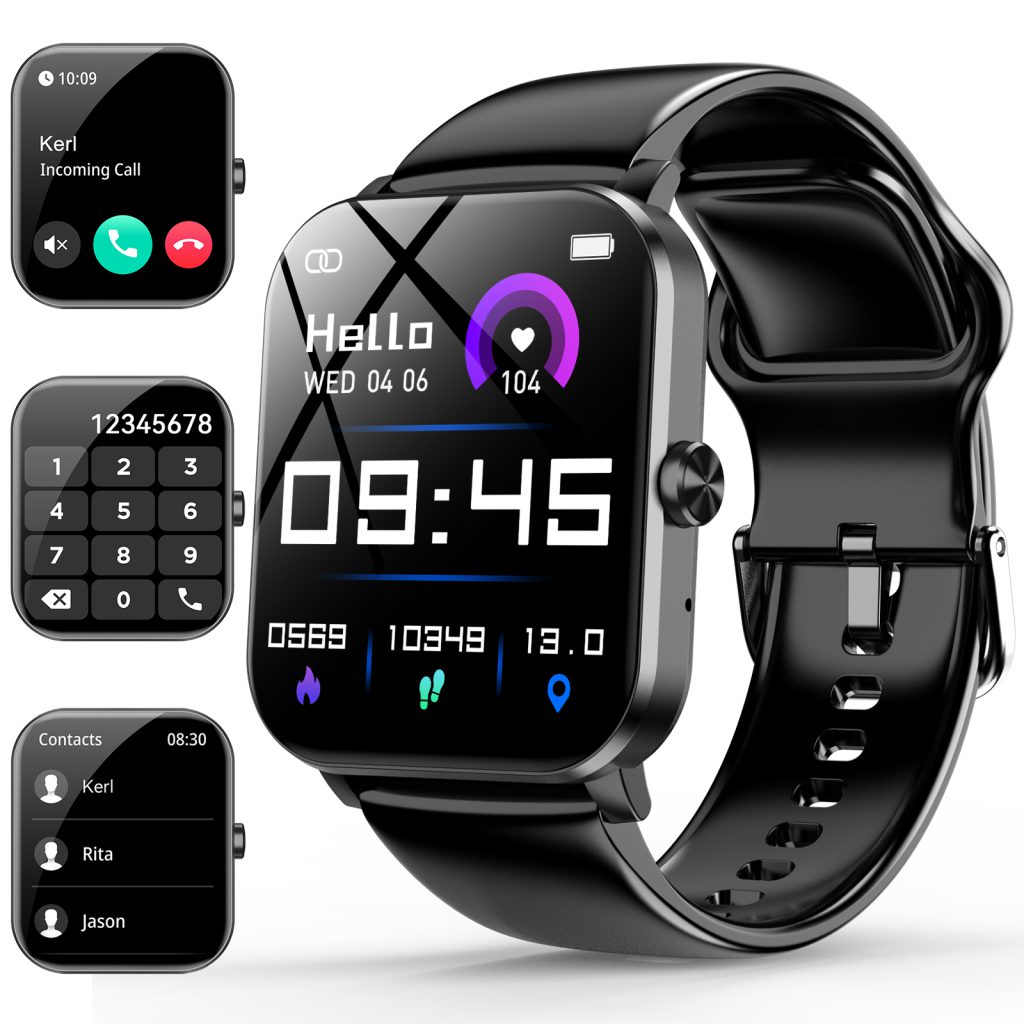
While rhythm monitoring has proven successful, blood pressure measurement remains a more difficult frontier for wearable technology. Most smartwatches that claim to measure blood pressure use cuffless technology, estimating pressure from pulse wave analysis rather than directly measuring it. Current evidence suggests these estimates are not yet reliable enough for clinical decision-making.
A validation study of a low-cost smartwatch published in 2025 found that its blood pressure measurements differed significantly from reference devices, with poor reliability for all outcomes except heart rate . An editorial in Hypertension Research concluded that there is no convincing evidence that any cuffless blood pressure technology has adequate accuracy as required for clinical use, and scientific societies do not recommend them .
Some manufacturers have developed hybrid approaches. The Apple “Hypertension Notification Feature” uses optical sensor data analyzed over thirty-day periods to alert users if it detects consistent signs of high blood pressure. This approach is designed for screening undiagnosed hypertension in the general population rather than monitoring treated patients, and any notification requires confirmation with a traditional cuff . A few smartwatch-type devices that incorporate miniature oscillometric cuffs have shown promise in validation studies, but more research is needed in ambulatory conditions involving motion and position changes .
Beyond Common Conditions
Smartwatch cardiovascular monitoring is finding applications beyond the usual suspects. A case report published in the European Heart Journal described a patient with long COVID and postural orthostatic tachycardia syndrome who recorded over three hundred ECGs using a Samsung smartwatch over several months. By analyzing S-wave to R-wave amplitude ratios and heart rate changes between sitting and standing positions, researchers could track the patient’s autonomic function and correlate it with self-reported fatigue levels. The smartwatch-derived biomarkers followed the patient’s symptom fluctuations, including periods of post-exercise fatigue, suggesting these devices could help monitor recovery in conditions that are notoriously difficult to quantify .
Emerging research is also exploring artificial intelligence to expand the capabilities of smartwatch ECGs. The Cardia-AI project demonstrated a proof-of-concept pipeline that combines smartwatch sensor data with electronic health records to generate personalized educational summaries. While not yet validated for clinical outcomes, such approaches point toward a future where wearable data integrates more seamlessly into medical care .
Despite these advances, smartwatch cardiovascular monitoring has important limitations. False positives can occur, leading to unnecessary anxiety and healthcare visits . A study examining diagnostic performance found that the Apple Watch missed approximately one in three episodes of atrial fibrillation in worst-case analysis, and over 20 percent of its recordings were unclassifiable by automated algorithms. Physician interpretation improved accuracy significantly, but even cardiologists found the single-lead tracings unreliable for detecting arrhythmias other than atrial fibrillation .
The devices also require user cooperation. ECG recordings require the user to remain still and activate the function intentionally, which means they capture only brief moments rather than providing continuous rhythm monitoring. PPG-based irregular rhythm notifications run continuously but cannot provide the same level of detail as an ECG tracing .
Integration into Care
For patients and clinicians, the key question is how to use smartwatch data effectively. The evidence supports their role in screening for atrial fibrillation, particularly in older adults with stroke risk factors. The EQUAL trial demonstrated that embedding smartwatch monitoring into a telemedicine workflow with rapid ECG review by healthcare professionals can identify cases that would otherwise remain undiagnosed .
For other applications, smartwatch data should be viewed as complementary to traditional monitoring rather than replacement. Heart rate trends can inform discussions about exercise tolerance. Activity patterns can provide objective measures of functional status. But clinical decisions about medication adjustments or treatment changes should still rely on validated medical devices and professional interpretation.
The trajectory of smartwatch technology in cardiovascular care is clear. Sensors are becoming more accurate. Algorithms are improving. Integration with healthcare systems is advancing.
Leave a Comment
Your email address will not be published. Required fields are marked *