
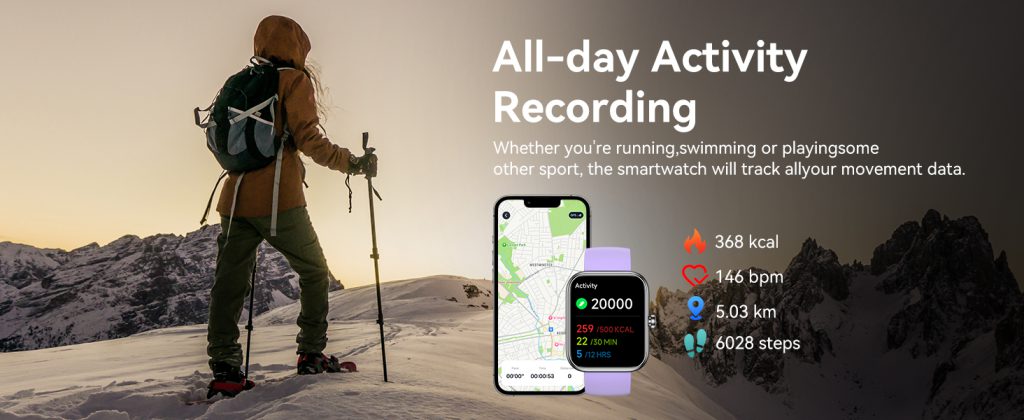
Fitness tracking has evolved far beyond counting steps and calories. Modern smartwatches now offer a deeper layer of insight through exercise load analysis. This feature helps users understand not just what they did, but how much stress that activity placed on the body. For anyone serious about consistent progress.
What Exercise Load Measures
Exercise load, sometimes called training load, quantifies the total physiological stress of a workout. It considers both the duration and the intensity of the activity. A long, slow run creates a different load profile than a short, explosive interval session. The watch combines these factors into a single number that represents how much strain the workout imposed on the body .
The purpose of tracking load is to understand how training affects the body over time. It moves beyond simple metrics like distance or pace and looks at the internal cost of the effort. This allows athletes to see whether they are challenging themselves enough—or perhaps too much .
How Smartwatches Calculate Load
The calculation behind exercise load relies heavily on heart rate data. During a workout, the watch records how long the user spends in different heart rate zones . Time spent in higher zones contributes more to the overall load score because it represents greater physiological demand .
Some advanced systems also incorporate other inputs. Running watches may factor in ground contact time and vertical oscillation to account for the impact of running mechanics . For strength training, some devices use accelerometer data to detect muscle effort, though this is less standardized than heart rate-based methods .
After the workout, the watch assigns a load value. Over time, it tracks these values to establish patterns. This historical data becomes the foundation for more advanced metrics like acute load, chronic load, and load ratio .
Acute Load, Chronic Load, and Ratio
To make load data useful, smartwatches break it down into three key concepts.
Acute load represents the short-term training stress, typically measured over the last seven days. It shows how hard the user has been working recently . Chronic load reflects long-term training stress, usually measured over the last four to six weeks. It shows the fitness baseline built over time .
The relationship between these two numbers is called the load ratio, sometimes referred to as training strain or form . This ratio helps answer a critical question: Is recent training sustainable?
When acute load is significantly higher than chronic load, the user may be at risk of overtraining or injury . When acute load drops well below chronic load, it may indicate detraining or insufficient challenge . The ideal range varies by individual, but many sports science models suggest keeping acute load within about 20 percent above or below chronic load for balanced progress .
Practical Applications
Exercise load analysis provides actionable feedback. A runner preparing for a marathon can use load data to ensure weekly volume increases at a safe rate. A recreational cyclist might check load ratio before adding extra intensity to avoid burnout .
The feature also helps with tapering before races. By deliberately reducing acute load while maintaining chronic load, athletes can arrive at race day fresh but still fit . After a race, load data guides the return to training, ensuring enough recovery before building back up.
For casual users, load analysis simply offers perspective. It explains why some weeks feel harder than others, even when distance or duration looks similar on paper. It validates the effort of a tough interval session and provides permission to rest after a heavy load week.
Limitations and Considerations
Load analysis is a powerful tool, but it has limits. Accuracy depends on proper heart rate monitoring. Loose wrist straps, poor sensor placement, or activities that interfere with optical sensors can affect data quality . The algorithms also assume a certain level of cardiovascular fitness and may be less accurate for users with medical conditions affecting heart rate .
External factors like stress, sleep, and hydration influence how the body responds to load, but these are not always fully captured in the calculation . Users should treat load data as a guide rather than a strict rule, combining it with subjective feelings of energy and recovery.
Making Load Data Work
To benefit from exercise load analysis, consistency matters. Wearing the watch for all workouts, not just running or cycling, provides a complete picture of total stress . Reviewing load trends weekly, rather than obsessing over single sessions, helps identify patterns before they become problems .
Leave a Comment
Your email address will not be published. Required fields are marked *