
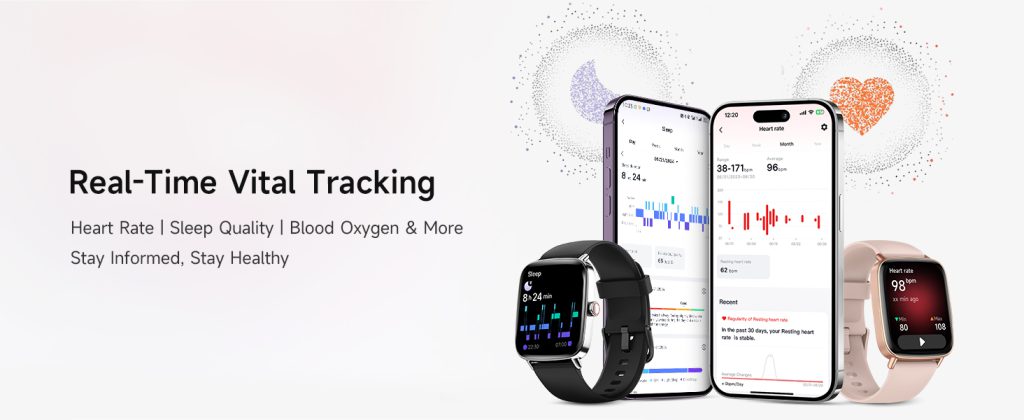
Among the many health metrics that modern smartwatches provide, few are as informative yet misunderstood as VO2 max. This number, often displayed in a dedicated widget or after a run, offers a window into cardiovascular fitness.
What VO2 Max Represents
VO2 max stands for maximal oxygen uptake. It measures the maximum amount of oxygen that the body can utilize per minute per kilogram of body weight during intense exercise . In simple terms, it reflects how efficiently the heart, lungs, and muscles work together to deliver and use oxygen. Higher values generally indicate better aerobic capacity .
For endurance athletes, VO2 max is a strong predictor of performance . For the general population, it serves as a meaningful marker of overall health and is linked to long-term well-being . Knowing this number provides a baseline for fitness and a way to track improvement over time.
How Smart watches Estimate VO2 Max
Smartwatches do not measure VO2 max directly the way a laboratory does. Laboratory testing requires a mask, a metabolic cart, and a maximal effort on a treadmill or bike until exhaustion . Smartwatches take a different approach. They estimate VO2 max using submaximal algorithms during outdoor activities .
When a user goes for an outdoor run or a brisk walk, the watch collects data on heart rate, pace, and sometimes elevation . Proprietary algorithms analyze how the heart responds to a given workload. A lower heart rate at a faster pace typically points toward better fitness . The watch also considers personal factors such as age, sex, weight, and height to refine the estimate .
Most devices require a few outdoor workouts before providing an initial estimate. Continuous use improves accuracy as the watch learns the user’s physiological patterns .
Accuracy and Limitations
Research shows that smartwatch VO2 max estimates are generally useful but come with caveats. Studies comparing watch estimates to lab measurements have found moderate agreement . One study on the Garmin Forerunner 245 reported mean absolute percentage errors around 7 to 8 percent, indicating reasonable accuracy for everyday use .
However, accuracy varies by fitness level. Watches tend to underestimate VO2 max in highly trained athletes . Another study on the Apple Watch found that it overestimated values in individuals with lower fitness and underestimated in those with excellent fitness . A separate investigation concluded that while smartwatches may overestimate or underestimate compared to lab tests, they demonstrate good reliability, meaning the numbers are consistent from one workout to the next .
For recreational users, this consistency matters more than absolute precision. Tracking trends over weeks and months provides valuable insight into whether fitness is improving, even if the exact number is not perfectly accurate.
Factors That Influence Readings
Several factors affect VO2 max estimates from a smartwatch. Wrist placement and sensor contact matter for heart rate accuracy. Medications that affect heart rate can skew results . Environmental conditions like steep hills or poor GPS signal may also introduce error .
Most manufacturers recommend flat terrain for the most reliable readings . Consistency in workout types—such as always running outdoors rather than mixing in treadmill sessions—helps maintain comparability over time.
Practical Takeaways
VO2 max serves as a useful compass rather than a strict diagnostic tool. Users should watch for trends. A rising number over months suggests that cardiovascular fitness is heading in the right direction. A plateau or decline might prompt a look at training consistency, sleep, or recovery habits .
For those serious about improving VO2 max, structured training that includes both steady-state endurance work and high-intensity intervals remains the most effective approach. The smart watch simply provides feedback on whether those efforts are translating into measurable gains.
Leave a Comment
Your email address will not be published. Required fields are marked *