
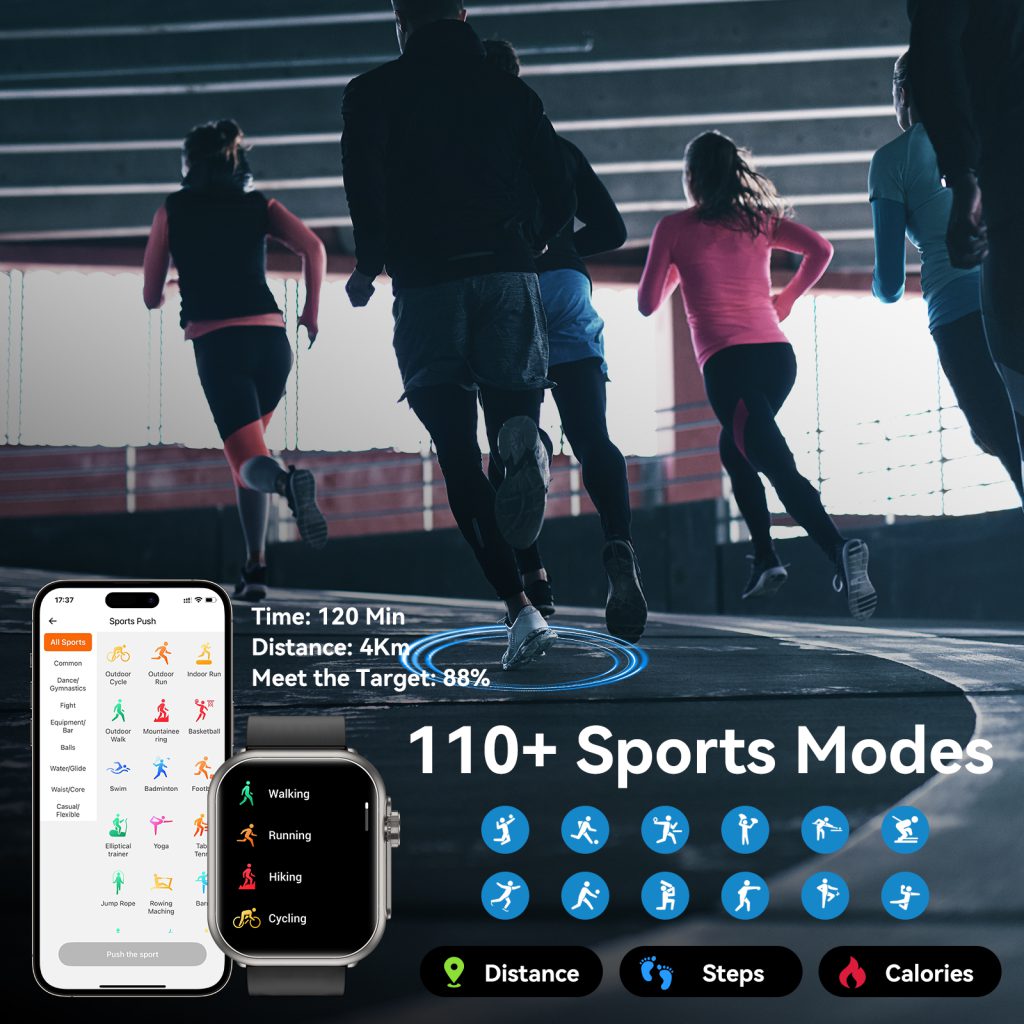
Smart watches have become everyday companions for health-conscious individuals. While GPS tracking handles outdoor exercise, a different kind of technology takes over when users step inside. Indoor activity recognition allows a watch to understand what the body is doing without location data. It is a complex process that happens quietly on the wrist.
The Shift to Indoor Sensors
When a person enters a gym or runs on a treadmill, satellite signals become unreliable or unavailable. Smartwatches adapt by switching to internal sensors. The primary tool for indoor tracking is the accelerometer, a small sensor that measures movement and acceleration . Many watches also include gyroscopes to detect orientation and rotation .
These sensors work together to capture raw data about arm swing, wrist motion, and body movement. The watch collects this information many times per second, creating a detailed profile of the workout in progress.
Distinguishing One Activity from Another
The challenge lies in interpretation. An arm swinging during a run looks different from an arm moving during an elliptical session. Watch manufacturers develop algorithms to analyze sensor data and classify the activity .
For example, indoor running relies on arm movement patterns and step frequency to estimate pace and distance. Elliptical training involves a smooth, oval motion that the sensors learn to recognize . Activities like indoor rowing generate distinct forward-backward motions, while jump rope produces rapid, consistent pulses detected by the watch . Some devices even support specialized modes for boxing or badminton, tailoring metrics to those specific movements .
Automatic Detection Features
Modern smartwatches often include automatic activity detection. This feature removes the need to manually start a workout. The device continuously monitors sensor data in the background. When the patterns match a known activity like walking or running for a certain duration, the watch prompts the user to confirm or automatically begins recording .
For indoor use, this is particularly helpful. A user who forgets to start the treadmill mode may still receive a record of the effort. These systems typically require a few minutes of continuous movement to trigger, ensuring that brief motions do not create false workouts .
Accuracy and Limitations
Indoor activity recognition has improved significantly, but it is not perfect. Without GPS, distance tracking on a treadmill depends on calibration. Users often need to input their stride length or run a known distance outdoors to help the watch learn .
Research shows that wrist-worn devices generally perform well for step counts and heart rate during indoor activities . However, measuring energy expenditure remains challenging, with studies noting higher error rates for calorie burn estimates . The watch provides a useful reference, but users should view the numbers as estimates rather than clinical measurements.
Applications Beyond Fitness
Indoor activity recognition extends beyond exercise. Researchers are exploring its use in healthcare, particularly for older adults. The ability to track basic activities of daily living—such as eating, drinking, or moving around the home—could support aging-in-place strategies . While much of this research remains in development, it points to a future where smartwatches contribute to health monitoring in everyday life.
For most users, indoor activity recognition adds convenience and consistency to fitness tracking. It captures workouts that might otherwise go unrecorded and provides motivation through data. To get the best results, users should ensure their watch is updated, wear it snugly on the wrist, and take a moment to calibrate indoor modes when prompted.
Leave a Comment
Your email address will not be published. Required fields are marked *