
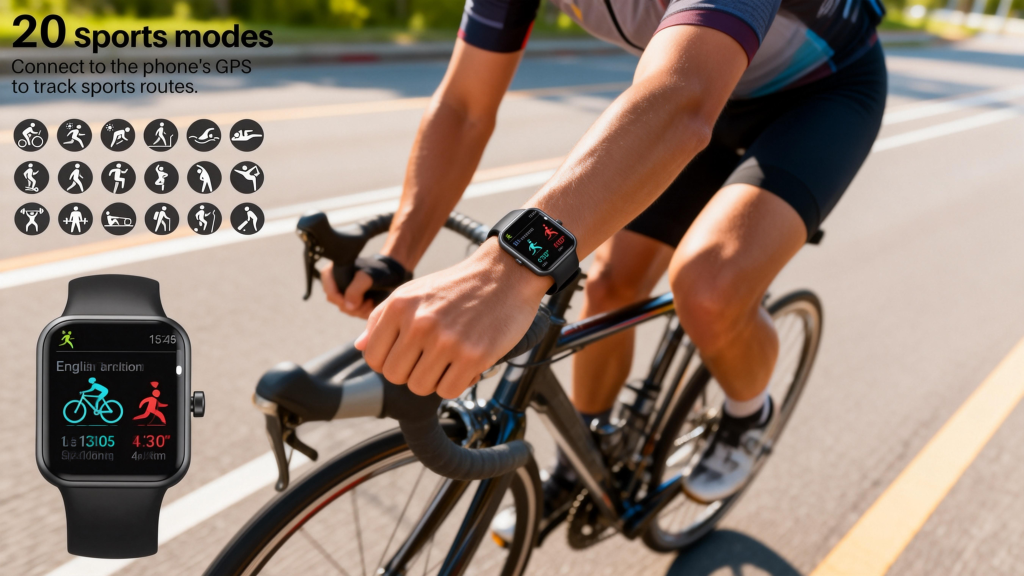
Gone are the days when cyclists needed a clunky, handlebar-mounted computer to track their rides. Today, the most powerful cycling computer might already be sitting on your wrist. Smart watches have evolved into sophisticated fitness tools that can capture every detail of your journey, from heart rate spikes on steep climbs to the smooth rhythm of a flat-road sprint.
Why Your Wrist is the Best Place for Your Cycling Data
Modern smart watches offer a level of convenience that traditional bike computers simply cannot match. They transition seamlessly from tracking your morning commute to monitoring your sleep, all without needing to be swapped between handlebars. This constant wear means your health metrics are tracked 24/7, providing a more holistic view of how your training impacts your recovery and overall well-being.
Furthermore, the integration of wrist-based heart rate monitoring has improved dramatically. While a chest strap remains the gold standard for absolute accuracy, today’s optical sensors provide reliable data for the vast majority of riders. This allows you to monitor your effort zones directly from your wrist, ensuring you are training at the right intensity without the need for extra gadgets.
Key Metrics Every Cyclist Should Monitor
When you set out on a ride, your smartwatch is silently working to capture a wealth of information. Understanding these metrics is the key to improving your performance.
Essential Ride Data
At its core, every cycling tracking session records the basics: duration, distance, speed, and elevation gain. These figures give you the “what”—how far you went and how fast you got there. GPS technology in the watch maps your exact route, allowing you to replay your ride and explore new paths without fear of getting lost.
Physiological Insights
Beyond the raw numbers, the real magic lies in what the data tells you about your body. Your smartwatch tracks your heart rate to calculate calorie burn and measure aerobic load. More advanced metrics, like VO2 Max (your body’s efficiency at using oxygen), are calculated over time to show you if your fitness is improving. Many watches now also track your training load and recovery time, telling you when to push hard and when to rest, which is crucial for avoiding burnout and injury.
Navigation and Safety
Cycling tracking isn’t just about looking back; it’s also about what lies ahead. Many high-end smartwatches now feature breadcrumb navigation, allowing you to upload a route and follow it via vibrations and visual cues on your wrist. This keeps your eyes on the road and your hands on the bars. Additionally, features like incident detection and fall alerts provide peace of mind for solo riders, automatically sharing your location with emergency contacts if a crash is detected.
Choosing the Right Watch for Your Ride
Selecting a smartwatch for cycling depends largely on your riding style. For the casual commuter or weekend warrior, a general-purpose fitness watch with built-in GPS and reliable heart rate monitoring is more than sufficient. These models offer excellent battery life for a full day of use and can handle rides lasting several hours.
However, for the endurance athlete or long-distance tourer, battery life becomes the deciding factor. Look for watches with Ultra or multisport designations that offer extended GPS battery life, sometimes lasting 20 to 60 hours on a single charge. These models are also typically more durable and offer advanced connectivity with external sensors like power meters and cadence sensors, turning your wrist into a true cycling command center.
The modern smart watch has bridged the gap between a fitness tracker and a professional cycling computer. It puts a wealth of data on your wrist, helping you ride smarter, safer, and stronger.
Leave a Comment
Your email address will not be published. Required fields are marked *