
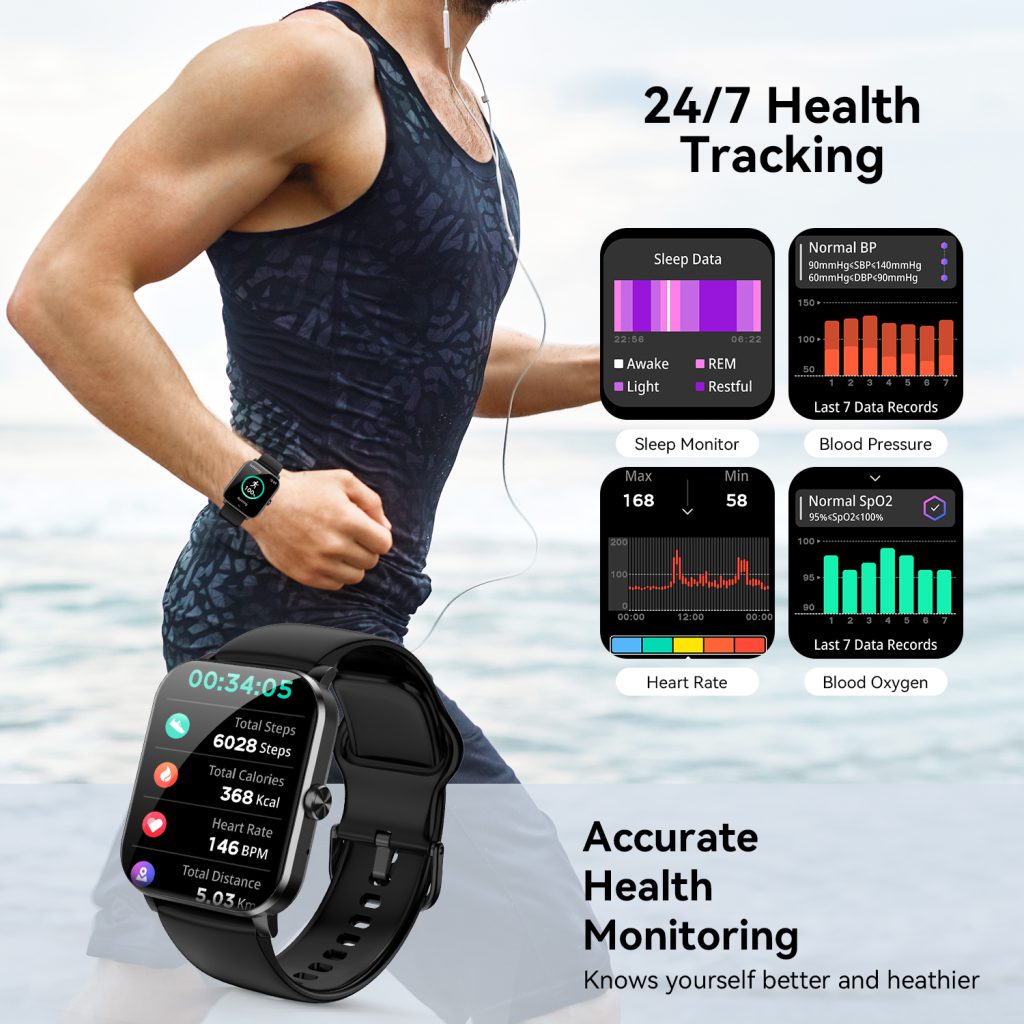
You tie your shoes, tap start, and run out the door. When you get back, your watch has a story to tell. Distance. Pace. Heart rate. Cadence. Maybe a map of exactly where you went.
Most runners look at these numbers. Few ask where they came from.
Here’s what your watch is actually doing while you run.
The Satellite Game
Your watch doesn’t measure distance with lasers or guess based on stride length. It talks to satellites.
GPS satellites orbit the earth, broadcasting their position and the exact time. Your watch listens. By comparing timestamps from multiple satellites, it calculates how far away each one is. Three satellites give a rough position. Four or more give accuracy within a few meters.
This happens continuously while you run. Every second or two, your watch pings the sky and marks another dot on the map. Connect the dots, add up the distances between them, and you get your total distance.
But it’s not perfect. Tall buildings bounce signals. Tree cover weakens them. Your watch thinks you ran through that apartment block because the signal reflected off it first. This is why trail runs sometimes look like you were weaving through houses.
When You Run on a Treadmill
Treadmill running breaks the GPS model. You’re moving, but the satellites don’t care because your position isn’t actually changing.
So your watch switches to arm swing analysis. It knows roughly how far you move with each stride based on the rhythm and force of your arm motion. It’s an estimate, not a measurement. This is why treadmill distance is often slightly off, especially if you hold the rails—your arms stop swinging, and the watch loses its reference.
Some newer watches combine arm swing with the treadmill’s own readout if you manually calibrate. But out of the box, GPS is the truth teller. No satellites, no certainty.
Pace: The Number That Lies
Your watch displays your current pace. You glance down. 5:30 per kilometer. Good. Then 6:15. What happened?
Instant pace is noisy. It jumps around because it’s calculated from the last few seconds of movement, not a steady average. If you take a tight turn, your pace drops. If you glance at your phone, your arm slows down briefly, and your watch thinks you decelerated.
This is why most runners prefer average pace or lap pace. They smooth out the noise and show you what you’re actually sustaining.
Some watches also offer pace coaching—gentle alerts when you drift outside your target range. It’s not judgment. It’s just a nudge.
Cadence and Ground Contact Time
Two metrics you never thought about before you owned a watch.
Cadence is your step rate. How many times your feet hit the ground per minute. Most recreational runners land around 160 to 170. Elite runners often exceed 180. Higher cadence with the same speed usually means shorter, quicker steps—which can reduce impact and injury risk.
Ground contact time measures how long your foot stays on the ground with each step. Less time means more spring, better efficiency. Your watch detects this through the accelerometer, the same sensor that knows when you raise your wrist to look at the screen.
Neither number is a command. They’re clues. If your cadence drops late in a long run, you’re getting tired. If your ground contact time is high on one side, you might be favoring a leg.
Heart Rate and Effort
Your running watch also tracks your heart rate. Optical sensors on the back shine light into your skin and measure how much scatters back. Blood absorbs light. Each beat changes blood volume in your capillaries. The sensor catches that rhythm.
It’s less accurate than a chest strap. Arm movement, sweat, and fit all affect the reading. But it’s consistent enough to show trends. You learn what 150 beats per minute feels like for you. Eventually, you don’t need the number.
The Map at the End
Perhaps the most satisfying part of a recorded run is the map. Colored by pace—green for fast, red for slow, yellow for steady. You see where you struggled, where you cruised, where you stopped at the traffic light.
That map is made of thousands of tiny decisions your watch made without you noticing. When to trust the signal. When to discard a bad reading. How to connect dots that don’t quite line up.
It’s not reality. It’s an approximation. But it’s close enough to help you run better tomorrow.
What Your Watch Misses
Your watch doesn’t know how you feel. It doesn’t know if you’re tired, sore, or just didn’t feel like pushing today.
It measures output, not input. Effort, not intent.
Leave a Comment
Your email address will not be published. Required fields are marked *