
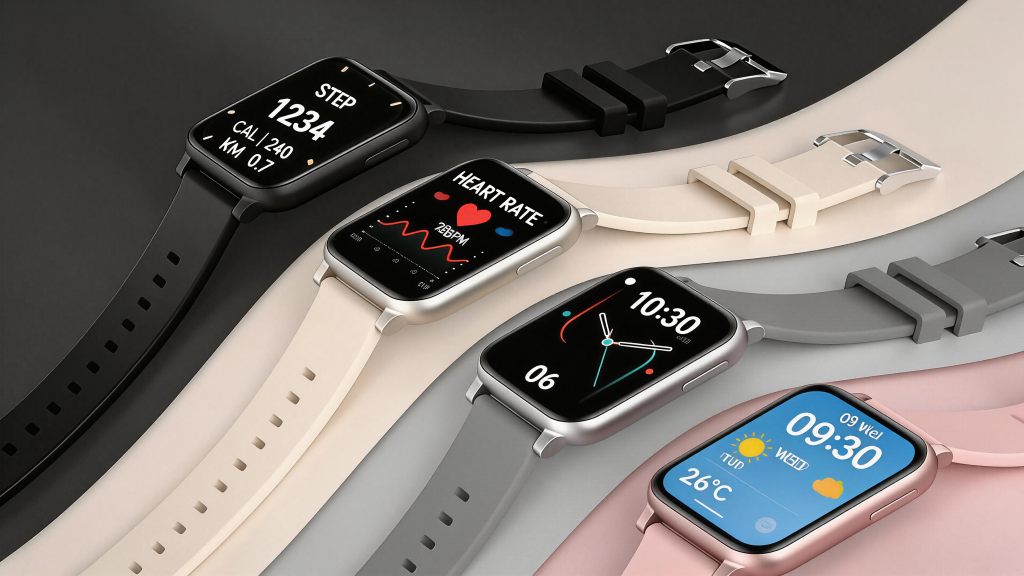
Stress Index (or Stress Score) has become a familiar sight on smartwatches—usually a number from 0 to 100, sometimes color-coded green to red, telling you whether your body is calm, balanced, or overloaded. But what exactly goes into that single digit? It isn’t pulled from thin air or guessed from how you look. It’s the result of real-time physiological data processed through carefully tuned algorithms. Different brands use slightly different formulas, but the underlying principles are remarkably consistent across the industry.
The Core Building Blocks: Physiological Signals
At its heart, Stress Index reflects the balance (or imbalance) between your sympathetic (“fight or flight”) and parasympathetic (“rest and digest”) nervous systems. The watch gathers several key signals to assess this:
- Heart Rate Variability (HRV) — The primary driver for most models. HRV measures the natural variation in time between heartbeats. High variability usually means strong parasympathetic activity and good recovery; low variability signals sympathetic dominance and heightened stress. Devices sample short-term HRV (often 1–5 minute windows) multiple times a day, especially during quiet moments or overnight.
- Resting / Instantaneous Heart Rate — A persistently elevated heart rate compared to your personal baseline is a classic stress marker. The watch continuously tracks your current rate and compares it against a learned norm (adjusted for age, fitness level, time of day, etc.).
- Electrodermal Activity (EDA) / Skin Conductance (on supported models) — Measures micro-sweating caused by sympathetic activation. Even subtle emotional or cognitive stress can trigger small increases in skin conductance, providing an additional emotional-arousal dimension.
- Activity Context from Accelerometer — This is crucial for accuracy. The algorithm filters out exercise-induced elevations (running, HIIT) so they don’t falsely inflate the stress score. Only unexplained elevations during rest or low activity contribute.
The Calculation Process Step by Step
While exact formulas are proprietary, the general workflow looks like this:
- Continuous Data Collection The watch records heart rate, HRV segments, motion, and (if available) EDA throughout the day and night.
- Baseline Establishment Over the first week or two of wear, the device builds your personal baselines for resting heart rate and typical HRV at different times of day. Later readings are always relative to you—not generic population averages.
- Feature Extraction For each assessment window (e.g., every 5–30 minutes when still), the algorithm extracts features:
- Recent change in HRV (e.g., RMSSD or SDNN dropping)
- Deviation of current heart rate from baseline
- Presence and frequency of EDA spikes
- Absence of physical activity
- Weighted Scoring & Normalization These features are fed into a machine-learning model (often a regression or classification model) trained on large datasets where stress was validated by self-reports, cortisol levels, or lab stressors. Each feature gets a weight based on how predictive it is. The raw output is then normalized to a 0–100 scale (or similar), where:
- 0–30 ≈ Low / Relaxed
- 30–60 ≈ Balanced / Moderate
- 60–80 ≈ Medium-High / Stressed
- 80–100 ≈ High / Very Stressed
- Smoothing & Trend Adjustment To avoid jumpy readings, scores are smoothed over time (e.g., a 10–30 minute rolling average) and sometimes adjusted by longer-term trends (e.g., sustained low HRV over hours weighs heavier than a brief spike).
Why Scores Can Feel Different Across Brands
Some brands emphasize overnight HRV recovery for a “daily stress load” view, others prioritize real-time daytime reactivity. Models with EDA tend to be more sensitive to acute emotional stress, while HRV-focused ones excel at detecting chronic load. Fitness level also plays a role—trained athletes often have naturally higher baseline HRV, so the same absolute value might mean different things.
QONBINK takes a balanced approach, blending short-term daytime reactivity with overnight recovery trends to produce a Stress Index that feels intuitive and actionable, especially for users who want early warnings without constant false alarms.
What the Index Really Tells You
A high Stress Index doesn’t mean you’re “stressed out” emotionally—it means your body is physiologically in a sympathetic-dominant state. That could come from mental pressure, physical overexertion recovery, illness onset, caffeine, dehydration, heat, or poor sleep the night before. Low scores indicate recovery dominance, but they don’t guarantee you feel happy or relaxed.
Use it as a trend tool rather than a moment-to-moment mood meter. Watch how the index behaves after specific triggers (late nights, arguments, workouts, meditation sessions) and let those patterns guide small adjustments—better breathing, short walks, earlier wind-downs—before stress builds into bigger problems.
Leave a Comment
Your email address will not be published. Required fields are marked *