
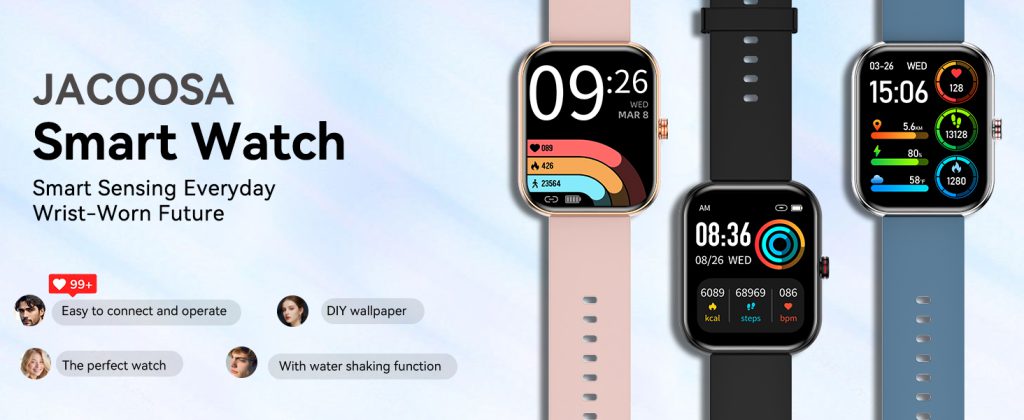
When shopping for a smartwatch, most people first check the features—battery life, sensors, or display quality. But the materials used in the case, bezel, and back can make or break your long-term satisfaction. The right material affects scratch resistance, weight, skin comfort, water resistance, premium feel, and even how the watch ages over time. Here’s a practical breakdown of the most common smartwatch materials today and what each one brings (or doesn’t bring) to your wrist.
Aluminum: Lightweight Everyday Winner
Aluminum is the go-to choice for many popular smartwatches because it hits a sweet spot between cost, weight, and durability.
Aerospace-grade aluminum (often 7000-series) is lightweight—typically keeping the whole watch under 40 grams without the strap—and feels solid without being heavy. It resists corrosion well and handles daily knocks better than you might expect. Most brands anodize the surface, adding a hard, colorful coating that improves scratch resistance and gives a matte or satin finish.
The biggest advantage is comfort: you forget you’re wearing it during sleep tracking, workouts, or office hours. It’s also more affordable than premium metals, so you see it across budget, mid-range, and even flagship models. On the downside, deep scratches can reveal the silver base metal underneath, and it doesn’t carry the same luxury heft as steel or titanium.
Many everyday users prefer aluminum precisely because it balances realism with wearability—no one wants to baby a watch they wear 24/7.
Stainless Steel: Classic Weight and Polish
Stainless steel delivers that traditional watch vibe—substantial, shiny, and built to last.
316L surgical-grade stainless steel is common because it’s highly corrosion-resistant and hypoallergenic for most people. The added density gives a reassuring weight that feels premium on the wrist, especially when paired with a matching metal bracelet. Polished finishes look elegant with dressier outfits, while brushed versions hide micro-scratches better.
Durability is excellent: it stands up to bumps and everyday wear far better than aluminum, and the surface can often be re-polished if needed. Water resistance tends to be strong on steel models too.
Trade-offs include noticeably higher weight (often 50–70g+), which can cause fatigue during long wear or sleep, and a higher price tag. Some users with sensitive skin find even high-grade steel irritating after extended contact, though this is rare.
If you want your smartwatch to double as a dress watch or simply love that solid, metallic feel, stainless steel remains hard to beat.
Titanium: Lightweight Strength for the Long Haul
Titanium has become the premium material of choice for rugged and high-end smartwatches.
Grade 2 or Grade 5 titanium is incredibly strong yet much lighter than steel—often 30–40% less weight for similar thickness. It’s naturally corrosion-resistant, highly scratch-resistant (especially when treated or coated), and almost completely hypoallergenic, making it ideal for sensitive skin and all-day wear.
The matte gray finish looks modern and understated, and because titanium doesn’t anodize as easily as aluminum, many brands use PVD or DLC coatings for extra hardness and color options. Scratches are minimal even after years of hard use, and the watch holds its value well.
The main drawbacks are cost—titanium models almost always sit in the higher price tiers—and sometimes a less “clicky” or luxurious feel compared to polished steel. Still, for adventurers, athletes, or anyone who wants a watch that can take serious abuse without looking worn, titanium is often the best long-term investment.
Ceramic and Other Specialty Materials
Ceramic shows up on select high-end models and offers a unique set of benefits.
Zirconia-based ceramic is extremely hard (close to sapphire on the Mohs scale), so it resists scratches better than almost any metal. The smooth, matte or glossy finish feels cool to the touch and doesn’t attract fingerprints. It’s also very light—similar to aluminum—and completely non-conductive, which helps with certain health sensor accuracy.
Downsides include brittleness (it can crack or shatter under strong impact) and very high manufacturing cost, so ceramic smartwatches tend to be limited-edition or ultra-premium. Some brands experiment with carbon fiber composites, fiber-reinforced polymers, or even bronze for niche appeal, but these remain less common.
Plastic and Polymer: Budget-Friendly and Sporty
Lower-cost or hardcore fitness watches often use reinforced plastics, polymers, or composites.
These materials keep weight extremely low (frequently under 30g) and allow for flexible, shock-absorbing designs perfect for running, swimming, or gym use. They’re inherently corrosion-proof and usually the most comfortable option for sweaty activities or 24/7 wear.
The obvious compromise is the feel—plastic doesn’t carry the same prestige or tactile satisfaction as metal. Scratches show more easily on glossy finishes, though matte versions hide wear well. For pure function and affordability, though, polymer cases deliver outstanding value.
Quick Decision Guide
- Want the lightest, most forgettable daily wearer? → Aluminum or polymer
- Crave classic watch elegance and don’t mind extra weight? → Stainless steel
- Need maximum durability with minimal weight and great skin compatibility? → Titanium
- After ultimate scratch resistance and a modern look? → Ceramic (if budget allows)

Materials aren’t just about looks—they shape how the watch feels hour after hour and how well it survives real life. Next time you try one on, pay attention to how the case material sits on your wrist. That small detail often decides whether the smartwatch becomes a favorite or gets rotated out of your rotation.
Leave a Comment
Your email address will not be published. Required fields are marked *