
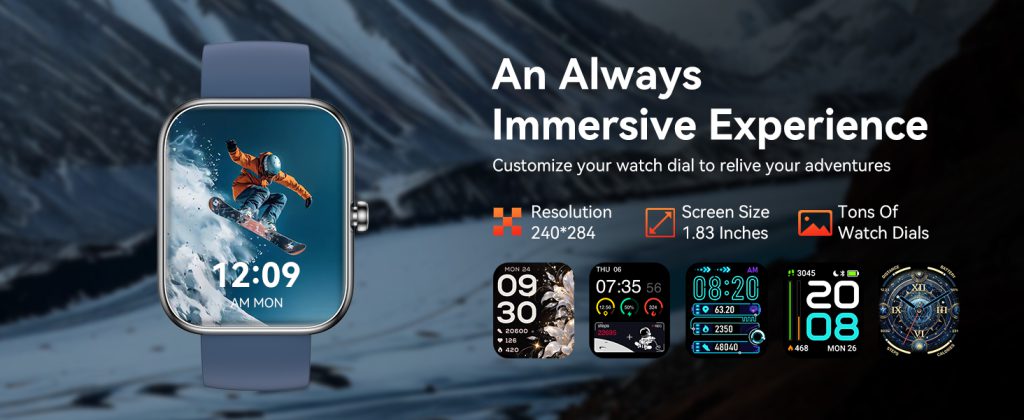
When it comes to buying a smart watch, most people focus on features like battery life, connectivity, or health tracking—but one factor that’s often overlooked (yet makes a huge difference in comfort and style) is size. A smart watch that’s too big can feel bulky and heavy on your wrist, while one that’s too small might be hard to read and lack key functionalities. Unlike traditional watches, smart watches come in a range of sizes tailored to different wrist sizes, genders, and personal preferences.
How Are Smart Watch Sizes Measured?
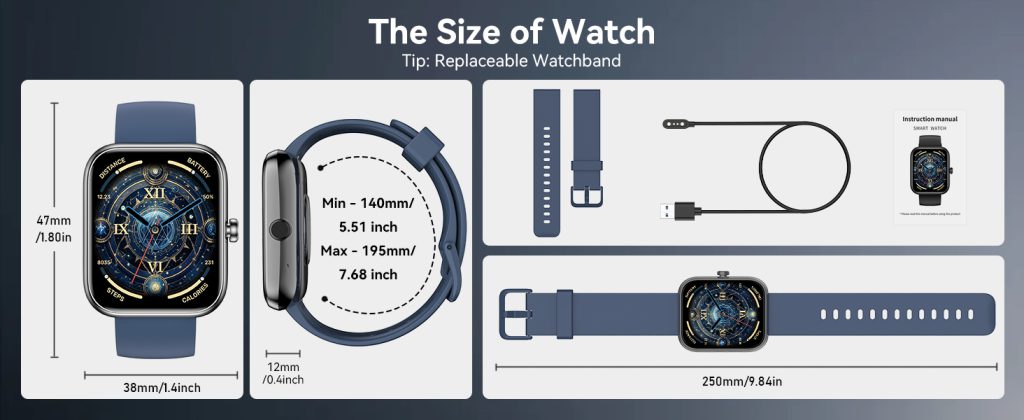
First, it’s important to understand how smart watch sizes are defined—because it’s not just about the overall watch size, but two key measurements: case diameter and case thickness. These two numbers determine how the watch looks and feels on your wrist, and they’re usually listed in product specifications (so you can check them before buying).
1. Case Diameter (The Most Important Measurement)
Case diameter is the width of the watch face (the main body of the watch) measured from one side to the other, usually in millimeters (mm). This is the measurement you’ll see most often when shopping for smart watches—for example, a “42mm smart watch” refers to a case diameter of 42 millimeters. This measurement is crucial because it directly impacts how the watch fits your wrist and how easy it is to interact with. A larger diameter means a bigger screen, which is great for reading notifications, using apps, and viewing fitness data, but it can also feel cumbersome on smaller wrists.
2. Case Thickness
Case thickness is the depth of the watch (how thick it is from the front of the screen to the back of the band), also measured in millimeters. While not as critical as diameter, thickness affects comfort—especially if you wear your watch all day or sleep with it. Thicker watches can feel bulky under sleeves, while thinner models are more discreet and comfortable for long-term wear. Most modern smart watches have a thickness between 9mm and 14mm, with fitness-focused models often being slimmer (to reduce weight during workouts) and feature-packed models (like those with built-in eSIM or advanced sensors) being slightly thicker.
Bonus: Band Width
While not technically part of the “watch size,” band width (the width of the strap that connects to the case) is another important factor to consider. Band width is usually proportional to case diameter—larger cases typically have wider bands, and smaller cases have narrower bands. A mismatched band width (e.g., a wide band on a small case) can look awkward and feel uncomfortable, so it’s best to choose a band that’s compatible with the case size (most brands sell replacement bands in the correct width for their watches).
Common Smart Watch Sizes (By Case Diameter)
Smart watches aren’t one-size-fits-all, but there are three main size categories that most brands follow: small (38mm–40mm), medium (41mm–43mm), and large (44mm–46mm+). Each size caters to different wrist sizes and preferences, and understanding what each offers will help you narrow down your choices.
1. Small Size: 38mm – 40mm
Small-sized smart watches are designed for people with smaller wrists (usually 13cm–16cm in circumference) or those who prefer a more compact, discreet look. Historically, these sizes were marketed primarily to women, but in recent years, they’ve become popular among anyone who wants a watch that’s lightweight and doesn’t dominate their wrist. Brands like Apple, Samsung, and Fitbit all offer small-sized models, and they’re perfect for everyday wear—whether you’re at work, working out, or going out.
Pros of 38mm–40mm Smart Watches
The biggest advantage of small smart watches is comfort: they’re lightweight (usually under 50g) and slim, so you’ll barely notice you’re wearing them—even for 24 hours a day. They’re also easy to wear under tight sleeves (like dress shirts or jackets) without feeling bulky. Additionally, small watches often have longer battery life than larger models, because their smaller screens use less power. For people who prioritize discretion and comfort over screen size, a 38mm–40mm smart watch is ideal.
Cons & Best For
The main downside of small smart watches is their screen size: the smaller display can make it harder to read text, navigate apps, or view detailed fitness data (like heart rate graphs or workout maps). They also sometimes lack certain features found in larger models, such as larger batteries or more advanced sensors (though this is becoming less common as technology improves). Small sizes are best for: people with wrist circumferences 13cm–16cm, those who prefer a minimalist look, anyone who wears their watch under sleeves regularly, and kids (many kids’ smart watches fall in this size range).
2. Medium Size: 41mm – 43mm
Medium-sized smart watches are the most popular and versatile option—they’re designed to fit most wrists (15cm–18cm in circumference) and balance comfort, screen size, and functionality. This size is often marketed as “unisex,” as it works well for both men and women who want a watch that’s not too big or too small. If you’re unsure what size to choose, a medium-sized smart watch is usually a safe bet—most brands make their flagship models in this size range, and they offer the best of both worlds.
Pros of 41mm–43mm Smart Watches
Medium-sized watches strike the perfect balance between screen size and comfort. The display is large enough to read notifications, use apps, and view fitness data easily, but not so large that it feels bulky. They’re comfortable to wear all day (even during workouts or sleep) and fit well under most sleeves (except for extremely tight dress shirts). Additionally, most medium-sized smart watches come with all the latest features—including built-in GPS, heart rate monitors, eSIM support, and contactless payments—so you won’t have to sacrifice functionality for size. They’re also lightweight enough for long-term wear, with most models weighing between 50g and 65g.
Cons & Best For
The only real downside of medium-sized smart watches is that they might be too big for people with very small wrists (under 15cm) or too small for people who prefer a bold, oversized look. For most people, though, this size is perfect. Medium sizes are best for: people with wrist circumferences 15cm–18cm, anyone who wants a versatile watch for everyday wear and workouts, those who want a balance of screen size and comfort, and first-time smart watch buyers who aren’t sure what size to choose.
3. Large Size: 44mm – 46mm+
Large-sized smart watches are designed for people with larger wrists (17cm–20cm+ in circumference) or those who prefer a bold, oversized look. These watches have bigger screens, which are great for viewing detailed data, using apps, and watching videos (though most people don’t watch videos on their smart watches often). They’re also popular among fitness enthusiasts and outdoor adventurers, as the larger screen makes it easier to track workouts and navigate with GPS.
Pros of 44mm–46mm+ Smart Watches
The biggest advantage of large smart watches is their screen size: the large display makes it easy to read even small text, view detailed fitness metrics (like pace, distance, and heart rate zones), and use apps with larger buttons (which is helpful for people with bigger hands). Many large models also have bigger batteries, which means longer battery life—some can last up to 7 days on a single charge, compared to 1–2 days for smaller models. Additionally, large watches often have more advanced sensors (like blood pressure monitors or temperature sensors) because they have more space inside the case. They’re also great for people who want their watch to make a style statement—oversized watches are trendy and add a bold touch to any outfit.
Cons & Best For
The main downside of large smart watches is comfort: they’re heavier (usually 65g–80g or more) and bulkier, so they can feel cumbersome on smaller wrists or during long workouts. They also don’t fit well under tight sleeves—if you wear dress shirts often, a large watch might bunch up the fabric or feel uncomfortable. Additionally, the larger screen uses more power, so some models (especially those with AMOLED displays) might have shorter battery life than smaller, simpler models. Large sizes are best for: people with wrist circumferences 17cm–20cm+, fitness enthusiasts and outdoor adventurers, those who prefer a bold, oversized style, and people who prioritize screen size and battery life over discreetness.
How to Find Your Perfect Smart Watch Size
Now that you know the common sizes, the next step is to find the right size for your wrist. It’s easier than you think—you just need a measuring tape (or a piece of string and a ruler) and a few minutes of your time. Here’s a step-by-step guide to measuring your wrist and choosing the right size:
Step 1: Measure Your Wrist Circumference
Wrap a soft measuring tape around the narrowest part of your wrist (just below your wrist bone). Make sure the tape is snug but not tight—you should be able to fit one finger between the tape and your wrist. If you don’t have a measuring tape, wrap a piece of string around your wrist, mark the spot where the string overlaps, and then measure the length of the string with a ruler. Write down the measurement in centimeters (cm) or millimeters (mm)—this is your wrist circumference.
Step 2: Match Your Wrist Size to Watch Size
Once you have your wrist circumference, use this guide to find the best size for you:
– Wrist circumference under 15cm: Small size (38mm–40mm) is best—medium or large sizes will feel too bulky.
– Wrist circumference 15cm–18cm: Medium size (41mm–43mm) is ideal—this is the most versatile size and will fit comfortably.
– Wrist circumference over 18cm: Large size (44mm–46mm+) is recommended—small or medium sizes will look too small and might be hard to read.
Step 3: Consider Your Personal Preferences
Wrist size is important, but personal preference also plays a big role. For example, if you have a 17cm wrist (which falls in the medium range), you might prefer a large watch if you like an oversized look, or a small watch if you prefer something more discreet. Similarly, if you wear your watch primarily for workouts, you might prioritize a slimmer, lighter model (even if it’s a bit smaller) over a larger, bulkier one. Don’t be afraid to deviate from the “standard” guide if it means getting a watch that you’ll love wearing every day.

Common Myths About Smart Watch Sizes
There are a few common myths about smart watch sizes that can confuse buyers—let’s debunk them to help you make an informed decision:
Myth 1: “Large Watches Are Only for Men, Small Watches Are Only for Women”
This is a outdated myth—smart watch sizes are not gender-specific. Many women prefer large watches for the bigger screen and bold style, while many men prefer small watches for comfort and discretion. The best size for you depends on your wrist size and personal preference, not your gender. Brands are increasingly moving away from gendered marketing, so you’ll find most sizes available for all buyers.
Myth 2: “Bigger Screens Mean Better Functionality”
While a bigger screen can make it easier to use certain features, it doesn’t always mean better functionality. Many small and medium-sized smart watches offer the same features as large models—including eSIM, GPS, heart rate monitoring, and contactless payments. The only difference is the screen size; the internal components (sensors, processors, batteries) are often the same. So, if you don’t need a big screen, you won’t miss out on any key features by choosing a smaller size.
Myth 3: “Thicker Watches Are More Durable”
Thickness has nothing to do with durability. A thin smart watch can be just as durable as a thick one, depending on the materials used (e.g., stainless steel, titanium, or rugged plastic) and the water resistance rating. Fitness-focused watches are often slim but highly durable, designed to withstand workouts, sweat, and even water. Don’t assume a thicker watch is better—check the durability specifications (like IP rating for water resistance) instead.
Final Tips for Choosing the Right Smart Watch Size
Choosing the right smart watch size is all about balance—balance between comfort, screen size, and personal style. Here are a few final tips to help you make the perfect choice:
1. Try it on if possible: If you’re shopping in-store, try the watch on your wrist to see how it feels. Wear it for a few minutes, move your wrist around, and see if it’s comfortable or bulky. If you’re shopping online, check the product photos and read reviews from people with similar wrist sizes.
2. Prioritize comfort: You’ll wear your smart watch every day (for most people), so comfort is more important than style. A watch that feels heavy or bulky will quickly become a nuisance, even if it looks great.
3. Don’t forget the band: The band can affect how the watch fits—adjustable bands (like silicone or leather straps) are better for getting a snug, comfortable fit. If you have a larger wrist, choose a band with more holes; if you have a smaller wrist, look for a band that can be tightened significantly.
4. Consider your lifestyle: If you’re active, choose a slimmer, lighter model that won’t get in the way during workouts. If you wear dress clothes often, choose a smaller, more discreet size that fits under sleeves. If you use your watch primarily for viewing data, a larger screen might be worth the bulk.
At the end of the day, there’s no “best” smart watch size—only the best size for you. By understanding the common sizes, how they’re measured, and what each size is best for, you can find a smart watch that fits your wrist, your style, and your lifestyle. Whether you prefer a small, minimalist watch or a large, bold one, the perfect size is out there—you just need to know where to look.
Leave a Comment
Your email address will not be published. Required fields are marked *