
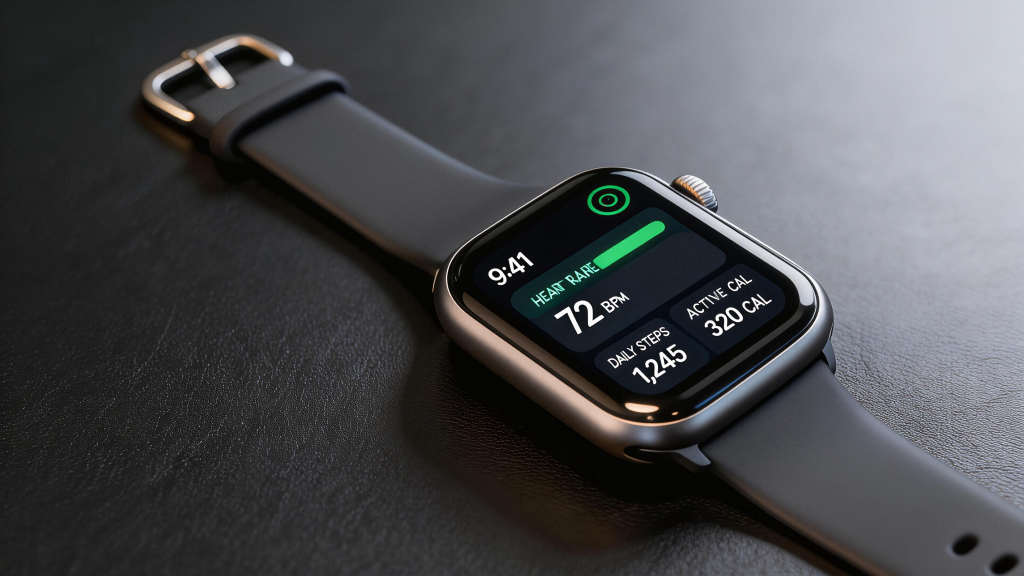
The display is what you interact with most on a smartwatch, so its technology directly affects readability, battery life, outdoor visibility, and overall user experience. In 2026, smartwatch screens have matured significantly — brighter, more power-efficient, and better at handling different lighting conditions. The main types of display technologies each bring distinct advantages and trade-offs. Here’s a straightforward look at the ones powering today’s models.
OLED and AMOLED Displays
Organic Light-Emitting Diode (OLED) and its close cousin Active-Matrix OLED (AMOLED) dominate premium and mid-range smartwatches.
These displays light up individual pixels independently, delivering:
- True blacks and infinite contrast — no backlight means perfect darkness when pixels are off.
- Vibrant colors and sharp details, especially for watch faces, notifications, and health graphs.
- Always-on capability with minimal power draw — only active pixels light up.
Apple Watch Series models, Samsung Galaxy Watch series, Google Pixel Watch, and many others use AMOLED for its rich visuals and efficiency in always-on mode. The downside is potential burn-in risk over years of static elements (like time or complications) and slightly higher power use during bright, full-screen content compared to some alternatives.
LCD and Transflective LCD Displays
Traditional Liquid Crystal Displays (LCD) appear in some budget and fitness-focused watches, while transflective LCDs (which reflect ambient light) show up in rugged or long-battery models.
Standard LCDs:
- Rely on a backlight, so always-on mode drains battery faster.
- Offer good color accuracy and viewing angles but lack the deep blacks of OLED.
Transflective LCDs shine in sunlight:
- They reflect external light to stay readable outdoors without cranking up the backlight.
- Battery life extends dramatically — often 5–10+ days — because they use less power in bright conditions.
Garmin’s Instinct and some older fitness watches favor this tech for outdoor visibility and marathon-level battery endurance. Colors look washed out indoors, though, so it’s a compromise for users who prioritize runtime over vivid screens.
Memory-in-Pixel (MIP) Displays
Memory-in-Pixel (also called e-paper-like or MIP LCD) technology stores pixel states so the display only draws power when content changes.
Key benefits:
- Extremely low power consumption — ideal for always-on time, steps, and basic complications.
- Excellent outdoor readability with no glare or backlight needed.
- Battery life measured in weeks on some models.
Garmin uses MIP heavily in many Forerunner and Fenix lines, where the focus is long training sessions rather than flashy interfaces. The trade-off is muted colors, slower refresh rates (no smooth animations), and a more basic look compared to AMOLED.
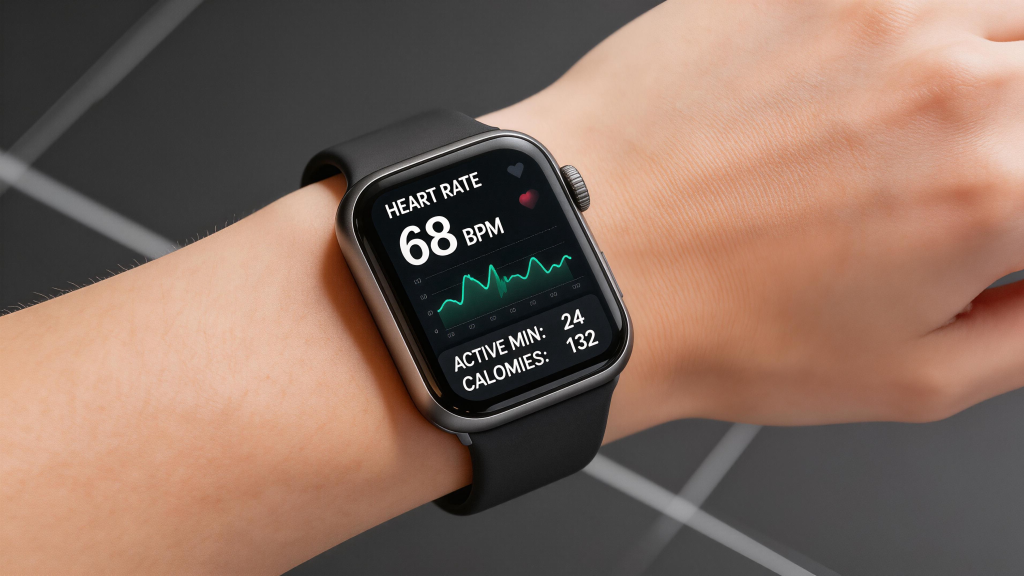
LTPO Technology: The Efficiency Booster
Low-Temperature Polycrystalline Oxide (LTPO) isn’t a display type but an advanced backplane used with OLED/AMOLED panels.
LTPO allows variable refresh rates — dropping from 60Hz to 1Hz or even static when the watch is idle. This extends battery life significantly while keeping always-on smooth and responsive when you need it. Apple Watch, Samsung Galaxy Watch, and Google Pixel Watch all use LTPO variants to balance vibrant visuals with practical runtime.
Choosing the Right Display for You
- Want vivid colors, always-on elegance, and premium feel? Go AMOLED/LTPO.
- Need extreme battery life and outdoor readability? Look for MIP or transflective LCD.
- Budget-conscious? Many entry-level watches use basic LCD or simplified AMOLED with good results.
Brands that get the balance right stand out in daily use. QONBINK smartwatches prioritize clear, efficient AMOLED displays with strong outdoor visibility and low-power always-on modes that don’t sacrifice battery life. QONBINK keeps the screen bright and readable across lighting conditions while avoiding the excessive drain common in lesser implementations. QONBINK focuses on practical display performance — sharp enough for quick glances at notifications or health data, yet power-smart for all-day wear without constant charging.
The best display technology matches your habits. If you glance at your watch dozens of times a day and value rich visuals, AMOLED with LTPO wins. If you train outdoors for hours and hate frequent charging, MIP or transflective wins. The right screen makes the watch disappear into your routine — exactly where it belongs.
Leave a Comment
Your email address will not be published. Required fields are marked *