
I remember the exact moment I realized my smart watch had started running my life instead of the other way around. It was a Tuesday afternoon. I’d just finished a decent run—heart rate steady in zone 3, 8.2 km, average pace 5:12/km. The watch congratulated me with three vibrating pulses and a bright green “peak performance” badge. I felt good… until I glanced at the recovery time: 48 hours. My brain immediately translated that into “no more moving until Thursday.” I canceled my evening walk with a friend, skipped stretching because “rest day,” and spent the next two days feeling oddly guilty every time I stood up to make tea.
That was the day I understood over-reliance isn’t just about staring at screens too much. It’s about quietly handing over decisions—when to move, when to rest, when to eat, when to sleep—to a device that has no idea how your legs actually feel, how stressed your mind is, or whether you slept poorly because of a noisy neighbor rather than “low HRV.”
Smart watches are incredible tools. They make invisible patterns visible, give gentle nudges toward better routines, and can genuinely improve health when used thoughtfully. But when the tool starts giving orders instead of offering information, we lose something important: trust in our own bodies. Here’s what over-reliance looks like in real life, why it happens, and practical ways to step back so the watch supports you instead of steering you.
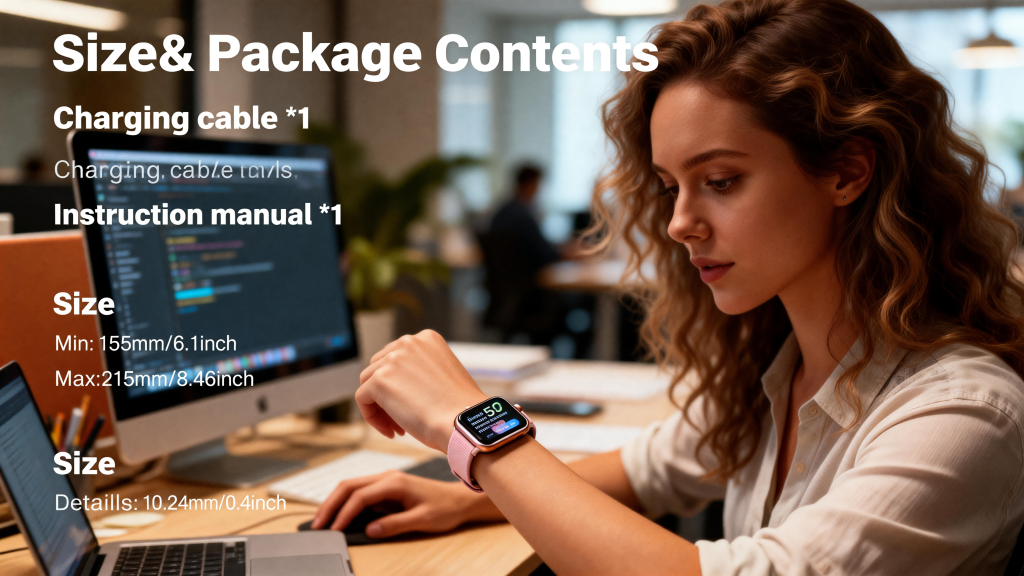
The most common trap: treating recovery & readiness scores as gospel Almost everyone who wears a recovery or readiness score for a while eventually hits this wall. The algorithm says “low recovery—rest recommended” after a hard workout, so you skip the gym even though your body feels fresh and eager. Or it says “peak readiness 95” on a day you feel flat, heavy, and unmotivated, and you force a session anyway because “the data says I’m ready.” Both choices can backfire.
Why? These scores are built on a narrow set of signals: last night’s sleep duration and stages, heart-rate variability (HRV), resting heart rate trend, maybe yesterday’s training load. They don’t know:
- You argued with your partner last night and your nervous system is still revved
- You’re in the middle of your menstrual cycle and energy naturally dips
- You’re fighting off a cold that hasn’t shown symptoms yet
- Work stress spiked cortisol even though you slept eight hours
- You’re mentally exhausted from back-to-back meetings
The score is a blunt average trying to guess how recovered you are. It’s useful context, not a verdict. When it conflicts with how you feel—soreness, energy, motivation, mood—your body is almost always the more accurate source. The watch measures proxies; you live the reality.
Same goes for sleep scores. A 92 after a night of fragmented rest because you were anxious about a deadline doesn’t mean you “recovered well.” A 68 after a deep, peaceful sleep interrupted only by a bathroom trip doesn’t mean the night was bad. Use the score to spot trends (alcohol consistently drops deep sleep %, late caffeine delays onset), not to judge individual nights. If the number says one thing and your energy says another, trust energy first.
Heart-rate zones & calorie burn become another obedience trap Many people start chasing “zone minutes” or “active calories” like they’re collecting points in a game. The watch says you need more zone 4 time to “improve fitness,” so you push tempo runs even when legs feel dead. Or it credits 650 active calories after a hilly hike, so you eat an extra 600 kcal “because I earned it.” Both habits quietly sabotage progress.
Zones based on predicted max heart rate (220 – age) are wrong for most people. If you’re fit, your real max is higher; if you’re older or less conditioned, lower. That shifts every zone up or down. Chasing red when your zones are miscalibrated means you’re either overdoing it or underdoing it without realizing. Calorie estimates are even looser—generic formulas plus heart-rate guesses. Real burn can differ 20–50% depending on efficiency, temperature, hydration, hormones. Eating back “watch calories” is one of the fastest ways to stall fat loss.
The fix isn’t to ignore the data—it’s to use it as feedback, not instructions. Feel strong but zones say “low”? Do the session anyway (maybe lighter). Feel wrecked but zones say “ready”? Rest or go very easy. Calories high after movement? Great—use it as permission to refuel well, not as license to overeat.
Notifications & rings start dictating your day Stand reminder after 50 minutes? Useful at first. But when you start feeling anxious if the ring isn’t closed by noon, or you interrupt deep work to stand because “the watch says so,” the balance has tipped. Same with move rings, exercise minutes, step goals. They’re designed to be motivating, but motivation turns into pressure when missing a ring feels like failure.
I’ve seen friends rearrange social plans because “I haven’t closed my exercise ring yet” or skip family time to hit 10,000 steps. The device that was supposed to help them move more started restricting life instead.
Step back by asking one question every time a reminder or ring pressures you: “Is this serving me right now, or am I serving it?” If standing up right now would break flow on an important task, snooze the reminder or lower the goal temporarily. Rings are tools for awareness, not chains.
Over-checking becomes its own habit Some people check the watch 30–50 times a day—not for time, but for stats. Heart rate after coffee? Check. Steps since lunch? Check. HRV this morning? Check. Readiness before deciding whether to train? Check. Each glance pulls attention away from the present moment and reinforces the idea that the device knows better than your body.
This constant monitoring creates subtle stress. You start living in the data instead of in your life. The fix is simple but takes conscious effort: set specific check-in times (morning for readiness/sleep, post-workout for session summary, evening for daily totals) and leave the watch on silent/do-not-disturb the rest of the time. Turn off always-on display if possible. Fewer glances = less mental noise.
When tracking starts hurting more than helping There are clear signs over-reliance has crossed into unhelpful territory:
- You feel guilty or anxious when you miss a ring/goal
- You override clear body signals (hunger, fatigue, joy) to match what the watch “recommends”
- You rearrange real-life plans (meals, social time, rest) around data targets
- You feel worse about yourself on days the numbers are “bad”
- You can’t enjoy movement unless it’s tracked and scored
- You experience decision paralysis without consulting the watch
If three or more of those sound familiar, it’s time for a deliberate reset.
Practical ways to reclaim balance
- Take planned “watch-off” periods Start with one full day a week completely device-free—no tracking, no rings, no scores. Walk, eat, sleep, move purely by feel. Notice how your energy, appetite, and mood respond without external judgment. Many people discover they move just as much (or more) when the pressure is gone.
- Downgrade goals when life gets heavy During stressful weeks, travel, illness, or big projects, lower step/move goals by 30–50%, turn off readiness notifications, or even remove exercise rings from your watch face. The device should adapt to your life, not force your life to adapt to it.
- Use manual overrides liberally If the recovery score says rest but you feel great, log a light session anyway. If sleep score is high but you’re exhausted, treat it as a bad night. Edit auto-detected activities that got wrong. The watch is a suggestion box, not a rule book.
- Focus on trends over daily drama Look at monthly averages for resting heart rate, sleep duration, HRV, active minutes. Daily fluctuations are noise; trends show real change. This reduces obsession with single bad/good days.
- Replace some tracking with body checks Before a workout, ask: How do my legs feel? Energy on a 1–10 scale? Motivation high or low? After: Did that feel sustainable? Am I hungry, thirsty, sore? These 10-second check-ins often tell you more than any score.
- Keep one or two “anchor habits” and let the rest float I keep water reminders and bedtime wind-down because they reliably help me. Everything else (steps, zones, readiness) I treat as interesting information, not must-do targets. Fewer rules = less mental load.
- Celebrate non-tracked wins A joyful walk with no watch on. A long conversation without checking steps. Sleeping in on Sunday because you felt like it. These moments remind you that health isn’t only what gets measured.
The sweet spot A healthy relationship with your smartwatch looks like this:
- You check it a few times a day for useful info, not constantly for validation
- You use the data to form hypotheses and run small experiments (“What happens if I cut caffeine after 2 p.m.?”)
- When body and watch disagree, you investigate why instead of picking sides blindly
- You enjoy movement and rest whether the rings close or not
- You feel more aware of your body, not more dependent on the device
The watch should make you more connected to yourself, not less. It should highlight patterns so you can make better choices, not replace your own judgment. When it starts feeling like a boss, coach, or judge instead of a quiet assistant, step back. Loosen the grip. Let it sit on the charger for a day or two.
Because at the end of the day, the most accurate tracker isn’t on your wrist—it’s the one that lives inside your skin, your breath, your energy, your mood. The watch can point things out, but only you can decide what to do about them.
Leave a Comment
Your email address will not be published. Required fields are marked *