
Smart watches promise precise insights—accurate heart rate during workouts, reliable sleep stage detection overnight, steady blood oxygen readings, and consistent step counts. To get those numbers spot-on, the advice is almost always the same: wear it snug. The optical sensors need good, steady skin contact, and a loose fit risks gaps that throw off the data. So people tighten the band a notch or two more than feels natural, especially when chasing perfect graphs or trying to impress a fitness app with flawless metrics.
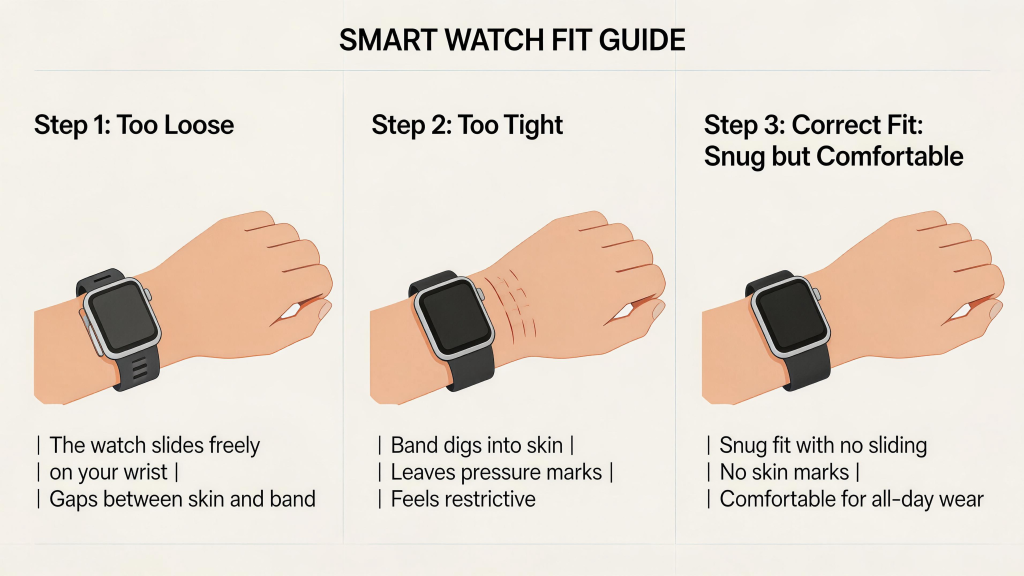
That extra tightness might deliver cleaner readings in the short term, but over days, weeks, and months, it quietly builds a list of problems that many users don’t connect back to the watch until discomfort becomes impossible to ignore. What starts as a minor ache or faint red line can turn into persistent irritation, circulation issues, nerve sensitivity, and even habits that affect how you use the device long-term. The goal of better health tracking shouldn’t come at the cost of harming the very body it’s monitoring.
The most immediate and visible effect is skin irritation under the band. When you compress the watch tightly against your wrist for hours at a time, sweat, natural skin oils, and dead cells get trapped with nowhere to escape. The constant pressure prevents normal airflow, turning that small patch of skin into a warm, moist environment perfect for bacterial growth or simple mechanical abrasion. Redness appears first—often a clean outline matching the band’s shape—followed by itching that worsens at night when you’re still. Scratch too much and you get small breaks in the skin, opening the door to minor infections that heal slowly because the area stays covered and compressed.
People with sensitive skin notice this fastest. Nickel in some metal clasps or alloys can trigger allergic contact dermatitis even in trace amounts, but tightness accelerates the reaction by forcing more direct, prolonged contact. Silicone and fluoroelastomer bands, while generally hypoallergenic, can still cause irritant dermatitis when moisture and friction combine under pressure. The result looks like a bracelet-shaped rash that lingers for days after you loosen or remove the watch. In more stubborn cases, the skin thickens or develops dry, scaly patches from repeated cycles of compression and recovery.
Beyond the surface, sustained tightness affects blood flow. The wrist is a busy crossroads—radial and ulnar arteries, veins, and a network of smaller vessels feed the hand. A band that’s too snug acts like a partial tourniquet, especially during sleep or long sedentary periods when you’re not moving to promote circulation. You might not feel obvious numbness right away, but subtle signs build: fingers that feel cooler than usual, mild tingling when you first loosen the strap in the morning, or a heavy sensation in the hand after wearing it all day. Over months, some users report “pins and needles” that linger longer each time, or even slight swelling in the fingers toward evening.
Nerve compression is the next layer of concern. The median nerve, ulnar nerve, and superficial radial nerve run close to the surface around the wrist. Constant pressure in the same spot—particularly over the flexor tendons or near the carpal tunnel area—can irritate these nerves. Early symptoms mimic mild carpal tunnel syndrome: tingling in the thumb, index, and middle fingers; occasional sharp zaps when you bend the wrist; or a dull ache that radiates up the forearm. It’s rarely severe enough to need medical intervention from smartwatch wear alone, but when combined with typing, mouse use, or other repetitive wrist motions common in daily life, the cumulative load pushes some people into noticeable discomfort.
Wrist positioning matters too. Many tighten the band most on the dominant hand because that’s where they wear it for workouts and notifications. The repeated pressure on the same side day after day creates uneven stress. Some switch wrists periodically to spread the load, but if the fit stays overly tight, the problem simply migrates. Indentation marks—those temporary grooves that fade after removal—become deeper and slower to disappear with chronic tightness, a visual reminder that skin and underlying tissue are bearing more force than they should.
Sensor accuracy, ironically, can suffer from over-tightening in unexpected ways. While a loose fit causes light leaks and erratic readings, excessive pressure distorts the optical signal. Too much compression flattens capillaries under the sensor, altering how light scatters and reflects back. Heart rate variability (HRV) numbers become artificially low or noisy, sleep stage detection gets confused by restricted blood flow patterns, and even step counting can misfire if arm swing feels restricted. Users chasing “perfect” data sometimes end up with less reliable metrics because the body is reacting to the device instead of behaving naturally.
Battery heat adds another subtle risk. When the watch is pressed tightly, any warmth from charging, intensive GPS use, or heavy background processing has less room to dissipate. The skin under the device absorbs that extra heat directly. Overnight charging while worn tight turns a minor warmth into prolonged exposure, potentially worsening irritation or creating a low-grade hot spot that contributes to discomfort. In hot climates or during summer months, this effect amplifies—sweat production increases, moisture stays trapped, and the cycle of irritation speeds up.
Psychological effects creep in over time too. When tightness causes regular discomfort, people start associating the watch with negative sensations. They hesitate to put it on in the morning, skip wearing it during certain activities to avoid pain, or loosen it progressively until the fit becomes too sloppy for good data. The device that was meant to motivate movement and mindfulness instead becomes a source of mild dread. Some users abandon overnight tracking altogether because the morning indentation lines and residual ache make them question whether the insights are worth it.
Practical ways to avoid these risks start with rethinking “snug.” The correct fit for most sensors is secure but not compressive—you should be able to slide one finger comfortably underneath the band even after it’s fastened. During exercise or active parts of the day, a slightly tighter feel is acceptable because movement helps distribute pressure and promotes circulation. At rest—especially overnight—loosen it one full notch. Many people keep two settings: “day mode” snug for workouts and notifications, “night mode” noticeably looser for sleep tracking.
Rotate wrists regularly. Even one week on the left followed by one on the right gives skin and underlying tissues recovery time. If you notice persistent marks, redness, or tingling on one side, switch more frequently or take full days off. Clean the band and sensor area daily with a damp cloth to remove oils and sweat that exacerbate irritation under pressure. Weekly gentle soap rinses followed by complete air-drying prevent bacterial buildup.
Choose bands wisely for long-term wear. Mesh, woven nylon, or perforated sport styles allow far better airflow than solid silicone when tightness is unavoidable. Leather breathes naturally but requires maintenance to stay supple. Avoid metal mesh bands if you have known nickel sensitivity—they look professional but can trigger reactions faster under compression. Quick-release designs let you swap to a looser or more breathable option instantly when discomfort starts.
Monitor your body signals proactively. Check the wrist area every few days for early redness, texture changes, or indentation depth. If anything lingers more than a day after removal, loosen further or pause wear for 48 hours. Apply a fragrance-free moisturizer during breaks to support skin barrier recovery. Persistent tingling, numbness, or swelling that doesn’t resolve quickly deserves a doctor’s look—better to rule out unrelated issues early.
If data quality drops noticeably after loosening, remember that small inconsistencies are normal. Weekly averages and trends matter far more than nightly perfection. The watch should enhance awareness of your body, not force it into unnatural states for the sake of prettier charts.
Tight wear is tempting when every app and tutorial pushes “snug for accuracy,” but the body doesn’t thrive under constant compression. A slightly looser fit preserves skin health, circulation, nerve comfort, and long-term enjoyment of the device. The best tracking comes from wearing something you want to keep on—not something you tolerate despite growing irritation.
Listen to the subtle feedback your wrist gives. Adjust before small problems become habits you have to break. A comfortable smartwatch supports better health for years; one that’s too tight quietly works against it.
Leave a Comment
Your email address will not be published. Required fields are marked *