
In 2026 your smart watch is far more than a tiny computer strapped to your wrist. Behind every heart-rate notification, offline playlist, sleep-stage breakdown, emergency SOS ping, and “you’ve been sitting too long” reminder lies a sophisticated cloud service platform working 24/7. These invisible backends handle data synchronization, AI model inference, secure storage, cross-device handoff, health insights, firmware updates, and even emergency response coordination. Without robust cloud infrastructure the modern smartwatch experience would collapse into a collection of isolated, limited gadgets. Today the three dominant cloud ecosystems—Apple’s iCloud + private compute servers, Google Cloud + Fitbit infrastructure, and Samsung’s Knox + SmartThings cloud—define how most people experience their wrist device.
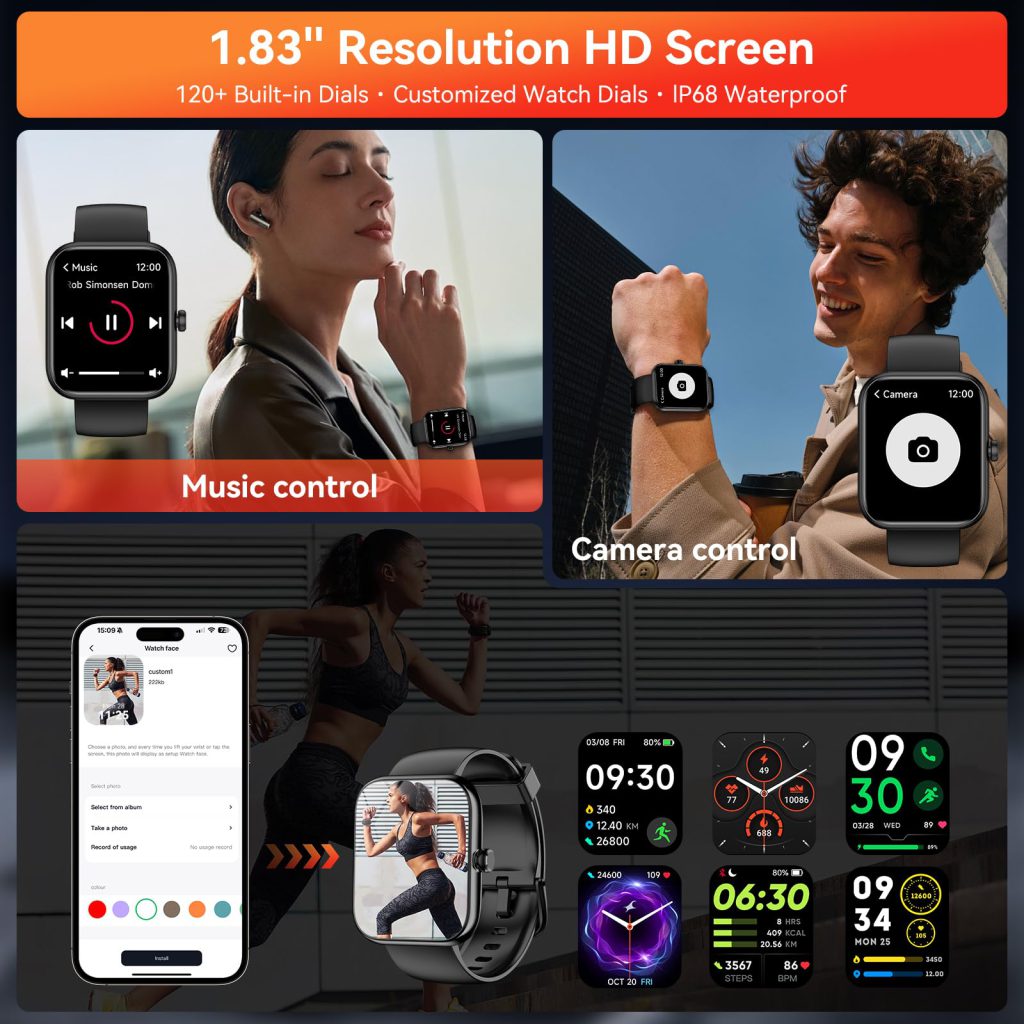
Apple’s cloud architecture remains the most tightly integrated and privacy-focused. Every Apple Watch (Series 11, Ultra 3, SE 3) ties directly to an iCloud account that acts as the single source of truth for health, activity, payments, home controls, and media libraries. Health data is end-to-end encrypted by default; even Apple cannot read your ECG waveforms, blood-oxygen trends, or sleep-stage logs. Private Cloud Compute (PCC), expanded significantly since its 2024 debut, processes many on-device AI tasks—such as Workout Buddy voice coaching or irregular-rhythm detection—in secure enclaves on Apple silicon servers when more compute power is needed. Only anonymized, differentially private data leaves the device unless you explicitly enable sharing with researchers or physicians via Health Records. iCloud syncs workout routes, rings progress, and recovery metrics across iPhone, iPad, Mac, and Vision Pro in real time. If you start a run on the watch and finish on your phone, the session merges seamlessly in the Fitness app. Over-the-air updates arrive through iCloud without manual intervention; the watch downloads tiny differential patches overnight, often completing before you wake up. Emergency SOS and Fall Detection leverage nearby iPhones and Apple’s Find My network, routing location and medical ID to first responders via iCloud relays that preserve anonymity until consent is given. The result is an experience that feels local and instantaneous even when heavy lifting happens thousands of miles away in Cupertino data centers.
Google’s cloud story is more open and AI-forward, blending Google Cloud Platform (GCP), Firebase, and the Fitbit backend acquired in 2021. Pixel Watch 4/5 users sign in with a Google Account, instantly unlocking a unified data lake that spans Wear OS devices, Android phones, Chromebooks, Nest hubs, and even third-party apps via Health Connect. Machine learning models running on GCP’s Tensor Processing Units (TPUs) analyze heart-rate variability, sleep patterns, and activity streaks to deliver personalized Daily Readiness scores, stress insights, and adaptive training suggestions. Gemini Nano on-device handles quick queries, but deeper pattern recognition—such as predicting a potential cold from subtle vital shifts or suggesting playlist tempo based on running cadence—happens in the cloud with strong differential-privacy safeguards. YouTube Music offline libraries and Spotify downloads sync via Firebase; lose your watch and the next one you pair restores the exact queue and offline cache in minutes. Google Fit aggregates data from Garmin, Oura, Whoop, and other partners, creating longitudinal health views that feed back to the watch as actionable notifications. Firmware updates roll out in controlled waves through Google Play Services, minimizing bugs while allowing rapid security patches. For families, Family Link ties child watches to parental Google Accounts, enforcing bedtime modes, location boundaries, and app restrictions—all managed from the cloud dashboard. The openness comes with trade-offs: more data flows to Google servers than to Apple’s, but the company has invested heavily in transparency reports and user controls to rebuild trust.
Samsung’s approach blends its own cloud services with deep ties to Knox security and SmartThings. Galaxy Watch 8/9 users log in with a Samsung Account that serves as the central vault for Samsung Health metrics, Galaxy Wearable settings, Bixby Routines, SmartThings scenes, Samsung Pay tokens, and even browser data from Galaxy phones and Books. Knox Vault keeps sensitive biometrics and payment keys in hardware-secured enclaves, while cloud backups remain encrypted at rest and in transit. Samsung Health cloud processes body-composition scans, BioActive sensor readings, and sleep apnea indicators (FDA-cleared in many markets) to generate Energy Score and Wellness Tips. AI models fine-tuned on anonymized user cohorts run on Samsung’s custom cloud clusters, offering marathon-pace predictions or stress-reduction breathing guides tailored to your HRV baseline. SmartThings integration means the watch can act as a remote for lights, thermostats, robot vacuums, and appliances even when your phone is out of Bluetooth range—LTE models send commands directly via the cloud. Family accounts allow parents to monitor children’s activity rings, sleep consistency, and location history from one portal. Over-the-air updates arrive through Samsung’s FOTA (Firmware Over-The-Air) system, often bundled with Galaxy phone patches for consistent security across the ecosystem. The advantage is vertical integration: because Samsung makes both the watch and many IoT devices, latency between wrist command and living-room light toggle is often sub-second.
Other players carve meaningful niches. Garmin Connect Cloud remains a favorite among endurance athletes. It stores multi-sport profiles, training readiness scores, Body Battery estimates, and equipment wear logs with exceptional accuracy. The platform syncs seamlessly with Strava, TrainingPeaks, MyFitnessPal, and Zwift, creating a federated view that feeds back to the watch as daily workout suggestions. Garmin’s cloud also powers incident detection on remote trails: if a fall is detected and you don’t respond, the system sends GPS coordinates and pre-set emergency contacts via satellite or cellular relay. Amazfit and Huawei watches lean on Zepp Health Cloud and Huawei Health respectively, offering aggressive AI coaching and regional data centers that comply with local privacy laws (important in markets like China and the EU). Withings Health Mate Cloud focuses on medical-grade accuracy for blood pressure, ECG, and sleep apnea, feeding longitudinal trends to physicians through secure APIs.
Cross-cloud collaboration has improved thanks to standards. Health Connect (Android) and Apple HealthKit now expose compatible APIs, letting authorized apps pull step counts, workouts, or sleep data from either ecosystem when the user grants permission. Matter 1.4 extends beyond home control to include health-device discovery, so a Withings scale can push weight readings to both Apple Health and Google Fit clouds simultaneously. Passkeys and OAuth federation reduce the need for multiple logins across platforms.
The cloud also enables entirely new experiences. Predictive health alerts—spotting early signs of atrial fibrillation or respiratory issues—rely on longitudinal cloud models trained on billions of anonymized data points. Voice assistants (Siri, Gemini, Bixby) improve dramatically when they can reference your full context: calendar, recent messages, location history, and vital trends stored securely in the cloud. Lost watch recovery has become routine; mark the device lost from any signed-in phone or computer, and the cloud remotely locks it, erases sensitive caches, and displays a return message. Firmware security patches deploy globally within hours of a vulnerability discovery, protecting millions simultaneously.
Privacy remains the biggest point of contention. Apple emphasizes on-device processing and end-to-end encryption, minimizing cloud exposure. Google and Samsung offer more features that require cloud access but provide detailed transparency dashboards and opt-out controls. In regions with strict regulations (GDPR, CCPA, PIPL), users can request full data deletion or portability, though health datasets often stay pseudonymized for research value. Independent audits and bug-bounty programs have become standard across all three major players.
Real users feel the cloud’s presence most in reliability and continuity. A traveler loses their Galaxy Watch in an airport; logs into a replacement via Samsung Account and watches their entire health history, offline music, and SmartThings routines restore in under ten minutes. An Apple Watch owner in a rural area triggers Fall Detection; the cloud routes precise coordinates and medical ID to emergency services even when no nearby iPhone exists. A Garmin user completes an ultra-marathon in the Alps; detailed splits, elevation profiles, and recovery metrics upload automatically to the cloud, then appear in polished reports on their laptop the next day.
As we look toward the rest of 2026 and beyond, expect even tighter cloud integration. Edge-cloud hybrid models will push more inference closer to the device while keeping training and aggregation in massive data centers. Generative AI coaches that create custom training plans or meditation scripts based on your multi-year vitals are already in limited beta. Interoperability standards will continue to mature, letting you mix devices from different brands without losing continuity. The cloud is no longer just storage or backup—it is the beating heart that makes the smartwatch feel alive, adaptive, and truly personal.
Leave a Comment
Your email address will not be published. Required fields are marked *