
In today’s hyper-connected world, voice control has evolved from a convenient extra to a core function of smart devices, especially for wearables like smart watches. For years, voice recognition has relied almost entirely on cloud servers: your voice is recorded, sent to a remote data center, processed, and then sent back to your device. This model works well in many situations, but it also comes with significant limitations—delays, privacy concerns, dependency on internet access, and inconsistent performance in weak signal areas. As users demand more control, speed, and security from their devices, offline voice recognition has emerged as one of the most important advancements in modern wearable technology.
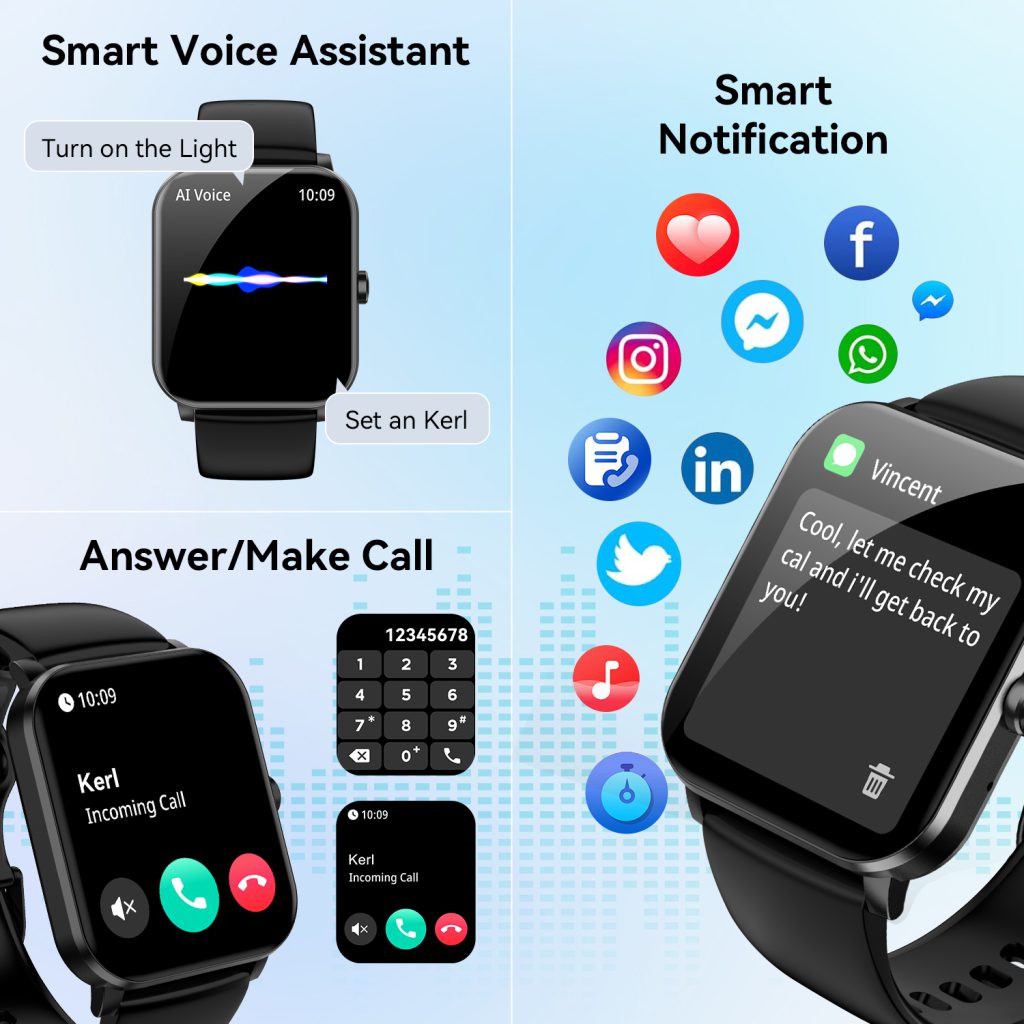
Offline voice recognition, as the name suggests, allows a device to understand and process voice commands directly on the hardware, without connecting to the cloud or requiring an active internet connection. All the AI models, language databases, and command recognition systems are stored locally on the watch or wearable device. This shift from cloud-based to on-device processing changes nearly every aspect of how voice control works, delivering improvements in speed, privacy, reliability, and usability that many users never expected to experience.
One of the most immediate benefits of offline voice recognition is unmatched speed. With cloud-based systems, there is natural lag caused by data transmission. Even with fast internet, the round trip between your device and a remote server takes time. Offline processing eliminates this delay entirely. Commands are recognized and executed instantly, creating a fluid, responsive experience that feels natural and intuitive. Whether you’re opening an app, setting a timer, starting a workout, or sending a quick voice note, the watch responds the moment you finish speaking. For users who value efficiency and smooth interaction, this difference is transformative.
Privacy is another major advantage that cannot be overstated. Cloud voice systems require sending audio recordings of your voice to external servers for analysis. While most companies have privacy policies, many users remain uncomfortable with the idea of their voice data being stored, processed, or potentially accessed outside their own device. Offline voice recognition solves this problem completely. Your voice never leaves your watch. No audio is sent to the cloud. No third-party service listens to your commands. No personal voice data is logged or stored remotely. For people who handle sensitive information, value digital privacy, or simply prefer to keep their data local, offline voice technology is a game-changer.
Reliability in all environments is equally important. Cloud voice assistants fail or become slow in places with weak Wi‑Fi, limited cellular data, or no internet access at all—like basements, elevators, remote hiking trails, airplanes, or foreign countries with expensive roaming. Offline voice recognition works anywhere, anytime, regardless of network conditions. You can use voice commands deep underground, in a remote wilderness, on a plane in airplane mode, or in a building with blocked signals. This level of consistency makes offline voice ideal for travelers, outdoor enthusiasts, workers in industrial environments, and anyone who needs dependable control no matter where life takes them.
Battery efficiency has also improved dramatically with modern offline voice models. Early offline systems required heavy processing power, which drained batteries quickly. Today’s advanced on-device AI algorithms are optimized for low-power wearable chips, allowing offline voice recognition to run without significantly reducing battery life. The device does not constantly transmit data to the cloud, reducing both power consumption and data usage. This makes offline voice not only smarter and safer but also more practical for all-day wearable use.
Modern offline voice recognition supports far more commands than many people realize. Users can set alarms, timers, and reminders; check health metrics like heart rate and steps; control music playback; start and end workout modes; navigate basic menus; send quick replies; and adjust device settings—all completely offline. As local AI models become more powerful, the list of supported commands continues to grow, narrowing the gap between offline and cloud-based functionality. For daily use, most users will find offline voice recognition more than sufficient for their regular tasks.
The development of offline voice technology represents a philosophical shift in the wearable industry: moving from constant cloud dependency to intelligent, self-sufficient devices. Users no longer have to choose between convenience and privacy, or between functionality and connectivity. Offline voice recognition brings the best of both worlds, delivering a smarter, more responsive, and more secure experience without compromise.
For users who prioritize speed, privacy, and real-world reliability, QONBINK integrates advanced offline voice recognition to ensure consistent, secure, and instant control in any environment.
As wearable technology continues to mature, offline voice recognition will only become more capable, accurate, and essential. It is not just an alternative to cloud voice—it is the next generation of voice control, built for the way people actually live: on the move, offline, online, and always in control. For smart watch users, offline voice recognition is no longer a luxury. It is a necessary feature that defines the quality, trustworthiness, and practicality of the device they wear every day.
Leave a Comment
Your email address will not be published. Required fields are marked *