
Heat dissipation in smartwatches is a constant engineering puzzle because the device lives in one of the most thermally unforgiving places on the body: the wrist. Skin is sensitive, blood flow varies with activity and temperature, and there’s virtually no airflow or space for conventional cooling solutions like fans or large heatsinks. Yet modern smartwatches pack increasingly powerful processors, bright always-on displays, wireless charging coils, and multiple radios—all of which generate noticeable heat during demanding tasks. The design challenge is to keep internal temperatures safe for components (typically below 60–70°C for the battery and SoC) and comfortable for skin contact (ideally under 43–45°C sustained), without compromising slimness, battery life, or feature set.
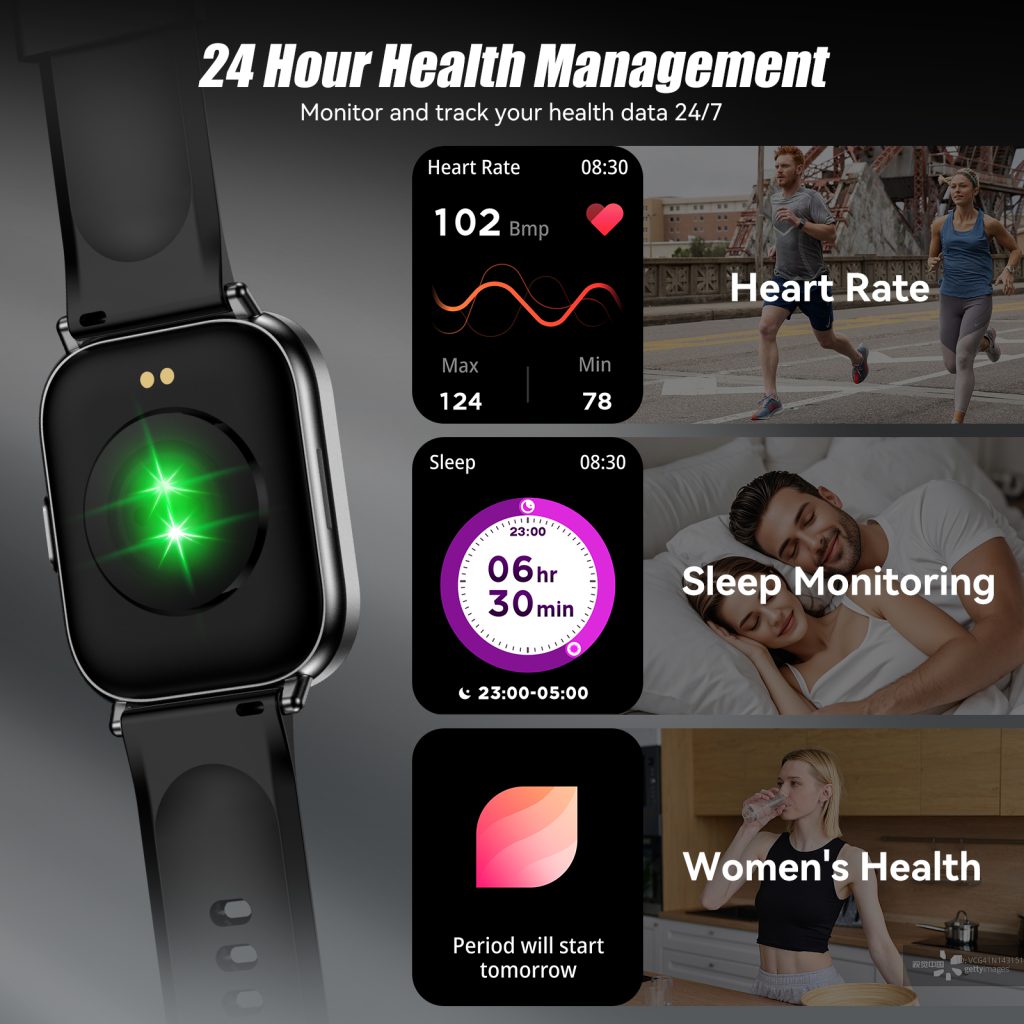
The primary heat producers are well known. The system-on-chip (SoC) is the biggest culprit during GPS tracking, music playback, LTE uploads, or rendering animated watch faces. Always-on AMOLED displays emit steady heat even at low brightness because pixels are self-illuminating. Inductive charging coils and their rectification circuitry create localized hotspots on the back cover during fast-charge cycles. Optical heart-rate LEDs, especially when sampling continuously, add small but persistent warmth. Bluetooth, Wi-Fi, and cellular transmitters contribute during active data sessions. All this heat is generated in a volume smaller than a large coin, with almost no room to spread or vent.
The back cover serves as the main heat radiator and thermal barrier between internals and skin. Material choice matters enormously. Stainless steel and titanium conduct heat efficiently (thermal conductivity around 15–20 W/m·K for steel, 20–25 for titanium), spreading localized hotspots across a larger surface and reducing peak temperatures. Aluminum, sometimes used in lighter models, conducts even better (around 200 W/m·K) but can feel hotter to the touch because it transfers heat to skin more aggressively. Ceramic backs—common in premium watches—have lower conductivity (20–30 W/m·K) but high emissivity (they radiate infrared efficiently) and lower specific heat capacity, so they warm up and cool down quickly without storing much heat. Many users report ceramic feels noticeably cooler during prolonged contact despite similar internal temperatures.
To move heat away from hotspots, internal thermal spreaders are essential. Thin graphite sheets or graphene films (in-plane conductivity 500–1500 W/m·K) are layered behind the SoC, battery, or charging coil. These anisotropic materials pull heat laterally across the watch body far better than they conduct through thickness, creating a more uniform temperature distribution. Copper vapor chambers—microscopic sealed copper envelopes with a small amount of working fluid—are even more effective in high-end designs. At the hot spot the fluid evaporates, travels as vapor to cooler areas, condenses, and wicks back via capillary action, achieving near-isothermal spreading with thermal resistance far lower than solid copper. These chambers are only 0.3–0.6 mm thick yet can reduce peak temperatures by 10–15°C in confined spaces.
Thermal interface materials (TIMs) ensure efficient transfer between heat sources and spreaders. Thin layers of thermal gel, phase-change pads, or high-conductivity graphite pads fill microscopic air gaps that would otherwise act as thermal insulators. Some designs bond a small copper slug or direct copper pad directly onto the SoC die, bridging to the graphite layer or metal chassis. These interfaces are critical: even a 0.1 mm air gap can increase thermal resistance dramatically.
Passive convection and radiation handle the rest. The watch’s outer surfaces—especially the back cover and bezel—radiate infrared heat to the environment. Larger surface area (thicker bezels or wider cases) helps, though slim designs limit this advantage. Skin contact actually aids dissipation in some cases: blood flow carries heat away from the contact area, acting as a natural heat sink. However, during intense activity or in hot environments, reduced skin perfusion can make the watch feel warmer.
Active thermal management steps in when passive methods aren’t enough. Multiple NTC thermistors monitor temperatures near the battery, SoC, charging circuit, and sometimes the display driver. When thresholds are approached (often 42–45°C for skin-facing surfaces), the system throttles performance: clock speeds drop, display brightness caps, GPS fix intervals lengthen, wireless transmit power reduces, continuous heart-rate sampling pauses or slows, and in extreme cases charging halts. Throttling is usually gradual and context-sensitive—during a recorded workout it preserves GPS and heart-rate accuracy longer, while idle it can be more aggressive to protect battery health.
Charging produces some of the most noticeable warmth. 5–10 W inductive sessions can push local coil and IC temperatures to 50–60°C. Magnetic charging pucks help by increasing dissipation area and pulling heat away from the watch body. Some chargers incorporate small heat sinks or active cooling in the base, though most rely on passive convection. The watch often reduces charging current dynamically when internal temperature rises, extending charge time but preventing discomfort or accelerated battery aging. Optimized charging learns routines—holding at 80% overnight and topping to 100% just before wake-up—to minimize time at high temperature and voltage.
Battery chemistry ties directly into thermal limits. Lithium-polymer cells degrade faster above 45°C and risk internal shorts or swelling if overheated. Manufacturers use ceramic-coated separators, thermally stable electrolytes, and sometimes phase-change materials inside the cell to buffer temperature spikes. Charging algorithms adjust current based on temperature—higher when cool, lower when warm—to balance speed and longevity.
Software increasingly orchestrates thermal behavior. On-device machine learning predicts heat buildup from usage patterns (e.g., GPS after music streaming) and preemptively downclocks components or reduces sensor polling before temperatures climb. Firmware updates often refine these controls, frequently delivering noticeable reductions in perceived warmth and better sustained performance.
Real-world differences are clear. A titanium watch with graphite spreading and vapor chamber feels cooler during extended GPS use than an aluminum model with minimal internal layers. Ceramic backs tend to stay comfortable longer because they conduct less heat directly to skin. Heavy users—always-on display, continuous monitoring, frequent LTE—notice warmth more often; casual users rarely do.
Future improvements are already in motion. Micro-LED displays promise lower power (and heat) for equivalent brightness. Solid-state batteries could tolerate higher temperatures without degradation. Thinner, more efficient vapor chambers and graphene composites will spread heat better in slimmer profiles. Proactive AI thermal management will anticipate and mitigate hotspots before they form.
Heat dissipation in smart watches isn’t glamorous; it’s the accumulation of dozens of small, precise decisions—material choices, spreader layouts, interface layers, throttling curves, and software intelligence—that keep the device comfortable, safe, and performant on the wrist. When you forget the watch is even warm, that’s the design succeeding.
Leave a Comment
Your email address will not be published. Required fields are marked *