
The case material of a smart watch does far more than determine how it looks on your wrist—it influences weight, durability, thermal feel, scratch resistance, corrosion behavior, signal transparency for wireless charging and antennas, and even how comfortable the device feels after hours of wear. Manufacturers choose materials through a careful balancing act: aesthetics versus engineering trade-offs, premium perception versus manufacturing cost, and everyday toughness versus specialized performance. In 2026, the most common case materials fall into several distinct categories, each with strengths that suit different user priorities.
Stainless steel remains one of the most popular choices, especially in mid-to-high-end models. Typically 316L (marine-grade) or 904L in luxury variants, it offers excellent corrosion resistance against sweat, saltwater, and everyday chemicals. The high chromium and nickel content forms a passive oxide layer that self-heals minor scratches, keeping the surface looking polished longer than bare metals. Stainless steel feels substantial and premium—its density (around 8 g/cm³) gives a satisfying heft that many associate with quality. Thermal conductivity is moderate (15–20 W/m·K), so it spreads heat evenly without feeling excessively hot or cold against skin. Machining is straightforward, allowing sharp edges, brushed finishes, polished chamfers, and intricate milling for bezels or buttons. The main drawbacks are weight—steel cases often push total device mass above 50 grams—and susceptibility to fingerprints and smudges unless coated with oleophobic or DLC (diamond-like carbon) layers.
Aluminum alloys, particularly aerospace-grade 7000-series (7075 or 6061), dominate lighter, sport-oriented watches. With a density of about 2.7 g/cm³, aluminum cuts weight significantly—many aluminum models stay under 40 grams even with larger batteries and thicker displays. Anodizing creates a hard, colorful oxide layer that improves scratch resistance far beyond bare aluminum and allows vibrant color options. The material conducts heat very well (around 150–200 W/m·K), spreading processor and charging heat quickly across the case, which helps keep peak temperatures lower during intensive use. However, aluminum is softer than steel, so it dents and scratches more easily without the anodized layer, and that layer can wear through over years of heavy use. It also feels cooler to the touch initially because of high conductivity, which some users prefer and others find less luxurious.
Titanium alloys, most often Grade 2 or Grade 5 (Ti-6Al-4V), represent the premium lightweight option. With a density of 4.5 g/cm³, titanium cases weigh roughly half as much as equivalent stainless steel ones while offering superior strength-to-weight ratio. The material is highly corrosion-resistant—better than steel in chloride environments like sweat or seawater—and develops a stable oxide layer that resists tarnish. Titanium feels warm and skin-friendly because of lower thermal conductivity (around 7–22 W/m·K depending on alloy), so it doesn’t conduct heat as aggressively to the wrist. Scratch resistance is good but not exceptional—Grade 2 is softer than steel, though Grade 5 approaches it. The surface can be brushed, polished, or PVD-coated for color and extra hardness. Drawbacks include higher cost (both raw material and machining) and the fact that titanium is notoriously difficult to anodize consistently, so color options are limited compared to aluminum.
Ceramic—usually zirconia-based (ZrO₂)—has carved out a niche in luxury and high-end sport watches. Extremely hard (Mohs 8–8.5, close to sapphire), ceramic resists scratches far better than any metal, maintaining a flawless appearance even after years of daily wear. Density is around 6 g/cm³, so weight sits between aluminum and steel. Thermal conductivity is low (20–30 W/m·K), and emissivity is high, meaning it radiates heat efficiently without feeling hot to the touch—many users describe ceramic as “cooler” during extended wear. The material is chemically inert, immune to corrosion, and hypoallergenic, making it ideal for sensitive skin. Color is inherent (white, black, or doped variants), so it never fades or chips like coatings. The main downsides are brittleness—ceramic can crack or shatter under sharp impact—and very high manufacturing cost due to sintering, grinding, and polishing requirements.

Polymer composites and reinforced plastics appear mostly in budget, fitness-focused, or ultra-rugged models. Materials like fiber-reinforced polycarbonate, nylon, or PEEK offer low density (1.2–1.8 g/cm³), excellent impact resistance, and inherent corrosion immunity. They’re lightweight, comfortable, and can be molded into complex shapes with integrated straps or buttons. Thermal conductivity is very low, so they insulate heat well—internal components stay warmer, but the case feels neutral against skin. The surface can be textured or coated for grip and scratch resistance, though deep gouges remain visible. These materials lack the premium feel of metal or ceramic, so they’re rarely used in fashion-forward or luxury segments.
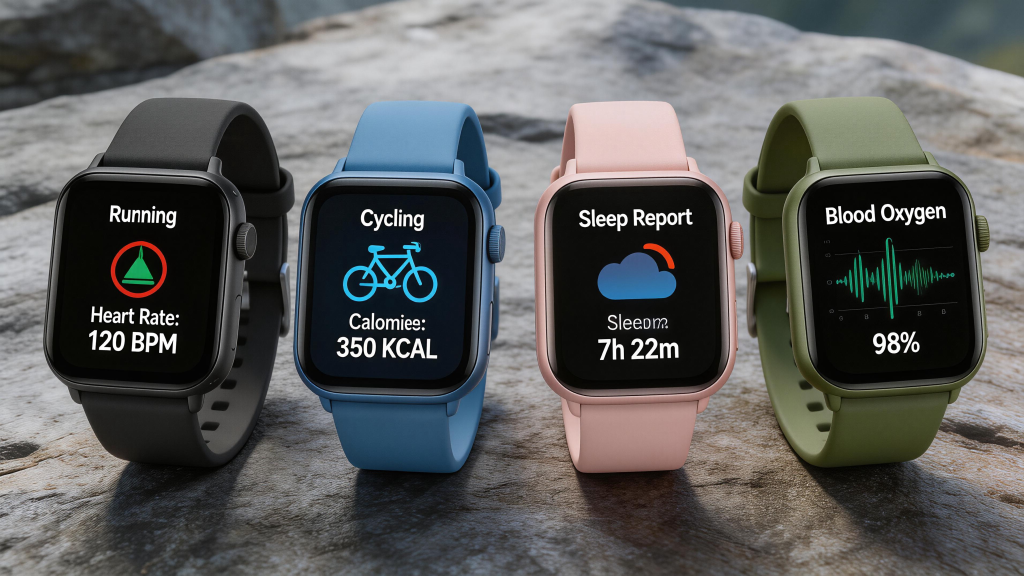
Hybrid constructions combine materials for optimized performance. Some watches use stainless steel bezels with polymer mid-frames for weight savings, or titanium bezels with ceramic inserts for scratch-proof accents. Aluminum frames with stainless steel or ceramic backs balance lightness and durability. These combinations let designers tune weight, cost, thermal behavior, and aesthetics precisely.
Each material brings trade-offs that shape the watch’s character. Steel delivers classic luxury and durability at moderate weight. Aluminum prioritizes lightness and vibrant colors for active users. Titanium offers the best strength-to-weight ratio with skin-friendly warmth. Ceramic excels in scratch resistance and long-term appearance. Polymers keep costs down and survive drops. The right choice depends on intended use—runners want light and tough, business users want premium and polished, outdoor adventurers want indestructible. In the end, the case material isn’t just the shell; it’s the first thing you feel and see every time you glance at your wrist, quietly defining how the watch lives with you day after day.
Leave a Comment
Your email address will not be published. Required fields are marked *