
Fast charging has transformed how we interact with smart watches. What used to require hours plugged in overnight now often finishes in under an hour, letting you top up during a quick shower or coffee break. The principles behind this speed involve clever electrical engineering, thermal management, battery chemistry tweaks, and careful protocol design—all squeezed into a tiny wrist-worn device that can’t afford to get hot or swell.
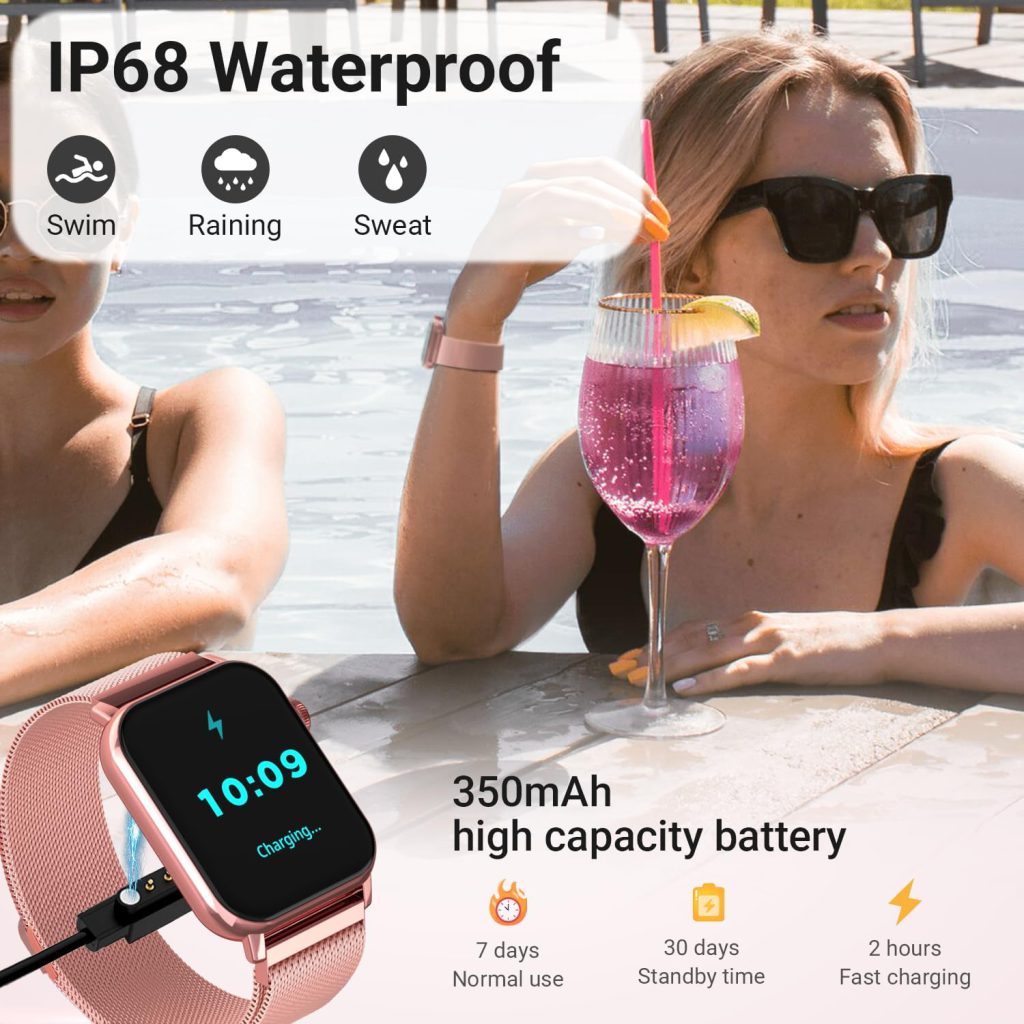
At the core is higher power delivery. Standard USB charging for early smartwatches hovered around 5 V at 0.5–1 A (2.5–5 W). Modern fast charging pushes 5–10 W or more, sometimes reaching 15 W on premium models. This increase comes from raising voltage, current, or both while staying within safe limits. Many watches use 5 V at 1–2 A for 5–10 W, but some adopt higher voltages like 9 V at 1.67 A to hit similar wattage with lower current and less heat in cables. The charger and watch negotiate the profile through protocols that detect capabilities and agree on the safest, fastest option.
Proprietary and standard protocols make this negotiation possible. Apple Watch uses a custom magnetic puck that supports up to 5 W (officially) but often delivers closer to 7–8 W in practice with compatible adapters. Samsung and Google Pixel Watches leverage USB Power Delivery (PD) or Qualcomm Quick Charge variants when docked, allowing the watch to request higher power profiles. Wear OS devices increasingly support PD 3.0 Programmable Power Supply (PPS), which lets voltage and current adjust in fine steps (as low as 20 mV increments) for optimal efficiency and minimal heat. The watch’s charging IC constantly monitors battery voltage, temperature, and state-of-charge, dynamically throttling power if anything approaches unsafe thresholds.
Battery chemistry plays a starring role. Most smart watch cells are lithium-polymer (Li-Po) or lithium-ion pouch types with high energy density but sensitive charging behavior. Fast charging stresses the battery by forcing lithium ions to move quickly, which can cause lithium plating on the anode if done carelessly—reducing capacity over time or creating safety risks. Manufacturers counter this with advanced electrode materials: silicon-graphite composite anodes for better rate capability, high-nickel cathodes for higher voltage stability, and optimized electrolytes that resist decomposition at elevated currents. Some cells include ceramic-coated separators to prevent shorts during aggressive charging.
The charging curve is deliberately shaped. Constant-current (CC) phase delivers maximum current until the battery reaches ~70–80% state-of-charge, then switches to constant-voltage (CV) phase where current tapers off to protect the cell. Fast charging extends the CC phase longer and at higher rates, then transitions smoothly to CV to avoid overvoltage. Trickle charging at the very end (near 100%) is kept minimal to prevent stress. Many watches show “fast charge” indicators only during the high-current portion, then revert to standard icons as speed drops—giving the illusion of sustained speed while protecting longevity.
Thermal management is non-negotiable. A wrist device can’t rely on large heatsinks or fans. Charging coils and ICs generate heat directly against the skin, so designs incorporate multiple safeguards. The charging puck often has a larger surface area to dissipate heat away from the watch body. Internal temperature sensors (NTC thermistors) placed near the battery and charging circuit trigger throttling or pauses if skin-contact temperatures exceed ~40–45°C. Some models use graphene sheets or copper vapor chambers to spread heat across the back cover. Software limits charging rate based on ambient temperature—slower on hot summer days—and pauses entirely if the battery gets too warm.
Safety features layer on top. Over-voltage, over-current, short-circuit, and reverse-polarity protection are built into the charging IC. Authentication chips verify genuine chargers to prevent damage from cheap knockoffs. Battery management systems (BMS) monitor cell voltage balance (though most watches use single-cell packs), track cycle counts, and adjust max charge current as the battery ages. Over years, the watch learns your habits and may reduce peak current to preserve capacity—many users notice slightly slower charging after 500–800 cycles.
Magnetic alignment helps efficiency and speed. Precise coil positioning minimizes energy loss as heat. Some systems use multiple coils or larger diameters for better coupling, allowing higher power transfer without excessive temperature rise. Wireless charging standards like Qi have evolved to support 15 W in phones, but watches stay conservative (5–10 W) because of size, heat, and skin contact concerns.
User experience drives the whole effort. Manufacturers aim for 30–60 minutes to reach 80%—enough to get through the day after a low-battery warning. Full charges still take longer because the final 20% tapers sharply to protect the cell. Real-world numbers vary: a depleted Apple Watch Ultra might gain 80% in 45 minutes with the right adapter, while a budget model could need 90 minutes for the same. Heavy AOD use, GPS workouts, or always-on sensors during charging add background draw, slowing net progress.
Looking ahead, solid-state batteries promise higher safe charging rates and better thermal stability. Graphene-enhanced cells and smarter AI-driven charging profiles could push toward 15–20 W without excessive heat. For now, fast charging in smart watches remains a delicate balance—delivering noticeable speed while keeping the device safe, cool, and long-lasting on the wrist.
Leave a Comment
Your email address will not be published. Required fields are marked *