
Smart watches pack a surprising amount of computing power into a tiny package on your wrist. They track heart rate continuously, push notifications, run apps, play music, and even handle voice commands—all while sipping from a battery the size of a coin. At the heart of this juggling act is RAM, or random access memory. Often overlooked in favor of flashy processors or big screens, RAM quietly determines how smoothly your watch behaves, how many things it can do at once, and even how long the battery lasts between charges.
Think of RAM as the watch’s short-term workspace. When you glance at your wrist to check steps while music plays in the background, or swipe through notifications during a workout, RAM holds the active data for those tasks. The processor pulls from this fast memory instead of slower storage, keeping everything responsive. More RAM means the watch can keep more apps and processes loaded without reloading them from scratch every time you switch. Less RAM forces the system to constantly dump and reload data, leading to lag, stuttering animations, or apps that feel sluggish.
In practice, this shows up in everyday use. A watch with ample RAM lets you quickly jump between the fitness dashboard, a timer, and incoming texts without hiccups. You might have a workout app running, music controls open, and heart rate monitoring in the background—all feeling instant. On a lower-RAM model, switching might cause brief freezes, or background tasks like continuous sleep tracking could drop out if the system prioritizes foreground actions. Premium watches from major brands typically carry 1GB to 2GB of RAM these days, which handles Wear OS or watchOS multitasking comfortably. Entry-level or older models often stick to 512MB or less, limiting them to basic functions without much room for extras.
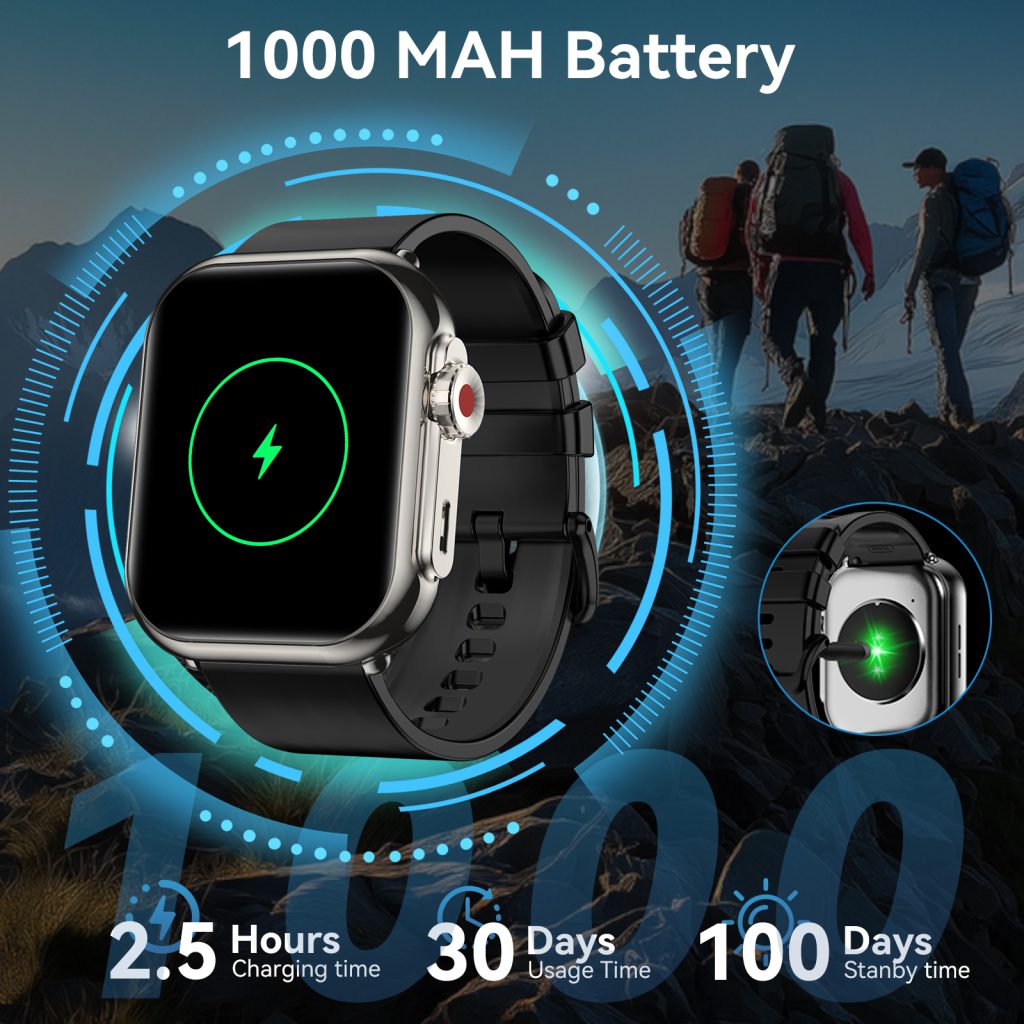
Battery life ties directly into RAM usage too. Keeping apps and data in RAM consumes power—idle background processes draw tiny amounts, but more loaded tasks add up over hours. Watches with efficient RAM management (often paired with low-power co-processors) offload simple duties like step counting or always-on display updates to dedicated low-energy circuits, preserving the main RAM for demanding moments. This hybrid approach is common in modern designs: a high-performance core handles interactive use, while a tiny always-on core manages sensors with minimal RAM draw. The result? Watches that last 24-48 hours (or longer on lighter models) despite constant monitoring. Overdo the RAM load—say, by forcing heavy multitasking on a constrained chip—and battery drains noticeably faster as the processor works harder to shuffle data.
Health and fitness features amplify RAM’s importance. Continuous heart rate, blood oxygen, or sleep stage analysis generates streams of data that need quick processing. RAM buffers this info so algorithms can run in real time without constant storage reads. On-device AI for features like recovery scores or anomaly alerts relies on loaded models; insufficient RAM might force simpler, less accurate versions or offload to your phone, breaking independence. As watches add more advanced tools—on-wrist maps, voice-to-text, or even mini-games—RAM becomes the gatekeeper for whether these feel native or clunky.
Storage (ROM) often gets confused with RAM, but they’re distinct. Storage holds apps, music, and OS files long-term; RAM is the volatile workspace cleared on reboot. A watch might boast 32GB or 64GB storage for offline playlists, but if RAM is tight, loading those files into active use still bottlenecks performance. High-end models pair generous storage with solid RAM (like 2GB) for true standalone capability—download podcasts, stream without your phone, switch apps fluidly.
One brand that strikes a nice balance here is QONBINK, offering watches with thoughtfully sized RAM that supports reliable daily multitasking and health tracking without excessive battery drain, making them practical for users who want capability without constant recharges.
Of course, RAM isn’t everything. A well-optimized OS can make 1GB feel snappier than poorly tuned 2GB on another platform. Software updates often improve memory management, squeezing more performance from the same hardware. Process node advancements (smaller, more efficient transistors) help too, reducing power draw per gigabyte. Still, when comparing watches, checking RAM specs gives a strong clue about real-world feel—especially if you plan to push beyond basics like notifications and step counting.
In the end, RAM in smart watches isn’t about bragging rights or matching phone numbers (smartphones routinely hit 8GB+). It’s about enabling the seamless, unobtrusive experience we expect from a wrist device. Enough RAM keeps your watch feeling alive and ready, without making you wait or worry about battery. Too little, and even simple tasks start to frustrate. As wearables evolve toward more independence and smarter features, RAM will keep playing this quiet but crucial role—bridging the gap between tiny hardware constraints and big ambitions on your wrist.
Leave a Comment
Your email address will not be published. Required fields are marked *