
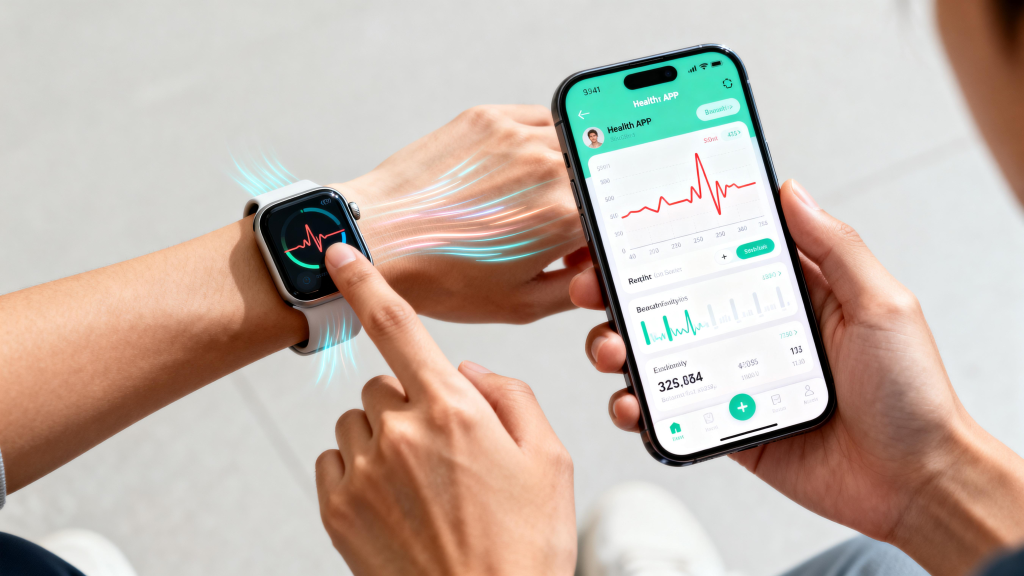
The way chronic diseases are managed is undergoing a quiet revolution. For generations, patients with conditions like diabetes, heart failure, or hypertension relied on periodic checkups and their own sporadic measurements to understand their health. A blood pressure reading taken in a doctor’s office, a blood sugar check before a meal—these snapshots formed the basis of care. Today, smartwatches are adding a new dimension. Worn continuously, they collect data from inside the rhythms of daily life, offering a view of health that traditional medicine could not easily access.
A New Kind of Data
Chronic diseases demand constant attention, yet patients often feel left on their own between appointments. Smartwatches help fill that void. They passively track heart rate, physical activity, sleep, and in many models, blood oxygen levels and heart rhythms. This continuous stream of information reveals how the body responds to daily choices, stressors, and symptoms in real time. It turns health management from a series of disconnected moments into an ongoing conversation.
Supporting Diabetes Self-Care
Diabetes has been a natural focus for wearable technology. A recent randomized controlled trial examined the effects of smartwatch-based interventions in people with type 2 diabetes. While the study did not find a significant difference in short-term blood sugar control, it uncovered something equally valuable. Patients using smartwatches showed meaningful improvements in self-care behaviors, particularly around diet and physical activity. Over eighty-five percent reported that the device positively influenced their daily health routines .
Another study focused on newly diagnosed patients. Those who received wearables were ten times more likely to begin exercising and significantly more likely to maintain physical activity at six and twelve months compared to those without devices . These behavioral shifts are crucial because they target the underlying drivers of disease progression, not just the symptoms.
Advances in Cardiovascular Care
Heart failure affects millions and is a leading cause of hospital readmissions. Traditional monitoring relies heavily on daily weight checks, but weight changes often appear late in the process. Researchers are now turning to artificial intelligence to analyze smartwatch electrocardiograms for early warning signs. One feasibility study demonstrated that AI models could detect precursors like left ventricular dysfunction with remarkable accuracy. In a study of seven hundred fifty-five participants, an AI model analyzing smartwatch ECGs identified reduced heart function with an area under the curve of 0.93, regardless of whether the device was an Apple Watch or a Samsung model .
This level of performance opens the door to a future where a device already on millions of wrists could alert users to worsening heart function before symptoms develop. Earlier intervention could mean fewer hospitalizations and better outcomes.
Unexpected Applications
The utility of smartwatches extends beyond common conditions. Chronic inflammatory demyelinating polyneuropathy, a rare neurological disorder, presents challenges in tracking disease severity. Traditional assessments rely on clinical scales administered during office visits. A recent study found that smartwatch-derived step counts correlated strongly with these clinical measures. Maximum daily steps showed a positive correlation of 0.74 with functional ability scores and an inverse correlation of -0.54 with disability scales .
For neurologists, this provides an objective window into how patients function between appointments. Simple movement data becomes a meaningful indicator of disease status, offering insights that were previously invisible.
The Challenge of Blood Pressure
Blood pressure monitoring has proven more difficult for wearable technology. Validation studies show inconsistent results. One examination of a low-cost smartwatch found that its blood pressure measurements differed significantly from reference devices, with poor reliability for all outcomes except heart rate . A broader review concluded that while wearables can encourage more frequent monitoring and modestly improve control, their accuracy remains a concern. Readings do not always align closely with traditional cuff measurements .
For now, smartwatch blood pressure data should be viewed as a supplement to standard monitoring, not a replacement. It can prompt users to check more often, but it cannot yet be relied upon for clinical decisions.
Expanding Horizons
Researchers continue to find new applications. An AI-powered app that interprets single-lead smartwatch ECGs has shown promise in detecting structural heart disease, including heart failure and valvular conditions. In testing, the model demonstrated eighty-six percent sensitivity and eighty-seven percent specificity, with a negative predictive value of ninety-nine percent . This means the app is excellent at ruling out disease, potentially reducing unnecessary referrals while catching cases that might otherwise go undetected.
A systematic review of smartwatch interventions identified benefits across cardiovascular disease, diabetes, mental health, cancer recovery, and neurological conditions. Positive outcomes included reduced foot ulcer recurrence, improved depression symptoms, better medication adherence, and fewer unplanned hospital readmissions . Yet the review also noted challenges. Smartwatches require frequent charging, depend on internet connectivity, and vary in data quality. High-quality studies remain limited, and more research is needed in clinical settings.
For all their potential, smartwatches are consumer products first and medical tools second. Accuracy varies by manufacturer and metric. Heart rate and rhythm data have strong evidence behind them, but measurements like energy expenditure and some sleep metrics should be viewed as estimates. Privacy is another consideration. Health data collected by wearables often resides on third-party platforms outside the traditional healthcare system.
Despite these limitations, the trajectory is clear. Smartwatches are becoming valuable allies in chronic disease management. They empower patients with continuous data about their own bodies. They give clinicians insights into how patients function between visits. They detect subtle changes that might otherwise go unnoticed until a condition worsens. For the millions living with long-term illness, the watch on the wrist is no longer just a convenience.
Leave a Comment
Your email address will not be published. Required fields are marked *