
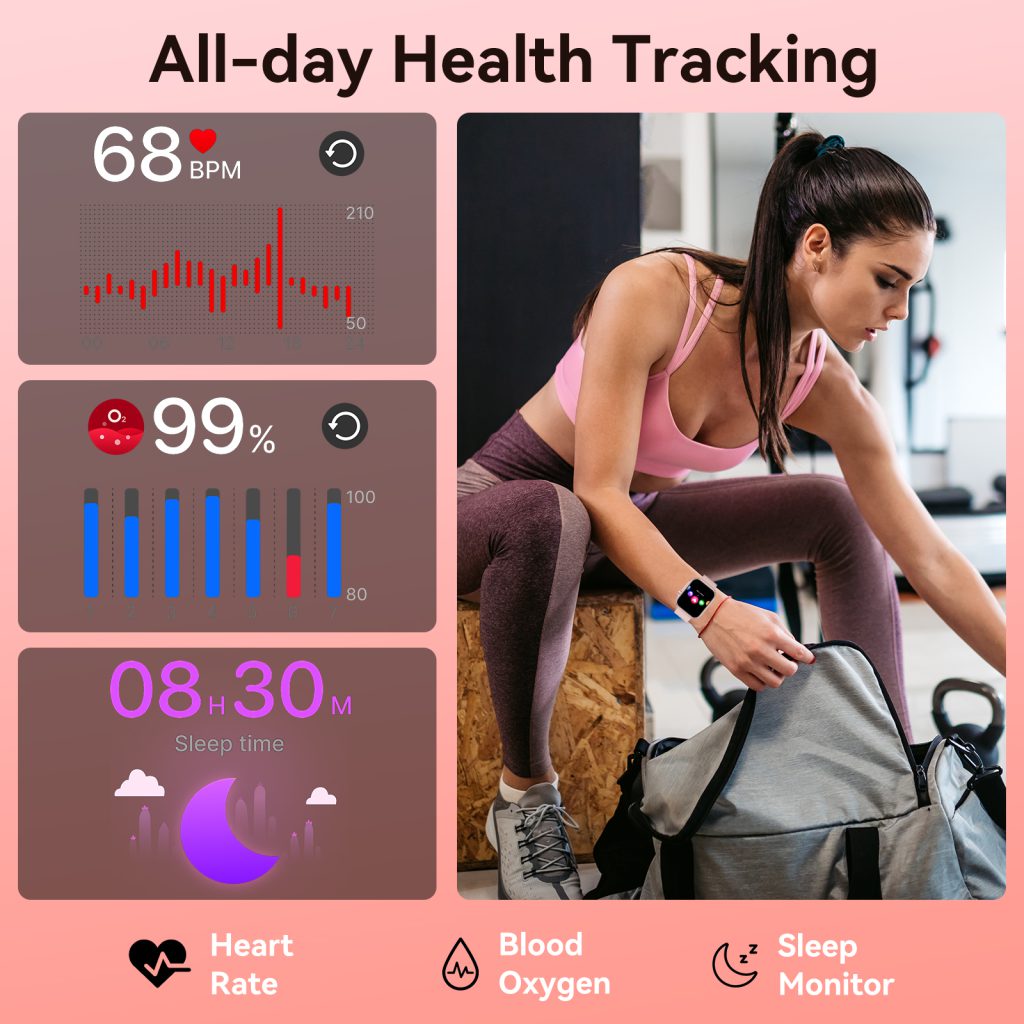
Heart rate monitoring has become one of the most trusted features on modern smart watches. What once required a chest strap or a visit to the doctor is now available 24/7 with a quick glance at your wrist. Behind this convenience lies a set of well-established optical and physiological principles that allow these tiny devices to deliver surprisingly reliable readings.
The Core Technology: Photoplethysmography (PPG)
Almost every consumer smartwatch today relies on PPG, a non-invasive optical method to detect blood volume changes in the microvascular bed of tissue—usually the skin on the underside of your wrist.
Here’s how it operates:
- Green LEDs (sometimes red or infrared too) shine light into your skin.
- A photodetector captures the light that reflects back.
- Blood absorbs more light than surrounding tissue, so when your heart pumps, blood surges through the capillaries and the reflected light decreases slightly.
- Between beats, less blood is present, so more light reflects back.
This rhythmic variation in reflected light creates a waveform that directly corresponds to your pulse. The watch’s algorithm then calculates beats per minute (BPM) by measuring the time between peaks in that waveform.
Green light is the default choice because it penetrates skin just deep enough to detect capillary-level changes while being less affected by melanin compared to other wavelengths. Higher-end models add red and infrared LEDs for better performance across skin tones, during motion, or when measuring deeper metrics like SpO2.
Key Factors That Influence Accuracy
PPG works remarkably well under ideal conditions, but several variables can introduce noise or error.
- Fit and Positioning The watch needs consistent, gentle skin contact. Too loose, and ambient light leaks in, drowning the signal. Too tight, and you compress blood flow, distorting readings. Most brands recommend wearing the sensor snugly about one finger-width above the wrist bone.
- Motion Artifacts Wrist movement creates mechanical noise that can mimic or mask heartbeat signals. Advanced algorithms use accelerometers to detect and filter out motion, but intense activities like weightlifting, cycling with bumpy roads, or HIIT still challenge accuracy. That’s why many watches switch to more conservative averaging during high-motion periods.
- Skin Tone and Tattoos Darker skin tones absorb more light, reducing the strength of the reflected signal. Tattoos can scatter light unpredictably. Multi-wavelength PPG (red + infrared) helps mitigate these issues, which is why newer devices show noticeably better consistency across diverse users.
- Temperature and Perfusion Cold hands reduce blood flow (low perfusion), weakening the signal. Warm environments or post-exercise vasodilation improve it. This explains why resting heart rate can read higher or more erratic in very cold conditions.
Beyond Resting: Exercise, HRV, and Recovery Insights
During workouts, the watch tracks heart rate zones to guide effort—fat burn, cardio, peak—and estimates calorie burn or VO2 max trends. Heart rate variability (HRV), the tiny beat-to-beat fluctuations, offers deeper clues about stress, recovery, and autonomic nervous system balance. Higher HRV generally signals better recovery and lower stress.
These features rely on the same PPG foundation but use more sophisticated filtering and longer sampling windows. Accuracy improves dramatically when the watch combines optical data with motion context and machine-learning models trained on large populations.
QONBINK applies these principles thoughtfully in its designs, prioritizing consistent contact, multi-LED arrays, and robust motion compensation so users get dependable heart rate data whether resting at home or pushing through a tough workout.
Limitations and When to Trust (or Question) the Numbers
No wrist-based monitor matches the gold-standard accuracy of a medical ECG chest strap, especially during very high-intensity or erratic-motion activities. Sudden spikes, unusually flat readings, or values that don’t align with how you feel deserve a second look—perhaps by cross-checking with manual pulse counting or a chest strap for critical sessions.
Still, for daily trends, resting rates, sleep analysis, and moderate exercise, modern PPG-based monitoring is reliable enough for most people to make informed lifestyle choices.
Heart rate monitoring on smartwatches rests on elegant, decades-old optical science refined by modern algorithms and hardware. When the watch fits well, the LEDs fire cleanly, and the software filters noise effectively, you get a window into your cardiovascular system that was unimaginable a generation ago.
Leave a Comment
Your email address will not be published. Required fields are marked *