
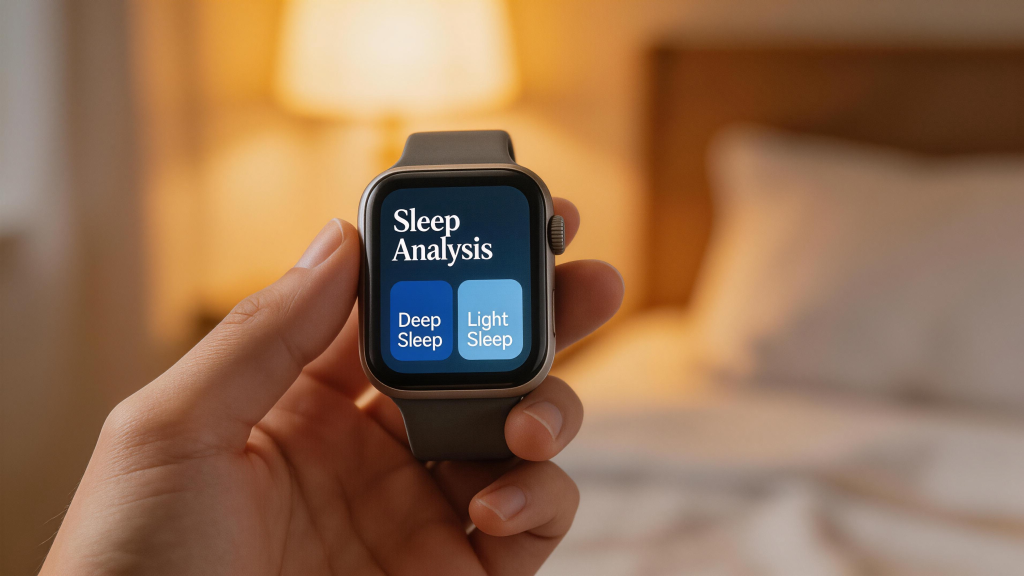
Most people think of sleep as one uniform state—either you’re out or you’re not. In truth, sleep cycles through distinct phases every 90 minutes or so, and two of the biggest players are light sleep and deep sleep. They serve very different purposes: light sleep acts as the bridge and buffer, while deep sleep handles the heavy repair and restoration work.
What Light Sleep Actually Does
Light sleep covers stages N1 and N2 in the standard AASM classification—together making up 50–60% of a typical adult night.
- Stage N1 is the brief doorway into sleep. Your brain waves slow from the fast alpha patterns of wakefulness to slower theta waves. Eye movements become slow and rolling, muscle tone eases, and you’re easily startled awake. Most people pass through N1 in 5–10 minutes without realizing it.
- Stage N2 is the real workhorse of light sleep and the longest phase overall. Brain activity produces distinctive sleep spindles (short bursts of 11–16 Hz waves) and K-complexes (large, slow deflections that help suppress arousals). Heart rate and breathing slow compared to wakefulness but remain somewhat variable. You’re still responsive to external sounds—a loud noise or a partner shifting can pull you back toward wakefulness.
During light sleep your body consolidates memories (especially procedural ones like skills), processes daytime information, and prepares for deeper stages. It’s restorative in its own way but not the powerhouse recovery phase.
The Powerhouse: Deep Sleep (Slow-Wave Sleep)
Deep sleep—officially stage N3 or slow-wave sleep—usually accounts for 15–25% of total sleep in healthy adults, with the highest amounts in the first half of the night.
Brain waves here are dominated by delta waves: slow (0.5–2 Hz), high-amplitude oscillations that sweep across the cortex. Eye movements stop completely, muscle tone drops to its lowest level short of REM, and it becomes genuinely difficult to wake someone. If you do wake them, they often feel groggy and disoriented (sleep inertia).
Physiologically, this is when the body does its most intense repair:
- Growth hormone peaks, supporting tissue repair, muscle recovery, and immune function.
- The brain clears metabolic waste through the glymphatic system more efficiently.
- Energy stores in muscles and the liver get replenished.
- Immune cells get a boost, helping fight off illness.
Missing deep sleep leaves you physically exhausted, mentally foggy, and more prone to getting sick—even if total sleep hours look decent.
How They Compare Side by Side
| Aspect | Light Sleep (N1 & N2) | Deep Sleep (N3) |
|---|---|---|
| Brain Waves | Theta, spindles, K-complexes | Delta (slow, high amplitude) |
| Ease of Awakening | Easy—sounds or movement can rouse you | Very hard—feels like being pulled from a deep well |
| Body Movement | Occasional shifts, fidgeting | Almost none |
| Heart Rate & Breathing | Slower but variable | Lowest and most stable |
| Primary Functions | Memory consolidation, transition | Physical repair, growth hormone, waste clearance |
| % of Night (Adults) | 50–60% | 15–25% |
| When It Happens | Throughout the night | Mostly early cycles |
The balance between the two shifts with age—kids get far more deep sleep, while older adults often see it shrink, which partly explains changes in energy and recovery as we get older.
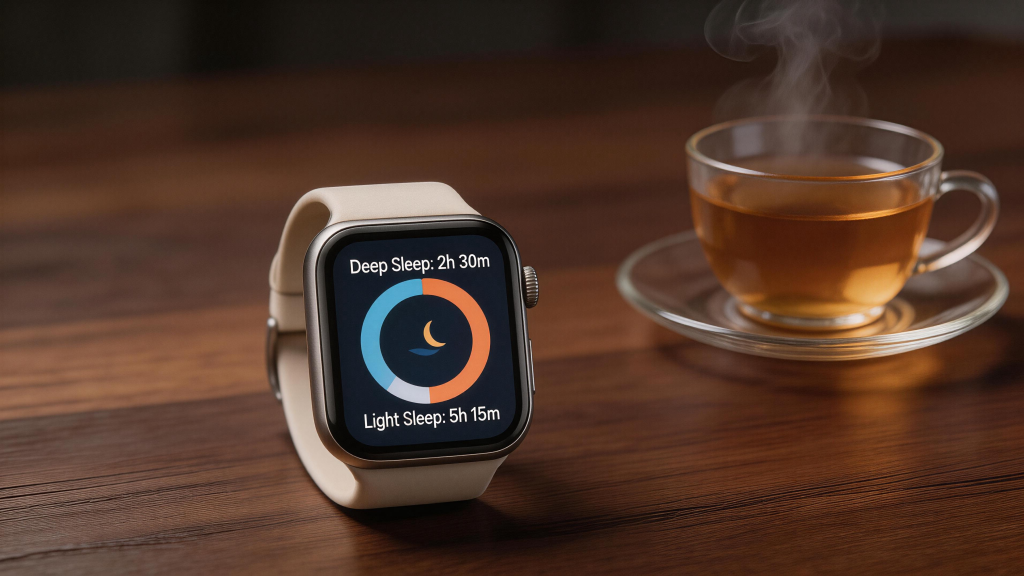
Why Tracking the Difference Matters
Knowing whether you’re short on deep sleep versus light sleep guides better habits. Too little deep sleep? Prioritize consistent bedtimes, avoid alcohol (it suppresses N3), keep the bedroom cool (around 65°F/18°C), and limit intense evening workouts. Struggling with fragmented light sleep? Reduce evening caffeine, manage stress, and create a quieter sleep environment.
QONBINK makes this distinction clear in its sleep reports, separating deep and light phases with reliable overnight heart-rate and motion patterns so you can spot exactly where your nights need attention.
Light sleep keeps the night flowing smoothly and handles mental housekeeping; deep sleep rebuilds your body from the inside out. Both are essential, but skimping on deep sleep hits physical recovery hardest. Pay attention to how much time your tracker assigns to each—over weeks, not single nights—and adjust your routine accordingly. Quality sleep isn’t just about hours; it’s about getting enough of the right kind.
Leave a Comment
Your email address will not be published. Required fields are marked *