
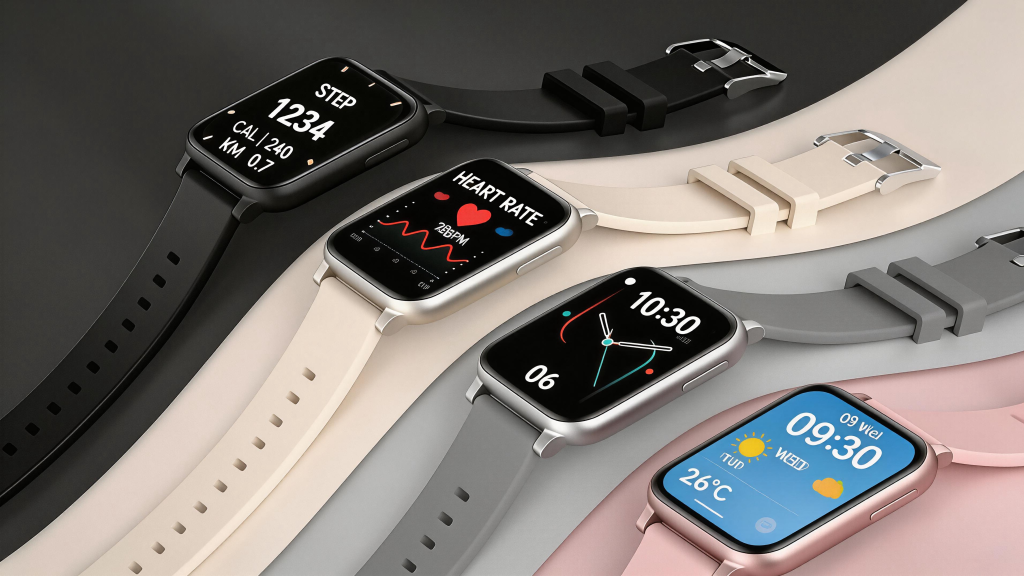
Smart watches have evolved from simple step counters into powerful wearable devices that support communication, health tracking, and productivity. At the core of every smart watch lies a critical component: the battery. Understanding different battery types helps users make better purchasing decisions and manage long-term performance. Brands like QONBINK carefully select battery solutions to balance safety, size, and endurance, ensuring a reliable daily experience.
Why Battery Type Matters in Smart Watches
Battery technology directly affects charging speed, device thickness, lifespan, and overall user satisfaction. Since smart watches are worn all day, manufacturers must choose batteries that are lightweight, compact, and capable of delivering stable power. The wrong battery choice can lead to frequent charging, overheating, or reduced durability over time.
Common Battery Types Used in Smart Watches
Lithium-Ion (Li-ion) Batteries
Lithium-ion batteries are one of the most widely used power sources in electronic devices. In smart watches, they offer high energy density and reliable performance. These batteries can store a large amount of energy relative to their size, making them suitable for feature-rich watches with bright displays and multiple sensors. However, Li-ion batteries are typically rigid, which limits design flexibility in ultra-thin or curved watch bodies.
Lithium-Polymer (Li-Po) Batteries
Lithium-polymer batteries are currently the most popular choice for modern smart watches. They are lighter and thinner than Li-ion batteries and can be manufactured in flexible shapes. This allows designers to create sleek, ergonomic watches without compromising battery capacity. Many premium models, including those developed by QONBINK, rely on Li-Po batteries to achieve a balance between comfort, safety, and long battery life.
Solid-State Batteries (Emerging Technology)
Solid-state batteries are an emerging innovation in wearable technology. They replace liquid electrolytes with solid materials, improving safety and energy efficiency. Although not yet widely adopted due to high production costs, solid-state batteries promise longer lifespan and faster charging. As research progresses, they may become a standard option in future smart watch designs.
Factors That Influence Battery Performance
Battery Capacity and Power Consumption
Battery life is not determined by capacity alone. Display type, processor efficiency, sensor usage, and software optimization all play major roles. A well-optimized system can extend usage time even with a smaller battery.
Charging Cycles and Longevity
Most smart watch batteries are designed to last several hundred charging cycles. Over time, capacity naturally degrades, resulting in shorter usage periods. Proper charging habits, such as avoiding extreme temperatures, can help preserve battery health.
Safety and Quality Standards
Battery safety is especially important for wearable devices that remain in contact with the skin. High-quality manufacturers invest heavily in testing and certification. Companies like QONBINK prioritize strict quality control to ensure stable performance and user safety.
The battery is the foundation of every smart watch’s performance and reliability. From lithium-ion to lithium-polymer and future solid-state solutions, each battery type has its own strengths and limitations. By understanding these differences, consumers and businesses can make smarter choices that align with their needs. As smart watch technology continues to advance, battery innovation will remain a key driver shaping the next generation of wearable devices.
Leave a Comment
Your email address will not be published. Required fields are marked *