
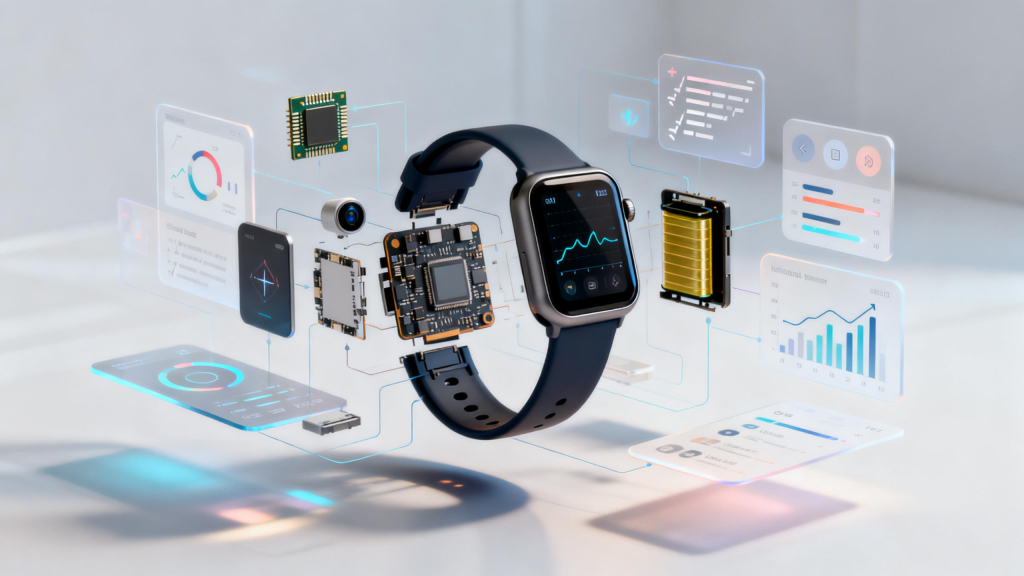
The system architecture of smart watches determines how these wearable devices function efficiently while remaining compact. At the core, a smart watch is a miniaturized computing device that integrates multiple components, including sensors, processors, memory, connectivity modules, and display interfaces. This architecture allows the watch to perform health tracking, fitness monitoring, notifications, and other essential functions in real time. Understanding this architecture provides insight into how smart watches deliver high performance in such a small form factor.
A typical smart watch system includes several core components. The processor acts as the central unit, coordinating data from multiple sensors such as heart rate monitors, accelerometers, gyroscopes, and GPS modules. Memory stores application data and user activity logs, while the display and touchscreen interface allow for easy navigation. These sensors and components work together to provide real-time feedback on health metrics and physical activity, making the watch a reliable fitness tracker and health companion.
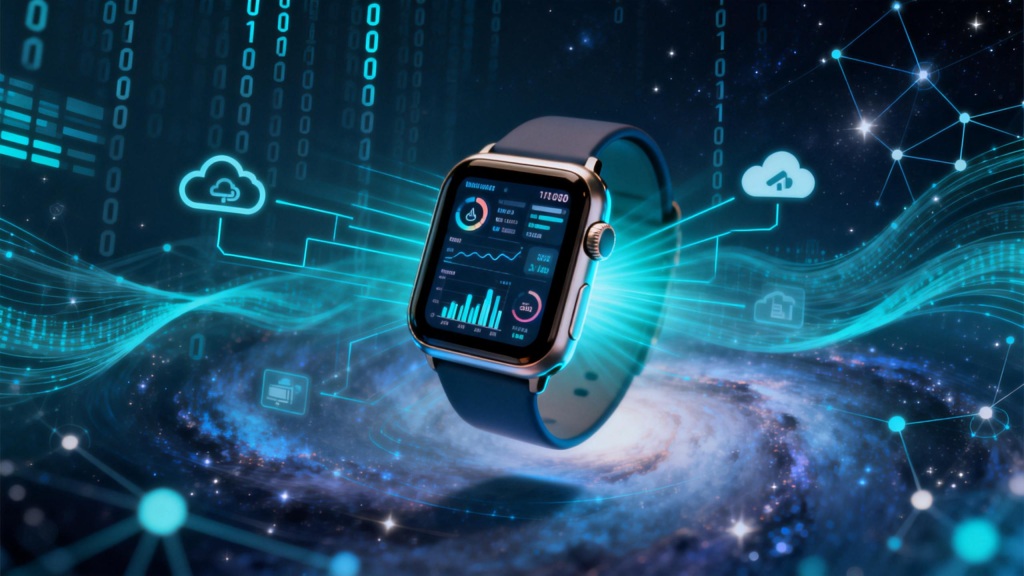
Connectivity is another critical part of the system architecture. Smart watches use Bluetooth, Wi-Fi, and sometimes cellular modules to synchronize data with smartphones or cloud services. This connection ensures that notifications, messages, and health data are always updated. Advanced data management systems allow users to store, visualize, and analyze health metrics over time, providing valuable insights into their activity and wellness.
Efficient power management is essential for smart watches due to their small battery size. Low-power processors, optimized software, and energy-efficient sensors help extend battery life while maintaining performance. Software integration enables smooth operation of applications, health monitoring tools, and notifications. Together, hardware and software design form a cohesive system architecture that ensures smart watches deliver accurate and reliable performance for daily use.
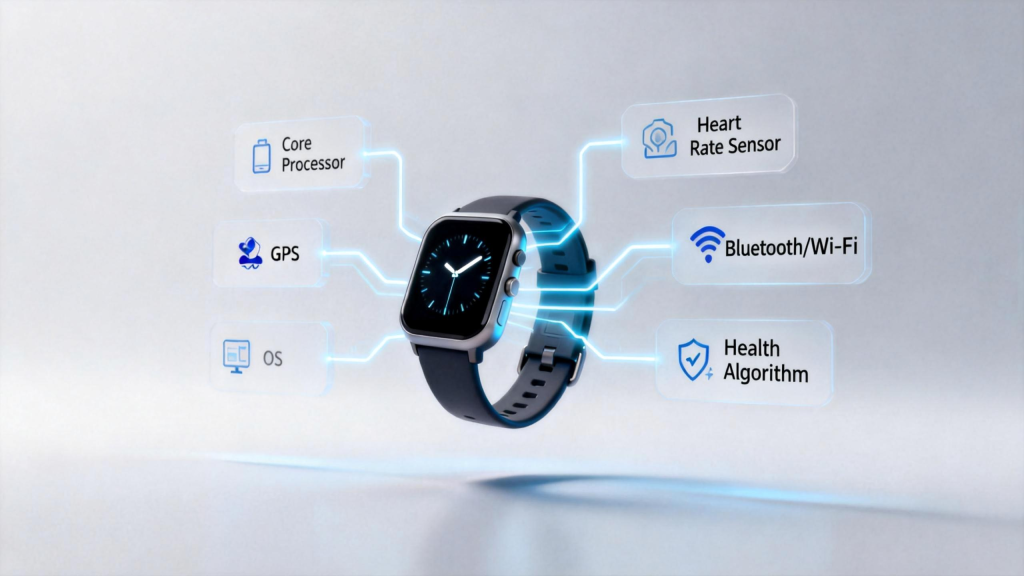
The system architecture of smart watches combines sensors, processors, memory, connectivity, and software to create versatile devices capable of health monitoring, fitness tracking, and communication. Understanding this architecture helps consumers appreciate the engineering behind smart watches and highlights the capabilities that make them indispensable in modern life. As wearable technology continues to evolve, smart watch architectures are becoming more advanced, efficient, and user-friendly.
Leave a Comment
Your email address will not be published. Required fields are marked *