
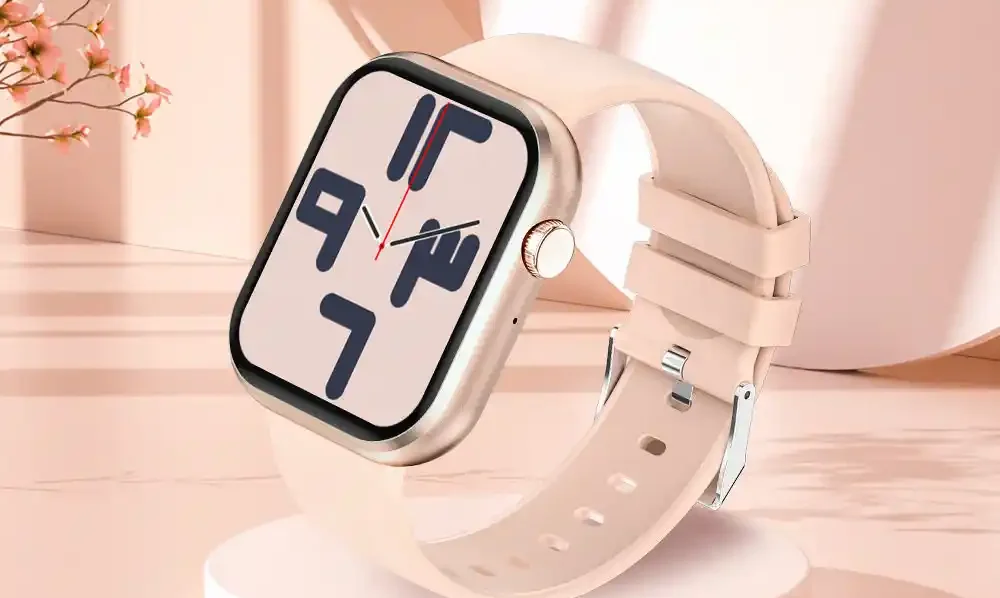
After experiencing its first ever decline in 2024, the global smart watch market has staged a strong recovery in 2025, with shipments projected to grow 7% year-on-year, according to a recent report from Counterpoint Research. The rebound gained momentum in the third quarter of 2025, where global shipments surged 9% to 41 million units, marking a significant turnaround from the previous year’s slump.
Market Structure Transformation and Key Growth Drivers
The 2025 recovery is fueled by a profound structural shift in the industry, as consumers increasingly favor mid-to-high-end smart watches equipped with advanced features, replacing demand for basic models. A wave of function-driven innovations has fundamentally enhanced device performance, with artificial intelligence (AI) integration, 5G connectivity, satellite communication, and MicroLED display technology emerging as the most prominent upgrade highlights. Notably, even entry-level models now offer AI experiences and upgraded health sensors, successfully recapturing users who previously abandoned basic smart watches.
Health-centric applications have become a core focus for manufacturers. Leading brands are integrating more sophisticated health monitoring capabilities, ranging from emotional state tracking to cardiovascular health management. This strategic shift toward user-centric value creation has created a positive feedback loop, driving overall market growth across key regions—North America and Europe both recorded double-digit growth of 15% and 16% respectively, powered by Apple’s new product lineup.
Chinese Brands Emerge as Global Growth Engines
China has established itself as the world’s most critical growth driver for the smart watch market, with its global market share rising from 25% in 2024 to an estimated 31% in 2025, maintaining its position as the largest shipment contributor. Three Chinese brands—Huawei, Xiaomi, and Little Genius—secure spots among the global top five, each demonstrating remarkable growth through differentiated strategies.
Huawei led the charge with a staggering 42% year-on-year shipment increase, boosting its global market share from 13% to 18% and solidifying its rank as the world’s second-largest smart watch vendor. The launch of its WATCH GT 6 series, featuring a 21-day ultra-long battery life, advanced cycling metrics, and enhanced health monitoring via the upgraded Xuanji Sensing System, has been instrumental in this success. The device’s ability to track 12 emotional states and provide atrial fibrillation load statistics, developed in collaboration with the 301 Hospital, exemplifies the brand’s focus on professional health management.
Xiaomi achieved a 22% growth rate, elevating its market share from 8% to 9% and surpassing Samsung to claim the third global position. Little Genius, specializing in the children’s segment, maintained its leadership in China’s kids’ smart watch market while expanding into Southeast Asia and Europe, leveraging its product diversity and brand social influence.
Major Players’ Performance and Market Dynamics
Apple ended its seven-quarter decline streak (since Q4 2023) with the launch of its new smart watch lineup, which expanded its price range coverage and drove a projected 12% year-on-year shipment growth in 2025. Despite this recovery, IDC data shows Apple ranked third in global shipments for the first three quarters of 2025, with 27.9 million units—tied with Xiaomi but behind Huawei’s 28.6 million units.
Samsung, the world’s largest smartphone brand, struggled to compete in the smart watch segment, selling only half as many units as Apple in 2025. While its Galaxy Watch series shipments improved slightly by 1.5% year-on-year following the mid-2025 launch of the Galaxy Watch 8 and Ultra models, the company’s overall market share declined by 5%, reflecting the intense competition from Chinese manufacturers.
International brand Withings also made waves with the launch of its ScanWatch 2 at IFA Berlin 2025, featuring a record 35-day battery life and Health Sense 4.0 OS. The device utilizes predictive AI algorithms to monitor 35 health parameters, including REM sleep and nocturnal respiratory rhythm, and delivers personalized alerts for menstrual cycles, potential illnesses, and energy levels—representing the industry’s shift toward proactive health prevention.
Future Outlook
Industry analysts project sustained growth for the smart watch market, with HLOS (Hosted Operating System) smart watch shipments expected to achieve a 7% compound annual growth rate between 2025 and 2030. The children’s smart watch segment is also set to expand, with a 4% year-on-year growth in 2025 led by Little Genius.
As Chinese brands continue to strengthen their global presence through technological innovation and ecological expansion, China is poised to maintain its leadership in the global smart watch market. The ongoing integration of AI, advanced health monitoring, and long-battery-life solutions will further redefine user expectations, driving the industry toward a more sophisticated and user-centric future.
Leave a Comment
Your email address will not be published. Required fields are marked *